
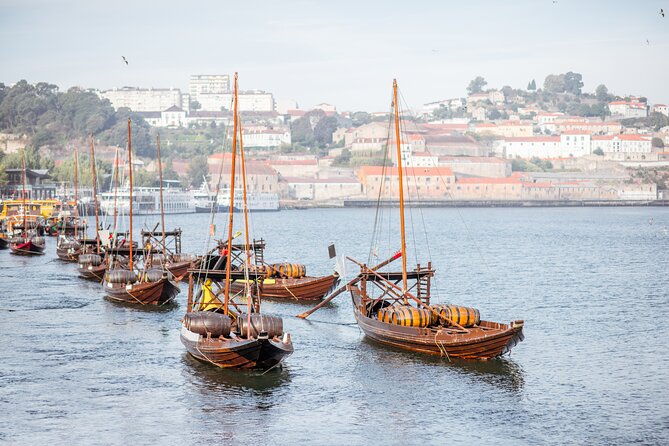
Reviewed · RIBEIRA & OLD TOWN
Porto “Old Town” Walking Tour with river cruise (Small-groups)
Porto snaps into focus fast when you have a guide. This small-group walking tour threads together key streets, viewpoints, and landmark exteriors, and then you end with a 6 Bridges Douro Cruise that shows the city from the river. I love how the route is made for people who do not want to think about directions, and I also love the storytelling approach that turns familiar scenery into real context. The one thing to consider: the tour keeps you outside, so if you expect to go inside big-ticket monuments, you will need separate plans.
Logistics are simple and low-stress, with a mobile ticket and an afternoon start at 2:30 pm. It runs about 1 hour 30 minutes with explanations, it caps at 15 travelers, and it ends near the Douro and Luis I Bridge, which is a smart place to keep exploring on your own.
Key things to know before you go
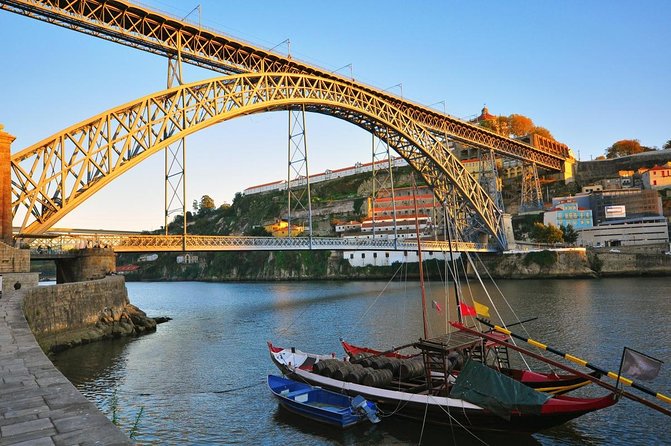
- Small-group pace: Maximum 15 travelers, so the guide can actually answer questions.
- 6 Bridges Douro Cruise included: You finish with a river ride that connects Porto’s layers.
- Outdoor stops only: You get explanations outside, not museum-style interior visits.
- Viewpoints first, then streets: You move from scenic lookout moments to tighter historic lanes.
- Local food and wine pointers: The guide shares what to eat and drink after the walk.
Porto Old Town makes more sense when someone maps your route
Porto has plenty of signs, but the real challenge is the layout. Hills, stairways, and riverfront neighborhoods can make it feel like you are wandering even when you are moving. This tour is built to solve that. You get a guided route that keeps you oriented without forcing you to pull out a map every few minutes.
What I like most is that the guide does not just point at buildings. You get explanations timed to what you are actually seeing, which helps the city click into place. One highlight is how the tour leans into both the grand and the everyday, from a major church interior seen from the outside to the lived-in feel of narrow streets like Rua do Barredo.
There is also a practical benefit to the small-group size. With up to 15 people, you are less likely to feel like you are being rushed past stops. You also have more chance to ask questions about wine, neighborhoods, or what to do next.
You can also read our reviews of more walking tours in Porto
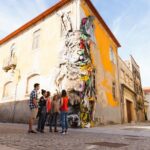

Price and value: what $28.43 really covers
At $28.43 per person, this is not expensive for what you get. The value is not only the walk. The big deal is that the tour includes the 6 Bridges Douro Cruise at the end of the experience. That means your money buys a full loop: city context on foot first, then a scenic river perspective right after.
You also save time. Instead of trying to stitch together a “walk tour plus river cruise,” you are doing both in a single booking, and you end in the perfect area for continuing on your own near Cais da Ribeira.
Could it feel like a mismatch if you want indoor sights? Yes, because the tour focuses on exteriors and street-level history. If your main goal is to spend time inside monuments, you might find this more satisfying as a complement than as a stand-alone “everything” outing.
Timing and logistics: meeting at Largo Amor de Perdição, ending by Luis I Bridge
The tour starts at 2:30 pm. You meet at Largo Amor de Perdição, Campo dos Mártires da Pátria 2117, 4050-600 Porto, and you finish at Cais da Ribeira, close to Luis I Bridge.
That end point matters. Cais da Ribeira is where you want to be if you plan to keep walking, grab dinner, or look for viewpoints over the river as the light changes. Ending by the bridge also gives you flexibility, since you can angle back into the old center or shift toward the waterfront without needing a long transit plan.
Because the walking portion includes explanations and runs about 1 hour 30 minutes, it is a solid choice for days when you want a major slice of Porto’s “why it matters” without committing to a half-day tour.
The route, stop by stop: from sunset viewpoints to medieval lanes
The best way to enjoy this tour is to think of it as three moods. First you get big-sky river views, then you step into the stories behind Porto’s institutions and trade, and finally you wander through the older, tighter streets that feel closest to medieval Porto.
Stop 1: Passeio das Virtudes, where sunsets feel earned
You start with Passeio das Virtudes, a lookout known for spectacular views over the Douro River. The time here is short, about 15 minutes, but it sets the tone. You are not just looking at a view, you are learning how Porto’s river relationship shaped everything else, from where people built and traded to how the neighborhoods grew along the water.
A practical tip: if you are chasing photos, treat this as your “capture everything quickly” moment. Bring your camera ready, and pay attention to the river angles so you can recognize them again later when you are on the cruise.
You can also read our reviews of more boat tours in Porto




Stop 2: Old English Clube do Porto, the British thread in Porto
Next is the Old English Clube do Porto. It is a simple stop in time, about 10 minutes, but the meaning is big. The building is tied to Porto’s historic links with Britain, including diplomatic, commercial, and wine-related connections.
Even from outside, it is the kind of place that helps explain why Porto became a wine powerhouse. You start connecting names, trade routes, and cultural influences, not as trivia, but as reasons the city looks the way it does.
Stop 3: Miragaia, colorful houses and an older riverside feel
You then head into Miragaia, a riverside district with colorful houses and narrow streets. Expect a quieter, more human-scale feel here, about 10 minutes.
This is where your eyes adjust to the geography. Porto’s old neighborhoods rise and fall, so when you see a steep stairway or a tight alley, you understand this was not built for convenience. It was built for survival, work, and community.
Stop 4: Church of Saint Francis, Gothic outside, gold inside
Stop four is the Church of Saint Francis. You will see it from the outside, about 10 minutes, with a Gothic exterior and an interior that is famously baroque and covered in gold leaf.
Here is a good way to think about this stop. Even without entering, you learn that Porto’s artistic surprises can be hidden in plain sight. The guide’s explanation helps you understand why people who love architecture get excited here, and why locals care about it.
Stop 5: Jardim do Infante Dom Henrique, explorer energy in a city square
The tour pauses at Jardim do Infante Dom Henrique, dedicated to one of Portugal’s major historical figures. This is another 10-minute moment that works well as a reset.
Portugal’s maritime story is one of the keys to understanding why Porto mattered commercially. When you link exploration, sea trade, and the Douro Valley wine economy, the city stops feeling like an isolated waterfront and starts feeling like a node in a bigger system.
Stop 6: Palacio da Bolsa, trade made into architecture
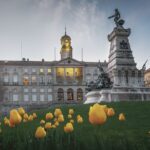
Next comes Palacio da Bolsa, a neoclassical palace associated with Porto’s commercial story. Your time here is about 10 minutes, and you stay outside while the guide explains what you are looking at.
This stop is valuable if you want more than postcard history. It helps you see that Porto’s wealth was not only about ships and vineyards. It also became institutions and buildings, and those buildings still shape the city today.
Stop 7: Rua do Barredo, medieval heart, laundry in the sun
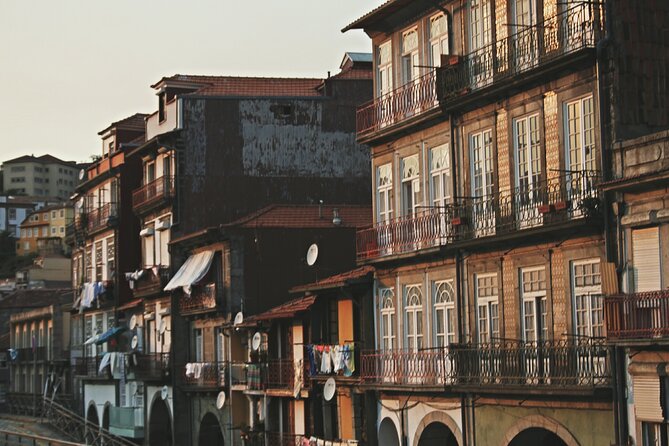
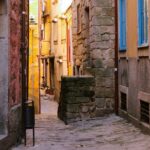
Then you move into Rua do Barredo, a maze of alleys, stairs, and everyday scenes like laundry hanging in the light. This stop is 15 minutes, which is generous for a street like this.
This is one of the most authentic-feeling parts of the route. You get the contrast Porto is famous for: big stories and old trade meet small daily realities. If you love street photography, this is where you will get it. If you prefer wide views, you will still enjoy how the guide frames the street’s medieval role.
Stop 8: Alminhas da Ponte, memory and riverfront layers
The final stop is Alminhas da Ponte, which combines several riverside elements into one concentrated area. The tour spends about 10 minutes here, and the guide connects history, memory, and scenery, including Porto’s iconic bridge plus the remains of a bridge that no longer exists but still matters.
This part of the walk is a good emotional landing. It reminds you that rivers create both movement and loss, and that Porto keeps its memory in everyday public spaces.
The 6 Bridges Douro Cruise: what changes after your walk
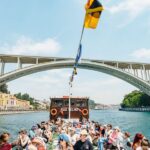
The tour finishes with a 6 Bridges Douro Cruise. Think of it as the payoff for everything you just learned. Walking shows you the city’s structure at human speed. The cruise shows you the logic of the coastline and the way the riverfront neighborhoods line up.
Also, you will recognize more after the walk. Instead of seeing a river full of bridges as generic scenery, you will understand why these crossings matter and how Porto’s growth traces the water.
For many people, this is the easiest way to enjoy Porto if you have limited time. You are not sprinting from one attraction to another. You are moving through the city’s geography in a calm rhythm, and it is a natural transition into dinner near the waterfront.
What makes the guide matter on this tour
The most consistent praise for this experience comes down to the human factor: a friendly, storytelling-rich guide who knows how to keep the pace and explain what you are seeing. On tours like this, the difference between a good walk and a memorable one is usually simple. A guide who can connect details, answer questions, and keep things moving makes the route feel effortless.
The tour also builds in plenty of photo moments and pause points, so you are not just listening while you walk. You are also stopping where the city is asking you to stop.
One more practical point: the tour notes that you stop outside different monuments for explanation and you will not go inside. That choice keeps the group moving and keeps the schedule sane, but it also means the guide’s narration is doing extra work. If you enjoy history as a story, this format is a win.
Practical expectations: walking comfort, what to bring, and how to pace yourself
Because the tour is a walk with explanations, wear shoes you trust on uneven pavement and possible steps. Porto’s old streets can be slippery in wet weather, and Rua do Barredo is the kind of area where you will notice every stair.
I also recommend you bring water, even though food and drinks are not included. You are not getting a snack stop built into the schedule, and afternoon tours can run warm depending on the season.
If you are planning other sights the same day, the ending location near Cais da Ribeira is helpful. You can move from the cruise into a meal without needing a long plan.
Who this tour fits best
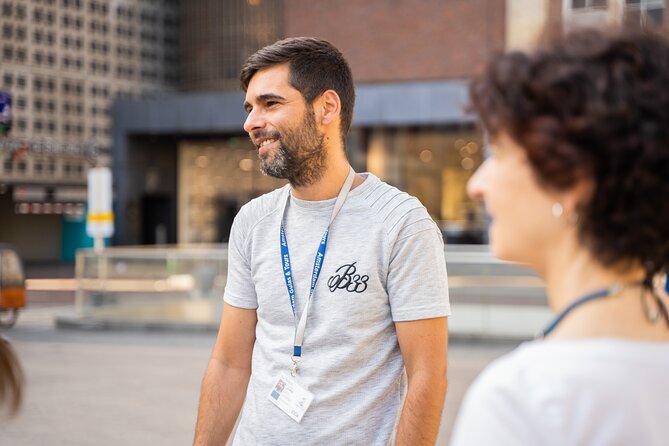
This Porto Old Town walk with a river cruise is a strong fit if:
- You want a guided route so you do not have to solve Porto by yourself
- You enjoy street-level history, not just museum walls
- You like small-group tours, with room to ask questions
- You want the river included, without booking two separate activities
It may be less ideal if:
- Your priority is going inside monuments and spending serious time inside major churches and palaces
- You want a longer, deeper neighborhood experience that goes off-route for longer stays at fewer places
Should you book? My honest take
Book it if you want Porto to feel organized and meaningful in a short window. The combination of outdoor orientation plus a Douro cruise is good value, and the small-group size helps it feel personal. Starting at 2:30 pm also makes sense because you can end your day near the water when the city looks its best.
Skip or adjust your expectations if you are primarily chasing interiors and long museum time. This is a route for seeing, listening, and understanding, not a ticket to move at your own pace inside every attraction.
If you are unsure, think of it as a smart “first Porto” experience. It gives you bearings, stories, and a river angle all in one go, so you can enjoy whatever you do next with a clearer sense of where you are.
FAQ
How long is the Porto Old Town walking tour?
The walk with explanations lasts about 1 hour 30 minutes.
What time does the tour start?
The start time is 2:30 pm.
Where do I meet the guide, and where does the tour end?
You meet at Largo Amor de Perdição, Campo dos Mártires da Pátria 2117, 4050-600 Porto, Portugal. The tour ends at Cais da Ribeira, 4000 Porto, close to Luis I Bridge.
Is it a small-group tour?
Yes. The group size is limited to a maximum of 15 travelers.
What languages are available for the guide?
The guide is available in English or Spanish.
Do you go inside monuments during the walk?
No. The tour does explanations while stopping outside monuments, and you will not go inside any of them.
Is the Douro river cruise included?
Yes. The tour includes a 6 Bridges Douro Cruise at the end of the walking portion.
What is not included in the price?
Hotel pickup and drop-off are not included, and food or drinks are not included.
Are service animals allowed, and is it easy to get to the meeting point?
Service animals are allowed, and the meeting point is near public transportation.
Is there free cancellation?
Yes. You can cancel for a full refund up to 24 hours before the experience start time.
More Walking Tours in Porto


More Tours in Porto

More Tour Reviews in Porto

Keep comparing: recently reviewed experiences around Porto







Ribeira & Old Town, compared.
 ★ 5.0The Unvanquished Tour in Porto City CenterFrom $326,497 reviews
 ★ 4.7Historic City Center Walking TourFrom $331,172 reviews
 ★ 4.8The highest-rated traditional fado concert (downtown)From $191,130 reviews
 ★ 4.8Historical Center Walking TourFrom $41898 reviews
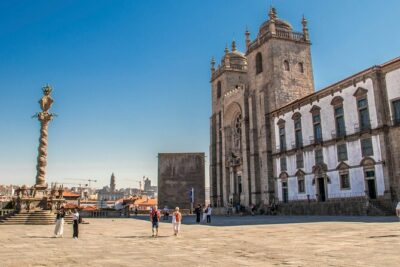 ★ 4.5Historic Porto by Private Electric Tuk Tuk to Top LandmarksFrom $42735 reviews
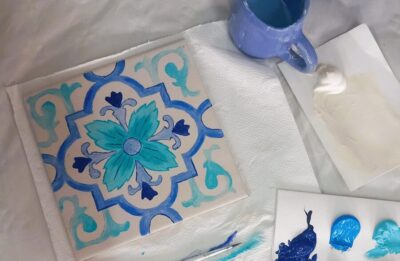 ★ 4.9Tile Painting and Cocktails in Downtown PortoFrom $41484 reviews
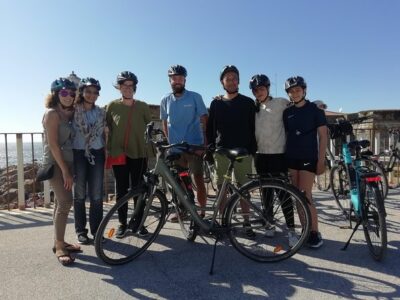 ★ 5.03-Hour Old Town & Riverside Bike Tour – Guided ExperienceFrom $47481 reviews
 ★ 5.0Pastel de Nata | Workshop from scratch | Porto’s city centerFrom $48449 reviews
Browse the lists this tour appears in