
Reviewed · PORTO CITY WALKS
Experience Porto’s Charm: 3-Hour Guided Walking Tour
Porto reveals itself on foot. This 3-hour walk strings together UNESCO World Heritage streets, big photo stops, and practical local context, from Roman leftovers to the Duoro trade that made Porto famous.
I particularly like the way you move between religion, everyday life, and the wine economy without it turning into a lecture.
The only real catch is weather and hills, so plan for some steady uphill walking and bring shoes that don’t hate cobblestones.
You’ll love two things right away: the guide style and the mix of stops. First, I like how the tour connects Porto’s Roman roots to later Moorish and Castilian pressure, then lands on what that means in the buildings you see. Second, I like the small-group feel (it caps at 15), which keeps the pacing friendly and your questions actually get answered.
If you get a standout guide like João or Diogo, you’ll feel like you’re walking with someone who’s seen Porto change.
One drawback to consider: the route includes climbs and it runs in rain. Entrance fees are not included, so you may still pay for any interiors you decide to go into on your own.
Key highlights you’ll actually feel during the walk
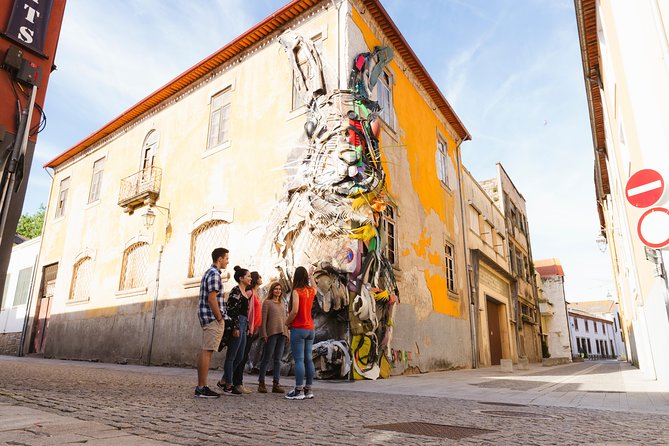
- UNESCO historic center orientation so you know where things are, fast
- Sao Bento tile panels at the railway station, a must-see without extra ticket drama
- Clerigos Tower views and Baroque details as you work your way uphill
- Cafe stop with local pricing options near the famous Majestic area
- Dom Luis I and Gaia riverfront for Duoro views and rabelo-boat context
- Ribeira Square finish gives you an easy next step for dinner plans
Porto’s UNESCO core, minus the guesswork
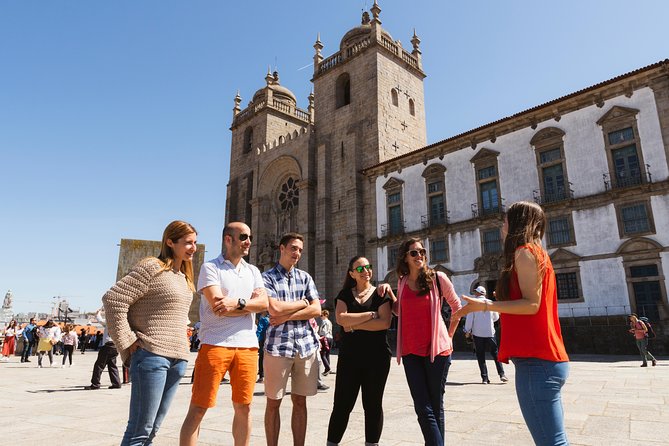
If it’s your first day in Porto, this tour works because it’s built like a walking map. You start in the historic center and end in the Ribeira area, so you leave with a mental picture of the city’s layout, not just a list of monuments.
What makes the tour feel useful is the story thread. Porto didn’t become Porto by accident. The guide frames the city as a place shaped by who controlled it over time, and that shows up in the architecture as you go.
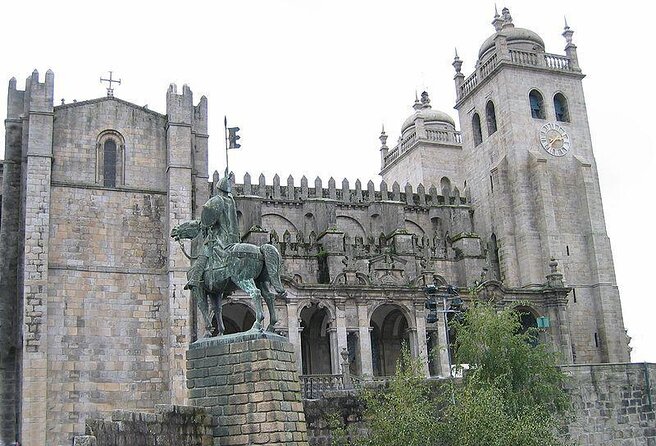
You get photo-ready stops too, including the Cathedral area and the big landmark moments like Clérigos Tower and Ponte de Dom Luis I. You’re not just standing in front of things. You’re learning what to look for while you stand there.
You can also read our reviews of more walking tours in Porto
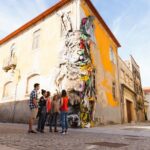

Meeting point and pacing: what 3 hours really means
You meet at R. de Alexandre Herculano 251, Porto, then the walk runs about 3 hours total. Expect a small amount of walking, plus a good bit of uphill and downhill. Even when the tour is called gentle, Porto is Porto, so plan for legs that may feel it the next day.
Group size matters here. The tour caps at 15 travelers, and many reviews point out how small groups made it feel personal. That usually means fewer bottlenecks at photo stops and more time for the guide to check that everyone is keeping up.
One more practical point: this tour operates in rain. If the sky is doing its usual Porto routine, you’ll still be outside for parts of the route. Comfortable shoes are non-negotiable, and a light rain layer helps.
Stop by stop: what you’ll see and why it matters
Entering the UNESCO center, from Roman outpost to later invasions
The walk starts by entering the UNESCO-listed historic center. This is where you get the city’s timeline in plain language, not academic terms.
You’ll hear how Porto began as a Roman outpost, later came under Moorish rule, and suffered major damage in the 19th century linked to French activity. The guide also points out older Romanesque walls, so the past feels physical instead of abstract.
Why this matters for you: when you later wander on your own, you’ll recognize patterns. Churches won’t look random. Tiles and facades won’t feel like decoration only. They’ll feel like evidence of power shifts, trade, and survival.
Porto Cathedral area: the oldest monuments vibe
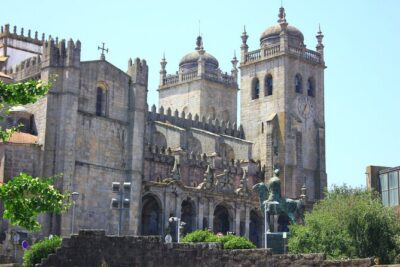
Next comes the Catedral do Porto area. The Cathedral sits right in the heart of the old city and is one of the oldest monuments in Portugal.
You’re not required to buy an entrance ticket with your tour price because entrance fees are not included. Still, even from the exterior and surrounding streets, you’ll get a sense of why this spot is central to Porto’s identity.
You can also read our reviews of more guided tours in Porto


Sao Bento Railway Station: tiles that tell stories
One of the most rewarding stops is Sao Bento Railway Station. It’s famous for its tile panels, and you’ll get context for what you’re seeing while you stand there.
This station connects lines serving the Minho and Douro Valley. It was designed by Portuguese architect José Marques da Silva and officially inaugurated on October 5, 1916. Even if you’ve only heard about Porto’s azulejos in passing, this is where the concept clicks.
Practical tip: plan a quick look, then a second slow look. Tiles reward attention.
Church and tile details as you head toward central streets
As you continue, you pass key architecture like Santa Clara Church and you look for the Moorish tile colors on building walls. The guide uses these moments to connect religion and everyday street life to Porto’s long memory.
You’re also walking by Aliados Avenue and toward Liberdade Square, where you can pause to watch how locals move through the city. That shift from big monuments to daily rhythm is a big part of the tour’s value.
King Peter IV monument: Porto’s “Liberator” connection
You also reach the monument to King Peter IV of Portugal, known as The Liberator. The guide explains why this matters to Portuguese history and even links it to the story of Brazil’s earlier leadership.
This is one of those stops where you might think, okay, statue, then you hear the backstory and suddenly you see the city’s politics in its stone.
Clerigos Tower, Lello Bookstore, and the Belle Epoque coffee break
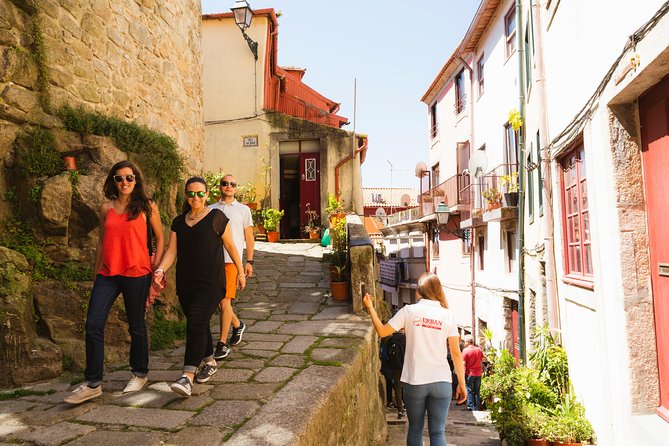
This is where Porto starts leaning into the dramatic.
Clerigos Tower: Baroque landmark energy
The Torre dos Clerigos stop is one of the defining “postcard Porto” moments. The church and tower are 18th-century Baroque works, designed by Nicolau Nasoni. Since 1910, both buildings have been part of the national monuments.
If you want a clear city-feel: the tower is a vertical exclamation point in a city shaped by hills and viewpoints. The guide points out architectural details so you don’t just see it, you understand why it looks the way it does.
Livraria Lello and the book-staircase moment
You’ll also pass Lello & Irmão Bookstore. It’s often mentioned for its beauty and for the famous staircase that people connect to the Harry Potter story, plus the fact that J.K. Rowling lived in Porto.
Important reality check: this stop is described as part of the walk, and entrance fees are not included in the tour price. So if you want to go inside, treat it as optional, based on your interests and time.
Cafe Majestic area and a smarter coffee stop
The itinerary includes a stop near Cafe Majestic. Cafe Majestic is known for its Belle Epoque look, with carved wood, mirrors, and chandeliers.
But here’s the practical bonus: there’s a cafe stop mid-route where the tour leans toward local pricing. One review specifically mentioned a much cheaper coffee-and-pastel option near Majestic, which made it feel like you were seeing the famous part of the street without being forced into famous-sticker prices.
If you’re the type who wants a break without losing too much money, this is a good inclusion.
Bolhão market: how Porto shops for dinner
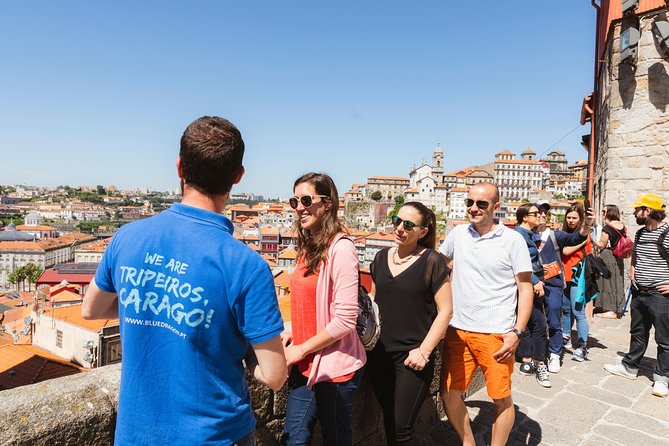
At Mercado do Bolhão, you get a window into daily food life. The market building is neoclassical and the space is organized by product areas, including fish, meat, vegetables, fruits, and flowers.
You don’t need to buy anything to get value from this stop. It helps you understand how Porto eats on a normal day. It also gives you ideas for dinner later in Ribeira, because you’ll know what kind of fresh choices the city is used to.
The Duoro crossing: Ponte de Dom Luis I and Gaia riverfront
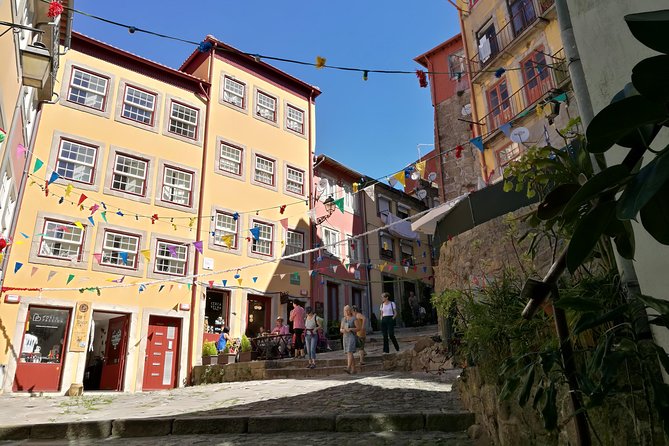
After the historic center, you move toward the Duoro.
Dom Luis I Bridge: iron, levels, and river trade
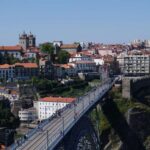
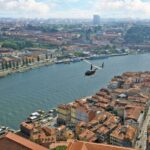
The Ponte de Dom Luis I is your big payoff view. This double-decker metal bridge links Porto and Gaia. It was built between 1881 and 1888 and is connected to the legacy of Gustave Eiffel, via one of his protégés who gave it an Eiffel touch.
Even if you don’t go up to the top level, the bridge is an instant “wow” because the river is right there. The guide also talks about how this crossing relates to the movement of goods.
Rabelo boats and what used to happen on the water
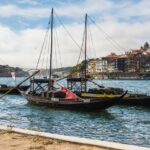
You’ll learn about rabelo boats, traditional wooden boats used to transport grapes to the cellars. That detail matters because it reframes the river. It stops being just scenery and becomes part of the supply chain that created Porto’s identity.
If you love wine tourism but hate fake-sweet stories, these types of trade details are usually more satisfying.
Cais de Gaia and port cellars: how Port is made
As you walk along Cais de Gaia, you pass cellars and hear how fortified wine, or Port, is made. You also learn the basics of how the wine industry shaped the riverfront, plus you get tips to keep exploring in the same area after the tour.
A key note: entrance fees are not included, so any cellar visits or tastings are up to you. Still, the tour gives you enough context to choose where to spend your time and money.
Finishing in Ribeira: the easiest place to keep the evening going
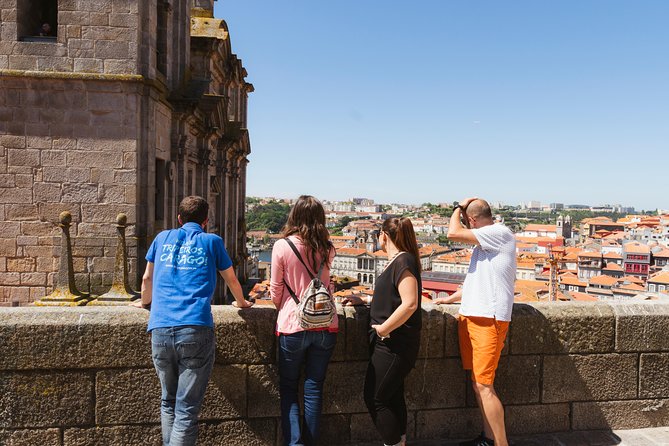
The tour ends around Ribeira Square. This neighborhood is one of the oldest in the city and it sits along the river as part of the UNESCO-listed historic area.
Ribeira is also where you’ll feel Porto shift from sightseeing mode into dinner mode. After the tour, you can pick a restaurant nearby and not waste time figuring out how to get back to the water.
Guide quality is the real variable here
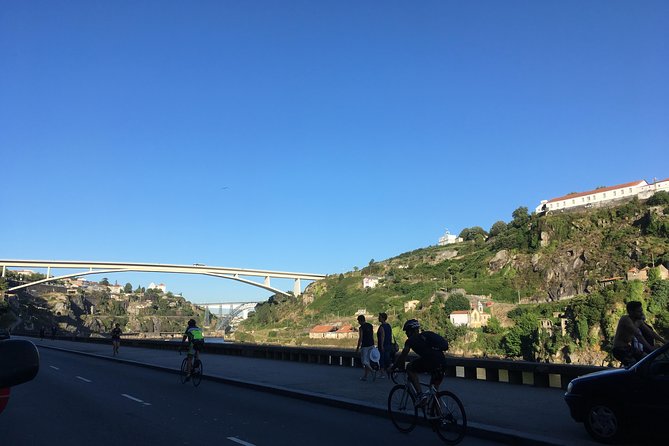
The good news: reviews strongly praise guides for clarity, energy, and storytelling. Names that come up include João, Diogo, Maria, Ana, Ramon, Igor, Fatima, and Lia. The common theme is guides who answer questions and keep the group comfortable, even when weather turns.
The reality check: at least one review complained about limited history coverage early on and English that was difficult to follow. That sounds like a mismatch, not the default, but it is a reminder that tour quality can vary with the specific guide and the day’s pacing.
My practical advice: if you are sensitive to language clarity, pick an afternoon slot and arrive a few minutes early so you can start the walk with a smooth introduction.
What you might miss if you skip longer, separate visits
This tour is excellent for orientation and highlights, but it’s not designed to replace longer visits. For example:
- You see important landmarks like Sao Bento and Clérigos Tower, but you don’t have time for deep museum-style exploration.
- Lello & Irmão is included as a pass-by highlight, not a full browsing appointment.
- The bridge and riverfront get story context, but you still need separate plans if you want a full cellar tasting experience.
In other words, use this as your Porto foundation. Then pick one or two places to return to on your own.
Price and value: what $35.07 buys you
At about $35.07 per person for a guided 3-hour walk, the value comes from three things:
- You get a live local guide with live commentary and a structured route through the key areas.
- Entrance fees are not included, which keeps the base price lower, and means you can decide what to pay for based on your interests.
- The tour cap at 15 travelers usually improves the pacing compared with big buses.
Also, you’re not just paying for stops. You’re paying for interpretation. If you enjoy history that connects to street-level details, this is the kind of tour where the guide’s storytelling changes how you experience the architecture.
Who this tour fits best
This is a great match if you want:
- a first-day overview of Porto’s UNESCO historic center
- photo stops at major landmarks like Dom Luis I and Clérigos Tower
- a practical route you can reuse later for self-guided wandering
- a guided walk that includes local texture like Bolhão market and tile-heavy interiors
It’s also a reasonable pick if you don’t want to spend your whole afternoon paying entrance fees. Many of the best moments here are visible from the streets.
If you hate hills, plan for them anyway. Porto’s terrain doesn’t negotiate.
Should you book Porto’s Charm walking tour?
Yes, if you’re doing Porto for the first time and you want a clear route with strong storytelling. This tour gives you a fast framework for understanding why Porto looks the way it does, and it helps you transition naturally into an evening in Ribeira.
Book it especially if you care about context for landmarks like Sao Bento, Clérigos Tower, and the river trade story behind Ponte de Dom Luis I.
Skip it only if you want a museum-heavy day with lots of indoor time, or if you strongly prefer tours that avoid hills and rain exposure. Otherwise, get good shoes and enjoy the walk.
FAQ
How long is the Porto walking tour?
It runs for about 3 hours.
Is the tour offered in English?
Yes. The live commentary is offered in English.
Are entrance fees included in the price?
No. Entrance fees are not included. Some stops are free to view, but the tour price does not cover entry costs.
How much walking is involved?
There is a small amount of walking, but the route includes hills and you should wear comfortable shoes.
Where does the tour start and end?
The meeting point is R. de Alexandre Herculano 251, 4000-053 Porto. The walk finishes in the Ribeira Square area.
Does the tour run in bad weather?
Yes. The tour operates in the rain, so it’s smart to check conditions and dress accordingly.
Can I cancel for a full refund?
Yes, free cancellation is available up to 24 hours in advance for a full refund.
More Walking Tours in Porto




More Tours in Porto





More Tour Reviews in Porto


Keep comparing: recently reviewed experiences around Porto








Porto City Walks, compared.
 ★ 5.0Porto Walking Tour, Lello Bookshop, River Cruise and Cable CarFrom $723,354 reviews
 ★ 4.8City Highlights 3-Hour Guided Electric Bike TourFrom $513,092 reviews
 ★ 4.83-Hour Guided City Highlights Walking TourFrom $342,050 reviews
 ★ 4.4Wine Tasting with Tapas Walking TourFrom $531,541 reviews
 ★ 4.7Historic City Center Walking TourFrom $331,172 reviews
 ★ 5.0Porto’s #1 Walking TourFrom $01,026 reviews
 ★ 4.8Delicious Food and Wine Walking TourFrom $87977 reviews
 ★ 4.8Walking Tour, Lello Bookshop, Boat and Cable CarFrom $70965 reviews
Browse the lists this tour appears in