
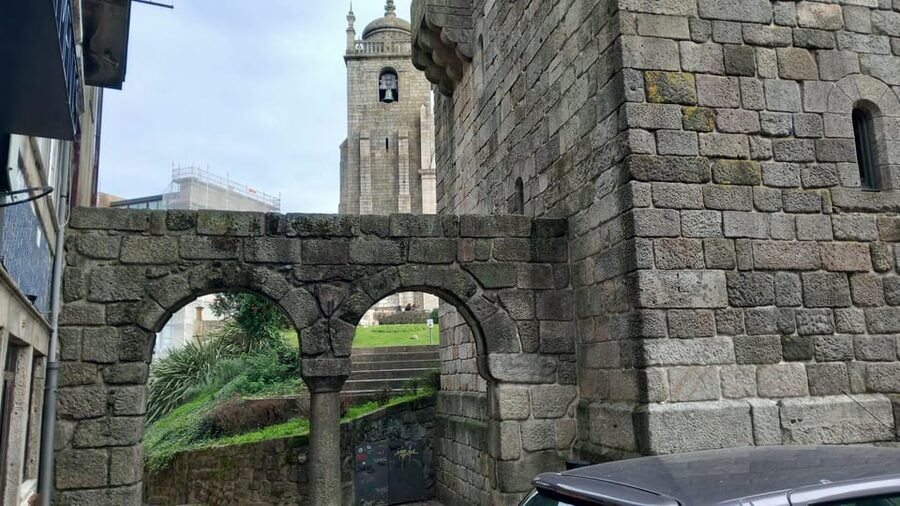
Reviewed · RIBEIRA & OLD TOWN
Porto Historic Center: Small Group Walking Tour & Cathedral
Porto’s old streets feel different when you have a plan. This small-group walking tour strings together the city’s biggest photo stops and a few deeper stories, from the legendary twin churches to tilework that explains Porto and Portugal. I especially like how the pace stays easy enough for a hilly city, and how the guide brings each stop into focus with clear context.
My other favorite part is the mix of art and viewpoint. You get the São Bento azulejos in one breath, then you climb out toward the D. Luiz Bridge and Serra do Pilar for panoramas that help the rest of your trip make sense. The one thing to consider is that this is still a 3-hour hike in a steep city, so if mobility is limited or you use a wheelchair, this is not the right fit.
Key highlights to look forward to
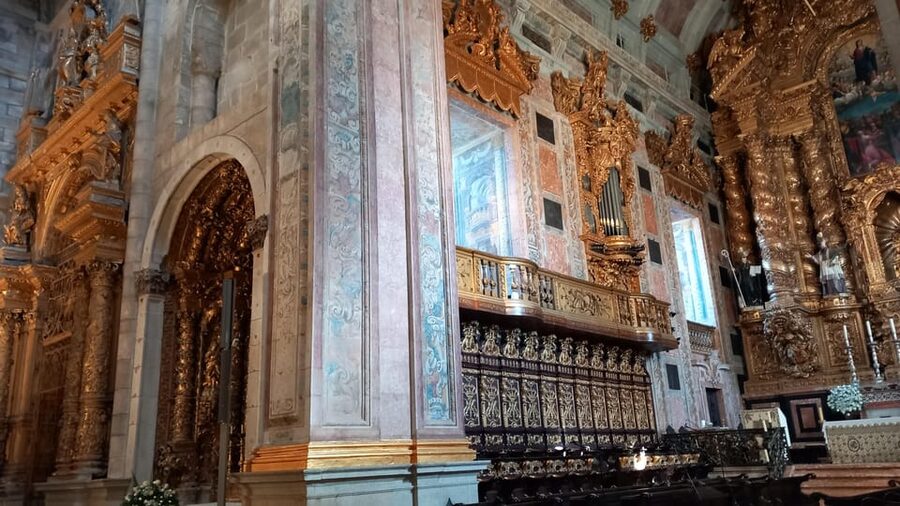
- Gilded Porto Cathedral interior, including a standout altarpiece
- São Bento Station azulejo panels that read like history
- Top-level D. Luiz Bridge walk with postcard views over the river
- Twin-church stories, including Carmo and Carmelitas
- Ribeira descent down stairways to the riverfront at Cais da Ribeira
- A guided route that links Porto’s landmarks to the Age of Discoveries
Meeting Porto at Câmara Municipal: the tour starts with bearings
The tour meets at the Câmara Municipal do Porto (Town Hall), in front of the statue of writer Almeida Garrett. This is a smart starting point because you’re in the historic core fast, before you waste time figuring out which way is up.
From the start, you’ll get quick stories that act like mental map pins. The guide covers the Carmo and Carmelitas twin churches connection early, and you’ll also spot key landmarks at a glance as you walk. That matters more than it sounds. Porto is a city of turns, hills, and sudden views, and early context helps you recognize what you’re seeing later when you explore on your own.
You can also read our reviews of more walking tours in Porto

From Livraria Lello to Clérigos Tower: Porto’s dramatic skyline lessons
You’ll pass by the famous Livraria Lello & Irmao and get a guided look that’s less about buying tickets and more about understanding why it belongs in a Porto story. Then the tour heads toward the Clérigos Tower and the Clérigos Church area.
The Clérigos Tower is impossible to ignore once you’re close. The tour frames it as part of a city rhythm: tall symbols, religious power, and how buildings compete for attention on steep streets. You’ll also have time to visit the Clérigos Church, so the stop isn’t just a look from the sidewalk.
Practical note: wear shoes with grip. Porto’s stone can be slick, and you’ll be walking steadily for the whole 3-hour loop.
São Bento Station azulejos: where history is painted in blue
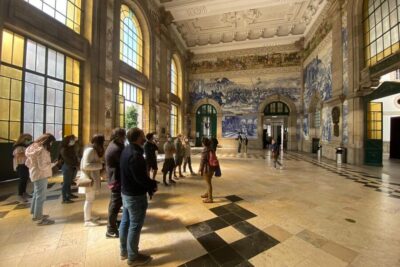
If you love visual storytelling, São Bento Train Station is a highlight you’ll remember. Instead of plain posters or quick displays, the station walls are packed with azulejos that depict scenes tied to Porto’s story and Portugal’s broader history.
This is one of those rare stops where you get a “slow look” experience without needing hours. You stand still, follow the guide’s explanation, then move on with a different understanding of what you’re seeing. It’s also a great way to break the walking rhythm before the viewpoints start.
What I like here is the payoff. Even if you don’t catch every detail, you’ll walk away feeling like you understand the visual language of Porto. And once you know what to look for, you’ll notice azulejos everywhere later.
D. Luiz Bridge and Serra do Pilar: panoramic views that help you navigate
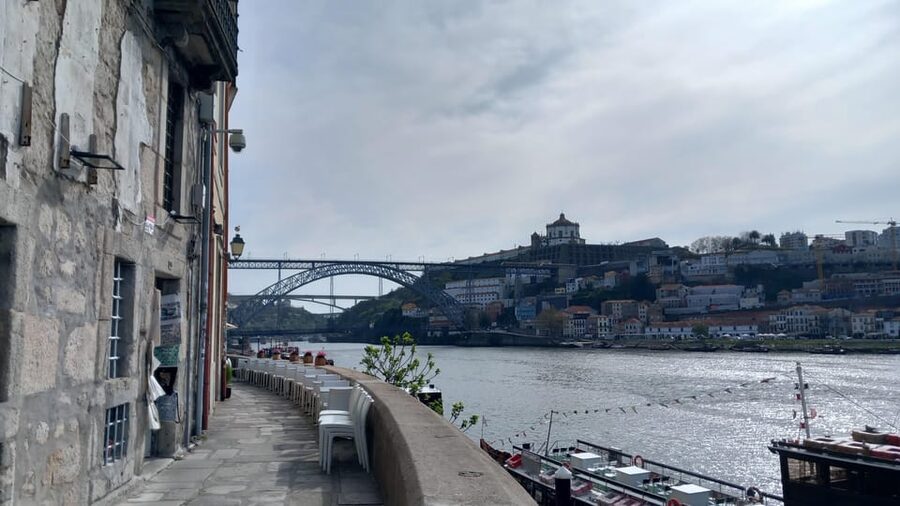
Next comes one of the best positioning moments of the tour: a scenic walk across the top level of the D. Luiz Bridge. From up there, Porto snaps into place. You can see the riverfront, the monastery area at Mosteiro da Serra do Pilar, and the city’s layout as it curves along the Douro.
The tour also points out things that help you orient on your own: the Fernandine city wall and the typical Rabelo boats you associate with the Douro. Even if you plan to wander afterward, this kind of viewpoint makes the map in your head much easier to build.
Small consideration: the bridge walk is scenic, but it still adds movement to an already active 3 hours. If you’re the type who tires fast, this is where you’ll want to keep your pace steady rather than stopping too much for photos.
Porto Cathedral: Romanesque bones and gilded woodwork
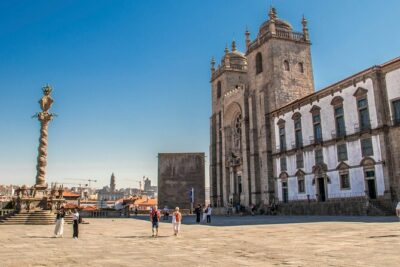
The tour visits the Porto Cathedral, a stark Romanesque church that feels grounded and serious compared to some of Porto’s more theatrical facades. Inside, the big draw is the exquisite gilded woodwork altarpiece. It’s the kind of detail that makes you stop mid-sentence, because your eyes keep finding new shapes and shine.
The cathedral stop includes entrance with skip-the-line express security, which is a genuine value add. In a busy historic center, time spent waiting steals energy from everything else. Here, you keep the momentum.
One more heads-up: the cathedral is closed on Christmas and on Easter Days, so the tour cannot operate on those dates.
You can also read our reviews of more historical tours in Porto






The Ribeira descent to Cais da Ribeira: stairways, alley corners, real Porto
After the viewpoints and major church stops, the tour shifts into the neighborhood experience. You’ll walk down into the Ribeira District, moving through medieval alleys and stairways until you reach the riverfront at Cais da Ribeira.
This is where Porto feels like Porto, not like a postcard. The buildings layered along the slope, the way streets tighten and open, and the river’s constant presence all combine into that lived-in atmosphere you’re chasing. Even if you’ve seen photos, seeing it at walking speed adds texture: sound, angles, and the way the city bends around the water.
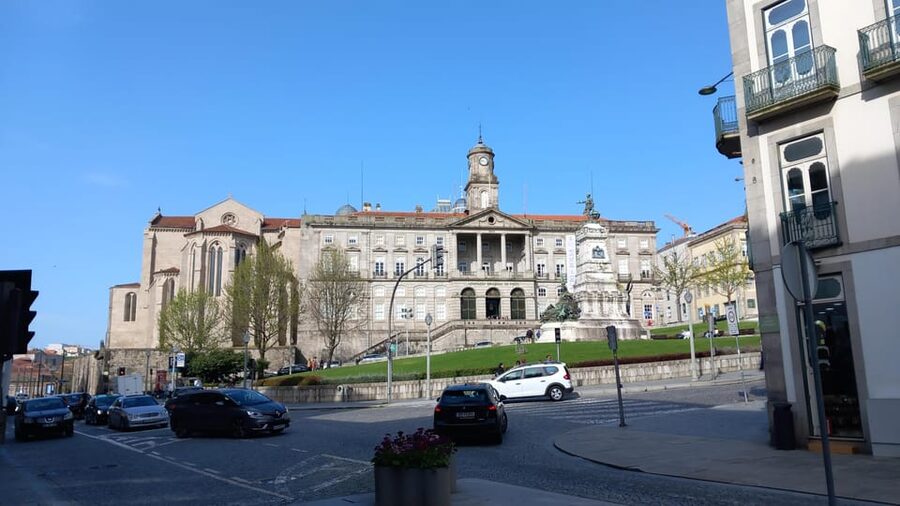
You’ll also get context as you pass notable landmarks in this riverfront approach. The route includes iconic sights such as Palácio da Bolsa and S. Francisco Church, and it passes Ferreira Borges Market at Praça do Infante D. Henrique.
Casa do Infante and the Age of Discoveries connection
A big part of what makes this tour feel more than sightseeing is how it connects Porto’s buildings to the Age of Discoveries. The guide covers the Casa do Infante, the old Royal Customs House, and explains how the site fits into Portugal’s maritime trade story.
This matters because it changes how you look at the river. Porto isn’t just pretty architecture. It’s a trading city, and a lot of its wealth and influence grew from movement, ships, and goods flowing through the port.
You don’t need a textbook for this to click. When the guide links landmark locations to the trading story, you start spotting meaning in the streets you otherwise might just walk through.
Palácio da Bolsa and S. Francisco: big-ticket feeling in a short window
Two more standout stops fit into the same half-day flow: the tour includes Palácio da Bolsa and the Monument Church of St Francis (S. Francisco Church). These aren’t quick curbside glances. You get guided time that helps you appreciate why these buildings became major symbols in Porto.
Palácio da Bolsa gives you that sense of formal power, where the city’s wealth shows in the way spaces are designed. S. Francisco offers a different mood, more dramatic and religious, with architectural character that feels intentional rather than decorative.
What to watch for on stops like these is not trying to see everything at maximum speed. In 3 hours, you’ll get more out of focusing on a few key details the guide points out, then letting the rest soak in while you walk.
Price and value: what $81 buys you in 3 hours
At $81 per person for a 3-hour small group (limited to 10 participants), you’re paying for access, guidance, and an efficient route. This is not a “stand near a monument” kind of tour. You get a local guide throughout, the cathedral entrance tickets, and time at São Bento Station plus the medieval neighborhood.
You also get that skip-the-line express security element for the cathedral. For many cities, this is the difference between a smooth experience and a day that feels chopped up.
If you’re on a tight schedule, this price makes sense because you’re combining multiple high-demand stops in one guided pass. If you’re the kind of traveler who loves free-form wandering only, you might feel like you could DIY parts of it. But for Porto’s steep layout and layered stories, the guided structure is the value.
Pacing and walking comfort: easy for Porto, not for everyone
This tour is a 3-hour hike in a steep town, so plan for steady walking and uneven slopes. The good news is that the walk is paced to keep people moving. A lot of visitors find the hills manageable when you’re not trying to race from stop to stop.
What you should bring is simple:
- Comfortable shoes
- Comfortable clothes
What you should avoid:
- Large bags or luggage
- Electric wheelchairs
- Wheelchair use, and in general mobility impairments, since the route is not designed for that
If you’re traveling with anyone who has trouble with long stair segments or steep grades, consider a different Porto option.
Who should book this Porto historic center walk
This tour is a strong match if you want:
- A guided route that makes Porto easier to navigate
- A blend of major landmarks and neighborhood feel
- Practical photo and orientation moments, like D. Luiz Bridge
- Stories that connect architecture to Porto’s wider role in Portuguese maritime history
It’s also ideal for first-timers who want a solid base before exploring the rest of the city on their own. After a walk like this, you’re better at choosing where to spend extra time later, and you’re less likely to miss the visual details that make Porto memorable.
Should you book this Porto historic center tour?
Yes, if you want a compact, high-impact way to see Porto’s top layers without turning your day into a logistics puzzle. The combination of São Bento tiles, Clérigos area, the D. Luiz Bridge viewpoint, and the Porto Cathedral is exactly the kind of route that rewards a guided small group.
Book it with confidence if you’re comfortable walking for about three hours and you want context, not just photos. Pass on it if steep streets and stairs are a concern, or if you need wheelchair-friendly access. If those conditions fit, this is a smart use of time in Porto, and it should give you a clear sense of how the city hangs together.
FAQ
Where does the tour meet?
The tour meets in front of the Câmara Municipal do Porto (Town Hall), beside the statue of Almeida Garrett.
How long is the Porto historic center walking tour?
It lasts about 3 hours.
How big is the group?
It is a small group, limited to 10 participants.
What does the tour include?
A local guide, entrance tickets to the Porto Cathedral with skip-the-line express security, and a visit to São Bento Train Station and the medieval neighborhood.
Is there a skip-the-line benefit?
Yes. The tour includes skip-the-line through express security check for the Porto Cathedral.
Is the tour suitable for people with mobility impairments or wheelchair users?
No. The tour is not suitable for mobility impairments and wheelchair users.
Which days is the Porto Cathedral closed?
The Porto Cathedral is closed on Christmas and on Easter Days, so the tour cannot run on those days.
More Walking Tours in Porto


More Tours in Porto






More Tour Reviews in Porto


Keep comparing: recently reviewed experiences around Porto








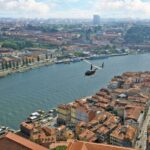

Ribeira & Old Town, compared.
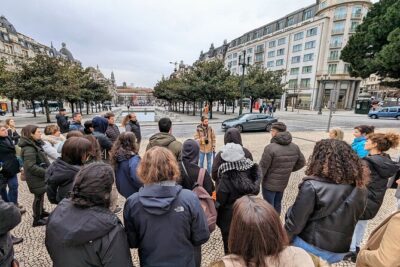 ★ 5.0The Unvanquished Tour in Porto City CenterFrom $326,497 reviews
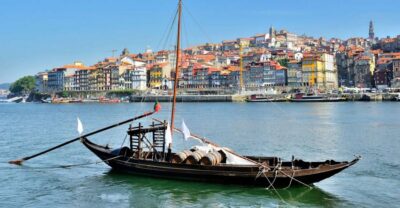 ★ 4.7Historic City Center Walking TourFrom $331,172 reviews
 ★ 4.8The highest-rated traditional fado concert (downtown)From $191,130 reviews
 ★ 4.8Historical Center Walking TourFrom $41898 reviews
 ★ 4.5Historic Porto by Private Electric Tuk Tuk to Top LandmarksFrom $42735 reviews
 ★ 4.9Tile Painting and Cocktails in Downtown PortoFrom $41484 reviews
 ★ 5.03-Hour Old Town & Riverside Bike Tour – Guided ExperienceFrom $47481 reviews
 ★ 5.0Pastel de Nata | Workshop from scratch | Porto’s city centerFrom $48449 reviews
Browse the lists this tour appears in