
Reviewed · RIBEIRA & OLD TOWN
Porto: 3-Hour Downtown Walking Tour
Porto can feel like two cities at once, old stone and new energy. This 3-hour private downtown walking tour helps you connect the dots fast, with a local guide pointing out the big sights and the smaller details, plus a café pause where you can taste Portuguese pastries. I especially like how Ribeira comes through in smell and color, not just on a postcard.
You also get a proper hit of Porto icons, including Clérigos Church and Tower, which makes a great starting point for understanding the city’s layers. One drawback to plan around: this is a walking tour, so it may not feel great if your fitness is low or if you use a wheelchair or have mobility limits.
Key things I’d book this tour for
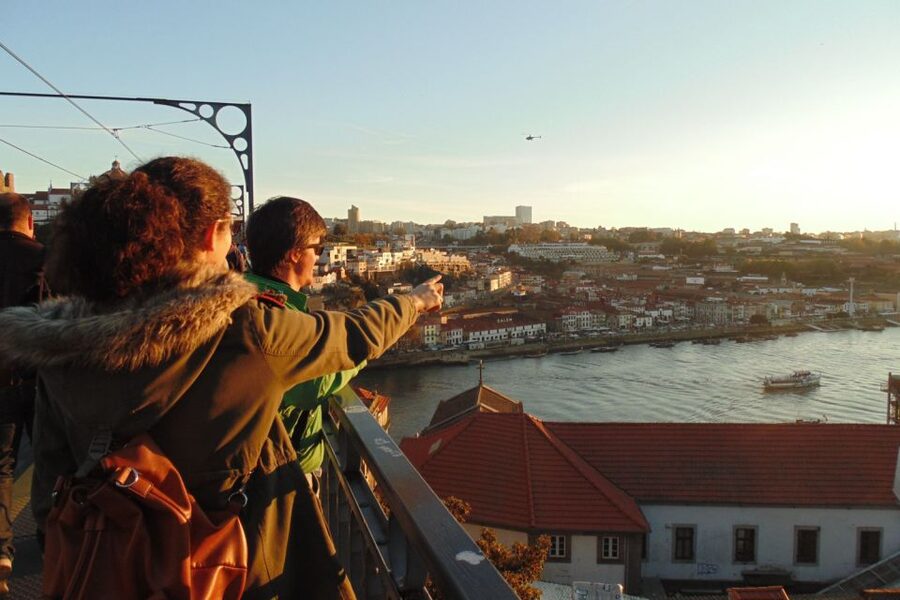
- A private local guide who answers questions with clarity and humor, not a one-size speech
- Clérigos Church and Tower plus the story of Nicolau Nasoni’s 17th-century design
- Aliados Avenue, Porto’s main “living room” street, explained as a social and architectural axis
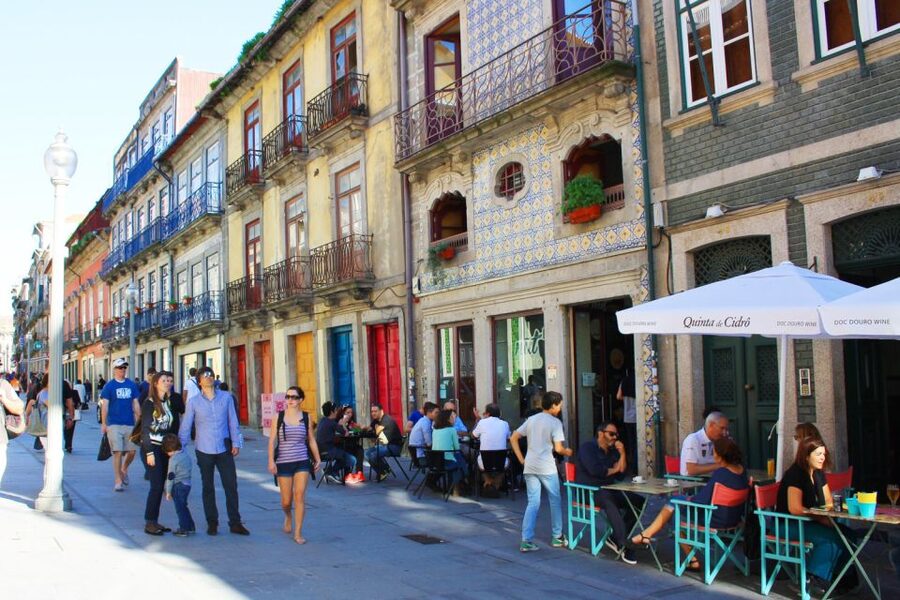
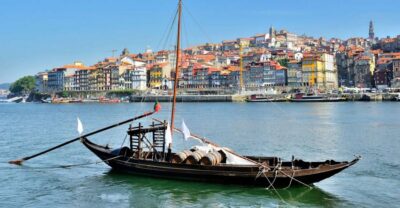
- Ribeira area atmosphere, where you get the aromas and the color of the historic riverfront
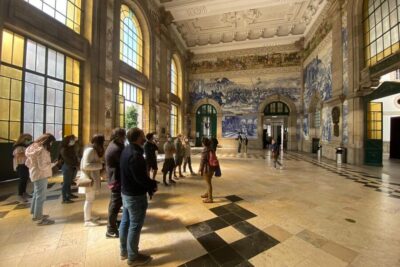
- São Bento train station tiles, a can’t-miss stop even if you are not riding a train
- Coffee and Portuguese pastries included during the walk, so you get a real break instead of rushing
Starting at Clérigos Tower, the easiest way to orient yourself
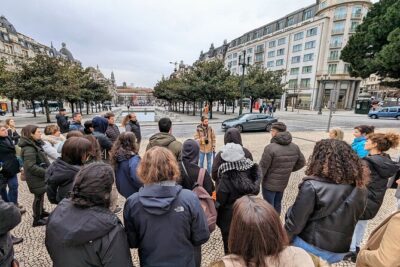
The tour begins at the staircase in front of Clérigos Tower, near Cordoaria garden. That location is smart because you start with one of Porto’s most recognizable landmarks, then you gradually work your way into the neighborhoods and streets that built the city’s identity.
Right away, you can expect the guide to frame what you are seeing. This matters because Porto’s center can feel confusing if you only rely on street names and map lines. With a local guide steering the route, you are not just looking at buildings, you are learning why they were built where they are, and what changed over time.
Since the reviews highlight guides who tailor the pace, it is also a good idea if your group includes different ages or walking comfort levels. In at least one case, the guide adjusted well for a wide age range, keeping it interesting for everyone.
You can also read our reviews of more walking tours in Porto


Clérigos Church and Tower: the 1600s signature you will remember
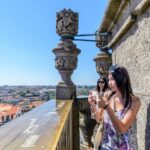
A huge part of why I like this tour is that it does not treat famous sights like mere checkboxes. At Clérigos Church and Tower, you get the full context: the church and tower are considered Porto’s ex libris, designed by Nicolau Nasoni in the 17th century.
What this means for you on the ground is simple: this stop turns into a reference point for the rest of your walk. When you see other churches, viewpoints, or even parts of the skyline later, you start noticing how the city’s architecture and ambitions evolved. The guide also helps connect the dots between “then” and “now,” so the tour feels like a story rather than a list.
Practical note: it is a walking tour, so you will want comfortable shoes from the first minute. The area around major landmarks can include uneven pavement and short climbs, and you do not want your feet to turn it into a chore.
Aliados Avenue, Porto’s living room street with a purpose
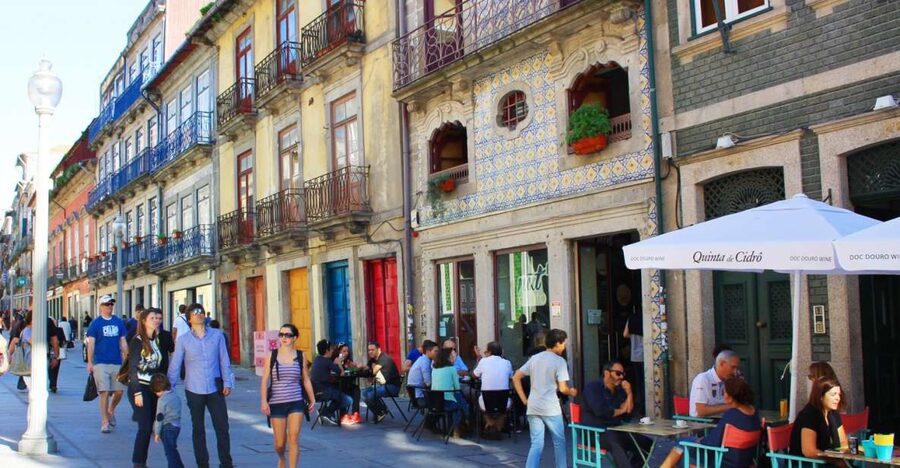
Next up is Aliados Avenue, described as Porto’s most important street and the city’s living room. This is the kind of statement a guide should earn, and here it actually makes sense once you are standing on the street.
Aliados is more than a straight line of buildings. It is where Porto’s civic life shows up in architecture and scale, and it often works like the city’s stage for everyday movement. A good guide will point out what to notice: building facades, the street’s role as a hub, and the way the city organizes itself around this axis.
Why it is worth time: if you only visit viewpoints and museums, you can miss how Porto functions day to day. Aliados Avenue gives you that “how people use the city” perspective, which makes the rest of your trip easier to navigate. After this, you are more likely to understand where to go next on your own, because you have a mental map of the city’s main flow.
Ribeira area: where the city’s colors come through
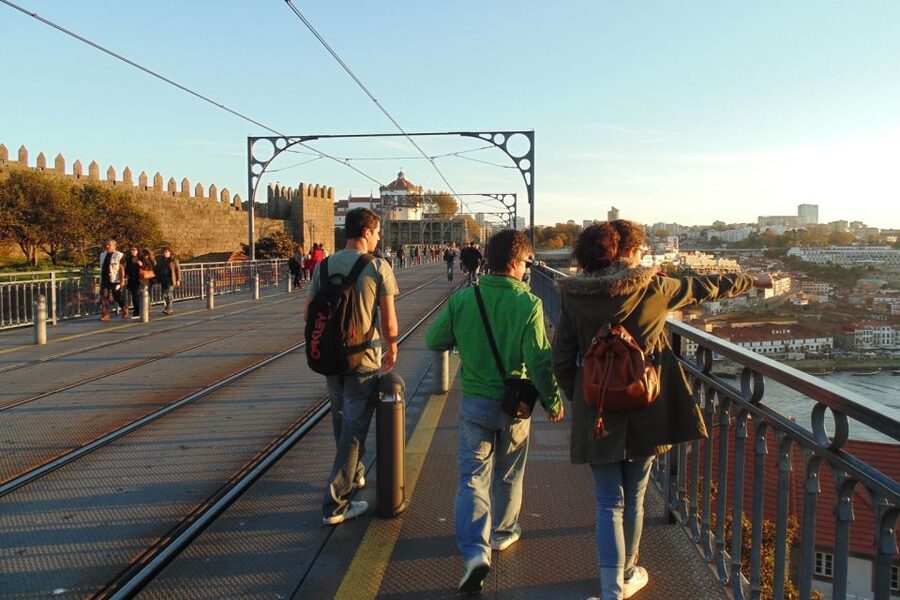
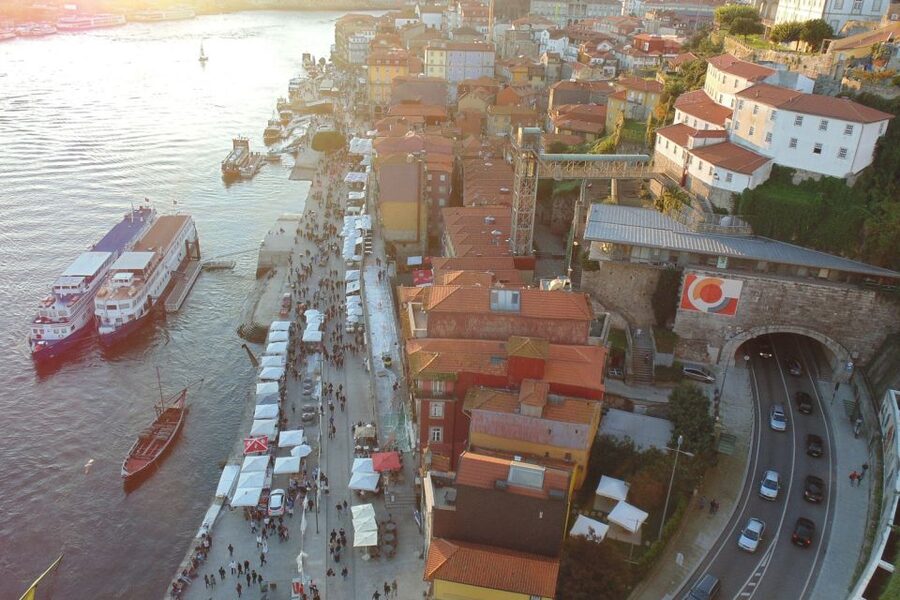
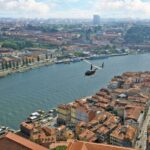
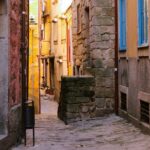
Then the tour leans into the sensory side of Porto, with the Ribeira area. You are encouraged to lose yourself in the aromas and colors there, which is exactly the kind of guidance that helps you experience a place beyond photos.
Ribeira is closely tied to the river and the historic center’s relationship with trade and daily life. The guide’s job is to make that connection feel real. Instead of only describing what the neighborhood looks like, you learn how the city center started and how it has changed over time.
A practical way to enjoy this segment: slow down when the guide talks, but also take a few quiet moments after. Look back toward the river, notice the way buildings frame the street, and pay attention to how the area feels at walking speed. That is where Ribeira stops being just a scenic district and starts becoming Porto.
Shopping streets and the coffee stop for Portuguese pastries
Porto also shows up in its everyday modern side, and the tour includes a shopping area where you can find some of the city’s more hyped stores. This section is not about turning your trip into a mall run. It is about understanding how Porto’s center blends commerce, architecture, and local routines in one walking radius.
Soon after, you get a coffee and pastry break in one of the many coffee shops in the area. This is a smart inclusion because it keeps the tour from turning into nonstop sightseeing. Also, it gives you a low-stress way to try Portuguese pastries without having to plan a separate stop.
About meals: the tour notes that meals are not included, so do not expect a full lunch built into the price. But you should expect the tour’s planned coffee and pastry moment, and that is often enough to keep energy up for the rest of your walking and exploring.
If you have dietary restrictions, you might want to plan ahead and ask what options are available at the coffee stop. The tour does not list specific pastry types, so the easiest approach is to request options directly when you get there.
More Porto river cruises, city walks, and northern Portugal day trips to compare




São Bento station tiles: the one stop you can’t skip
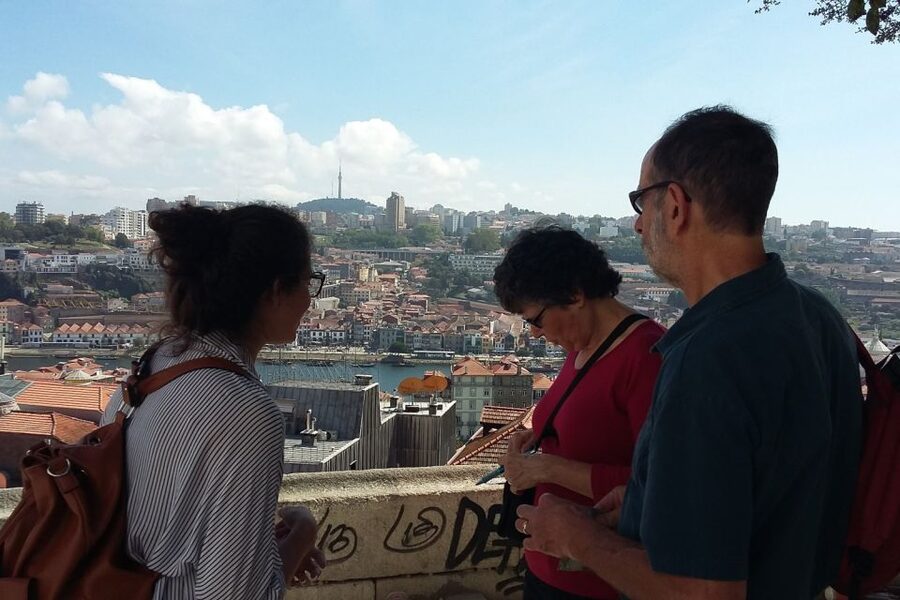
One of the most memorable parts of the walk is the visit to one of the most beautiful train stations in the world, São Bento station. Even if you are not traveling by train, this is a rare case where a transit hub becomes the highlight.
The reason is straightforward: the tiled artwork is the visual hook that turns a normal station into a cultural stop. A guide helps you look, not just pass through. Instead of scanning the walls quickly, you learn where to focus and how to make sense of what you are seeing from a storytelling angle.
Why it fits this tour: São Bento sits at the intersection of Porto’s “here and now” movement and its deeper cultural identity. You can feel Porto’s rhythm in the station area, then you get that strong artistic payoff in the tiles. It is also a helpful waypoint for the rest of your day, because once you have seen São Bento, you tend to understand this part of town much better.
Price and value: what $58 buys you in real terms
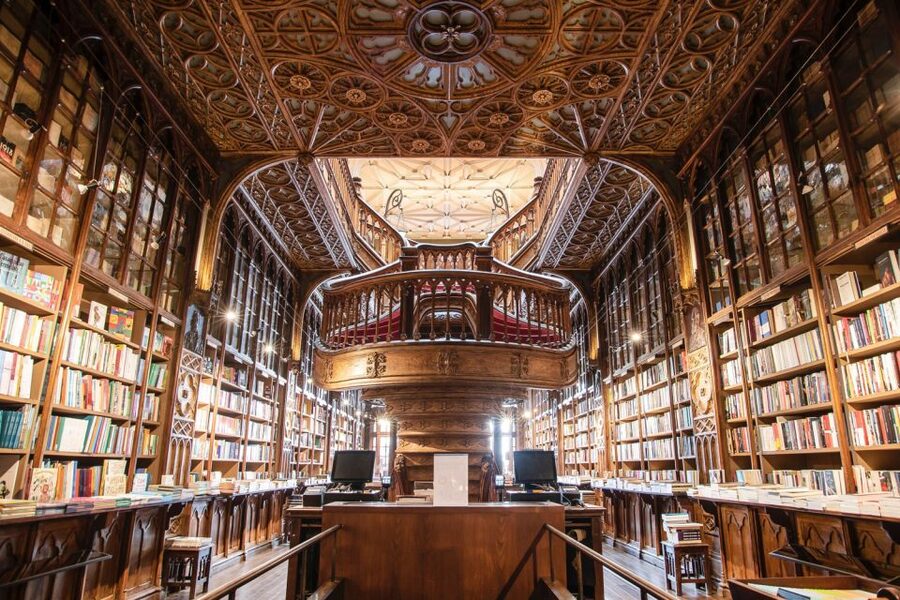
At $58 per person for a 3-hour private walking tour, the value comes down to what is included and how you use your time.
Here is what you are really paying for:
- A live guided experience in English or Portuguese (and the tour information also notes Spanish as an available option)
- A route that hits multiple big icons, not just one neighborhood
- A coffee stop with Portuguese pastries included
- A local guide approach designed to explain history and architecture in a way that fits your group’s pace
This kind of tour tends to be worth it when you want efficiency. Porto’s center is walkable, but it is also layered. Without context, it is easy to miss why a street matters or why a building is famous. With a guide, you get the “why” while you are already doing the walking.
Is it the best deal if you are a hardcore budget traveler who likes reading at your own speed? Maybe not. But if you want a guide to help you connect places quickly, this price is easier to justify. You are basically buying time saved, better orientation, and a structured day that still leaves you free after the 3 hours to explore on your own.
Who this 3-hour walk suits best, and who should skip it
This tour is best for people who want a strong introduction to Porto’s center and like learning while they walk. The stops are well matched to a first visit, especially if you want Clérigos, Aliados Avenue, Ribeira atmosphere, and São Bento tiles in one route.
It is also a good fit if you enjoy asking questions. One of the review takeaways is how guides respond in detail and with humor, which turns the tour from a lecture into a conversation. You’ll also likely appreciate the fact that the guide can adapt to different walking tempos.
Skip it if any of the following apply:
- You have mobility impairments
- You use a wheelchair
- You have low fitness and the idea of 3 hours of walking feels uncomfortable
Even if you are generally active, plan for comfortable shoes and real walking time. This is not a sit-down tour with frequent breaks.
Should you book this Porto downtown walking tour?
If you want a guided starter pack for Porto, I think this is a strong choice. You get the city icons that matter, plus the kind of commentary that helps them click into place in your mind. The coffee and Portuguese pastries stop is also a practical win, because it gives you a real reset without needing to plan anything extra.
I would only hesitate if you already know Porto well and prefer to explore entirely on your own with a map and guidebook. In that case, you might recreate the route yourself and skip the guide cost.
But for most first-time visitors, and for anyone who likes both major landmarks and local atmosphere, this is the kind of tour that makes the rest of your trip easier. You finish with a stronger feel for where you are, what to see next, and how Porto’s center developed.
FAQ
How long is the Porto downtown walking tour?
The duration is 3 hours.
Where does the tour meet?
It meets in the staircase in front of Clérigos Tower, near Cordoaria garden.
What is the price?
The price is $58 per person.
Is the tour private?
Yes, it is listed as a private group.
What languages are offered?
The tour is available in English and Portuguese, and it is also noted that visits can be in English, Spanish, or Portuguese depending on the option.
Is a guide included?
Yes. The experience includes a live tour guide.
What is included in the tour?
It includes the guided tour and a visit in the selected language.
Are meals included?
Meals are not included, but the highlights mention a coffee stop and Portuguese pastries during the tour.
What should I bring?
You should bring comfortable shoes, since walking is involved.
Is the tour suitable for wheelchair users?
No. It is not suitable for people with mobility impairments or wheelchair users, and it is also noted to be for those with a higher fitness level.
Can I cancel or pay later?
Free cancellation is available up to 24 hours in advance for a full refund, and there is an option to reserve now and pay later.
More Walking Tours in Porto



More Tours in Porto






More Tour Reviews in Porto


Keep comparing: recently reviewed experiences around Porto










Ribeira & Old Town, compared.
 ★ 5.0The Unvanquished Tour in Porto City CenterFrom $326,497 reviews
 ★ 4.7Historic City Center Walking TourFrom $331,172 reviews
 ★ 4.8The highest-rated traditional fado concert (downtown)From $191,130 reviews
 ★ 4.8Historical Center Walking TourFrom $41898 reviews
 ★ 4.5Historic Porto by Private Electric Tuk Tuk to Top LandmarksFrom $42735 reviews
 ★ 4.9Tile Painting and Cocktails in Downtown PortoFrom $41484 reviews
 ★ 5.03-Hour Old Town & Riverside Bike Tour – Guided ExperienceFrom $47481 reviews
 ★ 5.0Pastel de Nata | Workshop from scratch | Porto’s city centerFrom $48449 reviews
Browse the lists this tour appears in