

Reviewed · RIBEIRA & OLD TOWN
Guimarães: Flexible Walking Tour in Historic Center
Guimarães feels like a time machine. This self-guided loop gives you the medieval sights of the UNESCO center with Walkbox audio in multiple languages, timed to landmarks as you walk. I especially like the way you get clear stories at 40+ points of interest, and I also like the practical map-style guidance that keeps you moving without stopping to hunt. One watch-out is that there is no live guide, so you need a charged smartphone and you should be comfortable following audio instructions on the move.
The value is strong for what you get. For $8 per person, you’re basically paying for an easy route, offline narration, and a curator who can help remotely. Still, it is not built for mobility issues, and if you want a person to answer every question on the spot, this won’t be your style.
Key Things That Make This Guimarães Walk Worth Your Time
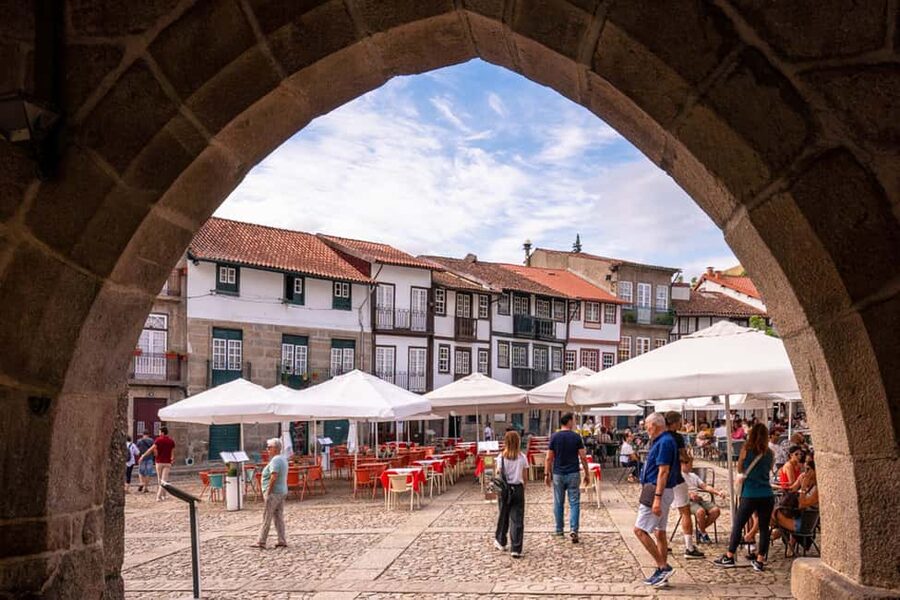
- Offline, multi-language audio: English, Portuguese, French, and Spanish, designed to work without data.
- True own-pace flexibility: do the full loop or take sections over 5 days after booking.
- A loop that links the best medieval hits: castle, palace, church squares, then the walls walkway.
- Easy route length for a slow wander: about 3.5 km, usually 3 to 4 hours depending on stops.
- Remote support instead of a live guide: curator help by WhatsApp or SMS, plus emergency phone support.
- Built for phone-based navigation: book for the number of smartphones you will use.
A Self-Guided Walk That Actually Lets You Think (and Stop)
Guimarães is one of those Portuguese cities where the old center rewards slow walking. The layout helps too, with a natural path that connects major stops, then brings you back around. This tour leans into that reality by using audio that plays as you go, so you do not have to stop every few minutes to read.
I like the own-pace aspect because your timing is yours. If you want photos at the castle, you take them. If you want to sit in a square for 10 minutes, you can. The route is designed as a loop, so you are not stuck crossing the city twice.
The other thing I really like is that it is practical. You get a curated path with clear instructions, and the app is supposed to function offline, which matters in smaller streets where signal can be spotty. You also get remote support from a curator, so you are not totally on your own if something goes sideways.
Compare more reviewed experiences around Guimaraes before fixing the rest of your day.


Getting Started at Campo de São Mamede, Behind the Castle
You begin at Campo de São Mamede car park, behind the Castle of Guimarães. The start point matters because it places you right at the top, so the rest of the walk flows down through the medieval center and then back again along the walls.
From the parking area, your first task is simple: let the castle area set the mood. You will explore Guimarães Castle and then make your way toward the church complex tied to the fortress world. As you walk, the audio helps you connect what you are seeing to why the area mattered.
A quick practical tip: wear comfortable shoes. The route is described as easy to follow, but you will still be on old stone streets and uneven footpaths. Bring a charged smartphone, since the tour is built around app audio and navigation.
The Castle World to Duques de Bragança Palace
After you settle in near the castle grounds, the tour steers you to the Duques de Bragança Palace, the big statement of ducal power in the area. This is one of those stops where it helps to understand that Guimarães is not just pretty. It is political history in stone.
I like how this section works because it gives you a high-to-low feeling. You start with the fortress presence, then you move into the city’s medieval fabric. If you enjoy looking at architecture without feeling rushed, this opening section is a good match for you.
You are also connected to church sights near the castle, including the Church of São Miguel do Castelo. That pairing, castle plus church, is a common medieval pattern, and having it called out by the audio makes the whole area click faster.
Santa Maria Street and Santiago Square, Old Town Hall Arcades
Once you leave the castle area behind, you follow the medieval streets toward Santiago Square. This is where the walking starts to feel like a story you can physically follow. Street names and squares become wayfinding, not just labels.
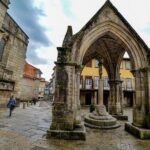
Next come the Old Town Hall arcades, a detail many people miss if they are zooming through. Arcades are practical spaces, built for movement and shade, and in older towns they often serve as a social and civic spine. Seeing them up close gives you a better sense of how people moved through daily life, not just ceremonial events.
From here, you continue onward toward the squares that anchor the old center’s rhythm. The audio is useful here because it helps you connect what you see, like monuments and church settings, to the broader significance of Guimarães.
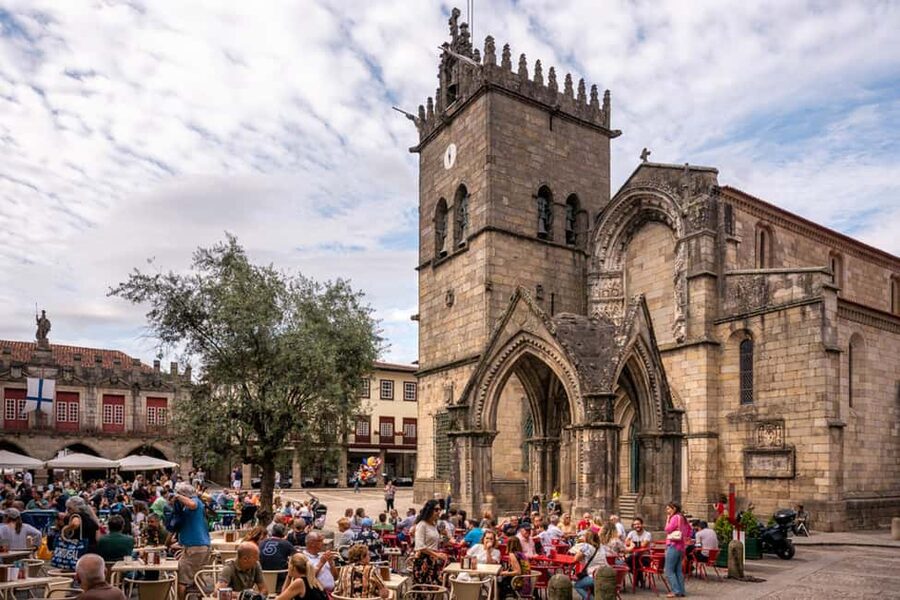
Oliveira Square and the Collegiate Church of Our Lady of Oliveira
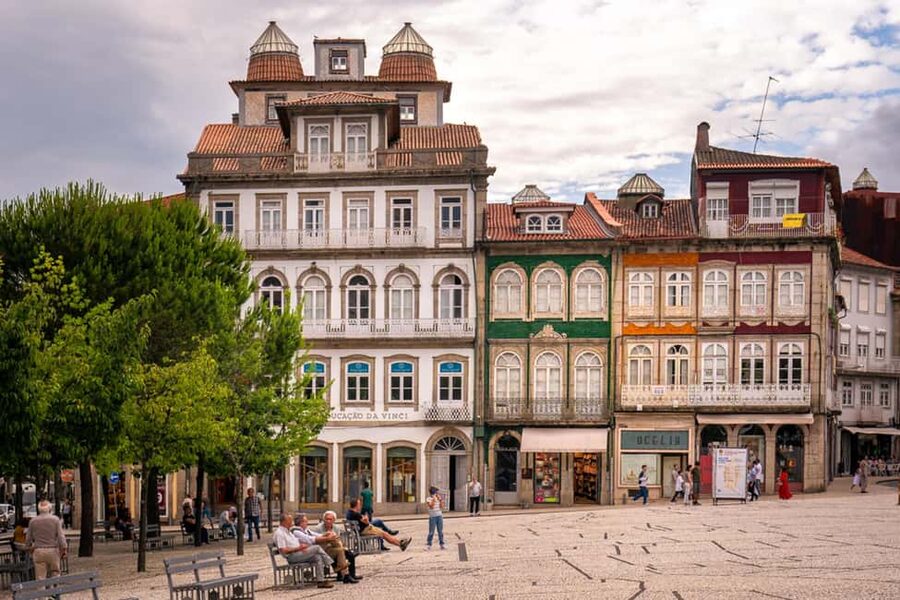
Oliveira Square is one of the tour’s key transitions because it leads you to the Collegiate Church of Our Lady of Oliveira and nearby landmarks. This is also where you start getting those UNESCO-center details that make Guimarães feel distinct from other Portuguese towns.
If you like stepping into places where religion, civic life, and local identity overlap, this stop is worth your time. The collegiate setting is impressive, and the square gives you a natural pause point to slow down.
The tour also takes in the Salado Monument, which helps explain why particular medieval events mattered here. Even if you skip reading every plaque, the audio context helps you make sense of what you are seeing.
You can also read our reviews of more historical tours in Guimaraes

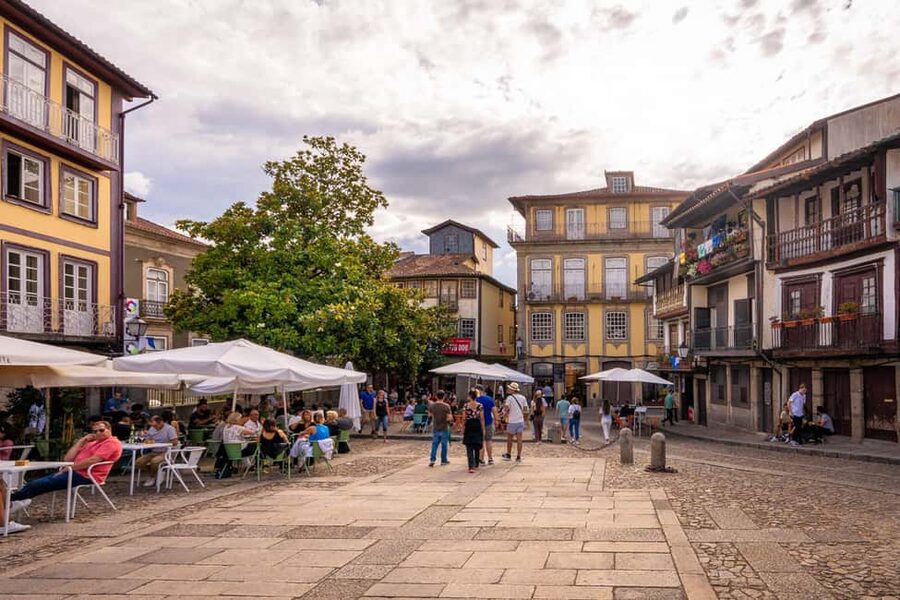
Toural Square, Market Life, and the Streets Between Churches
From Oliveira Square, you head to Toural Square. The tour frames it as a place with deep roots as a market area, and that changes how you look at it. Instead of thinking of it as only a pretty square, you can picture trade and daily movement happening there over centuries.
Then you walk through side streets with historic church and convent settings, including areas around Dom João II, Doutor Bento Cardoso, and Camões. This part is great for people who like wandering without getting lost, because the app keeps you oriented while still letting you stop for details.
One caution: because you are navigating by phone, keep an eye on screen brightness and battery. In sunny Portugal, battery drains faster when you constantly check directions.
Dom João II and Beyond: São Francisco Complex and the Medieval Leather Tanks

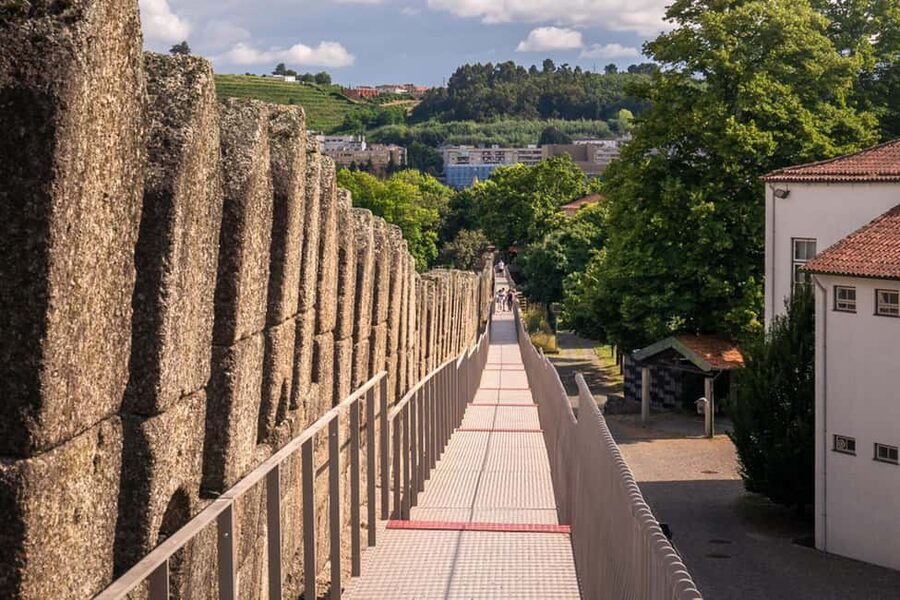
As the route continues, you reach the medieval leather-tank area and the São Francisco complex. This is a satisfying shift because it moves the story away from only castles and churches. It shows economic life, craft work, and the kind of industries that built towns like Guimarães.
If you enjoy industrial-era leftovers in medieval form, you will probably find yourself slowing down here. The mention of leather tanks is the kind of detail that makes a city feel lived-in rather than staged.
The São Francisco complex is the big visual anchor, and the audio helps you connect why religious architecture often expanded alongside practical city life. It is a nice reminder that medieval cities were not only ceremonial. They were working places.
Church of Our Lady of Consolation and Holy Steps at the End of the Route
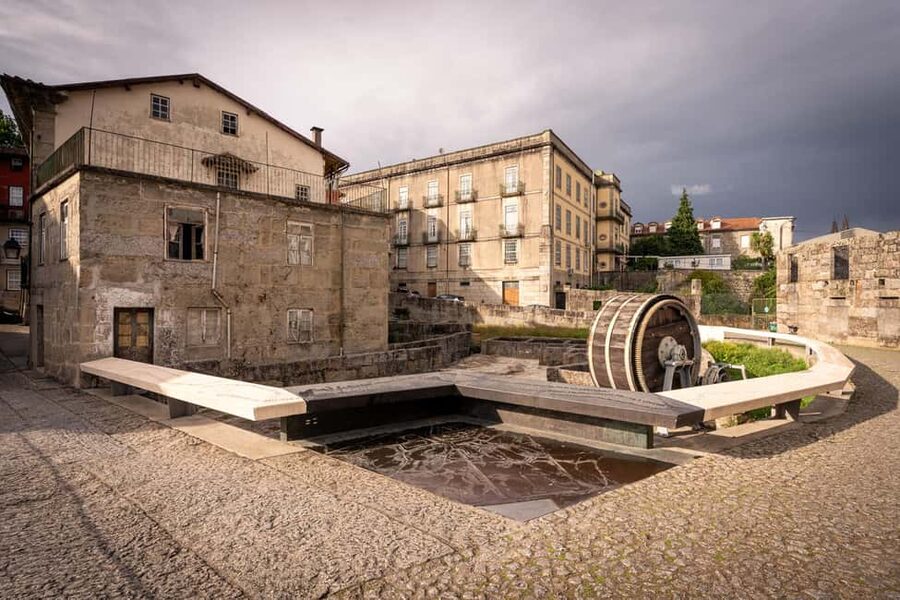
The tour’s finishing zone moves into calm, greener space. You walk through the Alameda Public Garden toward the Campo da Feira Garden, where the Church of Our Lady of Consolation sits. This is also where the Holy Steps come into the experience.
I like that the end of the walk gives you variety. After castle views and tighter medieval streets, you get breathing room in the garden setting, which makes the final church moment feel more reflective. It also helps if you walked a bit faster earlier and want a gentler landing.
If you are a photo person, this is a good area for that. Gardens plus church architecture give you angles and lighting options without needing to climb or sprint.
Walking the Footpath on the Walls, Then Looping Back
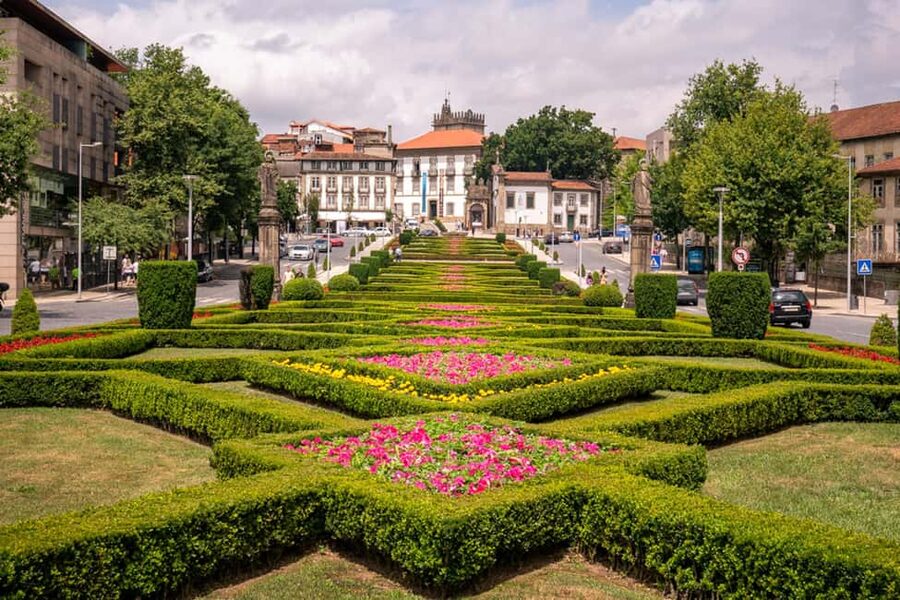
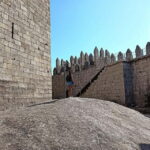
One of the headline moments is the Footpath on the Walls of Guimarães, connected to the pedestrian route along the walls. This is your best payoff view segment, because walls do two things: they protect, and they frame the town.
After the church and garden approach, the wall walk helps you see the “shape” of Guimarães. You can connect the earlier stops into one mental map, which makes the whole self-guided tour feel like a coherent loop rather than a list of points.
When you reach the end, you return toward the start area, and that loop structure is a real benefit. You do not have to figure out public transport just to “undo” your route.
Price, Time, and Why This Is Good Value
At $8 per person for a 3 to 4 hour experience, this is one of the better value categories in the self-guided world. You are not paying for a live guide, and that is exactly why the price stays low. Instead, your costs cover the app-based narration, the planned walking path, and the curator’s remote help.
The time length is also realistic. At roughly 3.5 km, you can take it at a comfortable strolling pace without feeling like you are speedwalking for a schedule. The tour says easy to follow, which matters, because one of the biggest problems with self-guided city walks is confusion mid-route. Here, the route planning is the selling point.
Where it gets even better is flexibility. You can do the loop in full or in parts within 5 days, so it stops being a stressful “booked time slot” activity. If you arrive in Guimarães and the day shifts, you are not forced into a tight plan.
Practical Tips So Your Phone Walk Goes Smoothly
A self-guided walk succeeds or fails on simple details. Here are the ones that matter most for this specific tour:
- Bring comfy shoes. Some paths and streets are not flat.
- Keep your phone charged. You need it for audio and navigation.
- Book for the number of smartphones you will use. This is important if you have multiple people and want each person listening on their own device.
- Know it is not for mobility impairments. If you use a wheelchair or have limited walking tolerance, this may not work for you.
Also, plan to use support if you need it. You can reach the curator by WhatsApp or SMS between 8:00 AM and 8:00 PM, and there is emergency phone assistance if required. That safety net makes self-guiding feel less risky.
Who This Tour Fits Best
This walking experience fits you well if you like to wander at a human pace. It is also a strong option for couples, solo travelers, and small groups who want to talk while walking, not wait for a group leader’s cadence.
You’ll likely enjoy it most if you:
- want an English-friendly tour option plus other languages if needed
- like learning from audio stories timed to what you see
- prefer flexibility over scheduled departures
- are comfortable reading a phone screen on the move
It is less ideal if you want a person to manage questions, crowd flow, or real-time adjustments. Because there is no live guide, you are steering the day.
Should You Book This Guimarães Flexible Walking Tour?
I think you should book this if you want a low-cost, high-coverage way to understand Guimarães’ medieval layout without racing. The Castle of Guimarães, Duques de Bragança Palace, Oliveira Square, Toural Square, São Francisco, and the end at the Church of Our Lady of Consolation and Holy Steps give you a full “medieval core” picture.
The biggest reason to choose it is the format. You can do the route when it fits you, in full or in pieces, and you have offline audio plus remote support. If that matches your travel style, it is a very solid deal.
FAQ
How long is the Guimarães historic center walk?
It takes about 3 to 4 hours, depending on your pace and which stops you enjoy, with a route length of around 3.5 km.
Is this tour truly self-guided or is there a live guide?
It is self-guided using the Walkbox app, with remote support from a tour curator available before and during your experience if you need it.
Does it work offline?
Yes. The Walkbox guide is designed to work offline.
What languages are available?
The tour content is provided in English, Portuguese, French, and Spanish.
Where does the tour start and end?
It starts and ends at the Campo de São Mamede car park, behind the Castle of Guimarães.
Can I do the tour in parts or only on one day?
You can do the tour in full or in parts, and you have 5 days from your booking date to complete it.
Are tickets included for paid attractions?
Tickets to paid attractions are not included.
Do I need to book for each person in my group?
You should book based on the number of smartphones that will be used, not just the number of participants.
Is the tour suitable for people with mobility impairments?
The tour is not suitable for people with mobility impairments.
More Tours in Guimaraes
More Tour Reviews in Guimaraes
Keep comparing: recently reviewed experiences around Guimaraes




Ribeira & Old Town, compared.
 ★ 5.0The Unvanquished Tour in Porto City CenterFrom $326,497 reviews
 ★ 4.7Historic City Center Walking TourFrom $331,172 reviews
 ★ 4.8The highest-rated traditional fado concert (downtown)From $191,130 reviews
 ★ 4.8Historical Center Walking TourFrom $41898 reviews
 ★ 4.5Historic Porto by Private Electric Tuk Tuk to Top LandmarksFrom $42735 reviews
 ★ 4.9Tile Painting and Cocktails in Downtown PortoFrom $41484 reviews
 ★ 5.03-Hour Old Town & Riverside Bike Tour – Guided ExperienceFrom $47481 reviews
 ★ 5.0Pastel de Nata | Workshop from scratch | Porto’s city centerFrom $48449 reviews
Browse the lists this tour appears in