
Reviewed · PORTO CITY WALKS
Walking Tour – History of Tiles in Porto
Porto tiles tell stories once you look closely. This 2 hour 45 minute walk through Porto’s UNESCO historic center teaches you how azulejos were made and why they show up everywhere. I loved the way the guide pointed out details you would otherwise miss, plus the big wow of São Bento Railway Station and its dramatic mosaic panels. One thing to plan for: the tour finishes back in the center near São Bento, so have your next stop or transport ready.
You start near the Igreja do Carmo area, at the Fonte dos Leões outside the church, then keep rolling through key tiled landmarks with time built in to look slowly. It’s offered in English, capped at 10 people, and the vibe is relaxed but focused. If you like art and street level details, this is a great first-day kind of tour, and guides such as Susana or Nuno are the kind of hosts you may meet on the route.
Key things you will notice
- Fonte dos Leões and Igreja do Carmo at the start, setting the tone with facade tile clues
- São Bento station mosaics tied to Jorge Colaço, with battles and historical scenes
- How tile techniques changed over time, so you can spot differences quickly
- Churches, shops, and house facades where tiles are part of daily city life
- A small-group route that keeps the focus on what you see, not just where you walk
Why Porto’s Tiles Feel Like a Secret Language
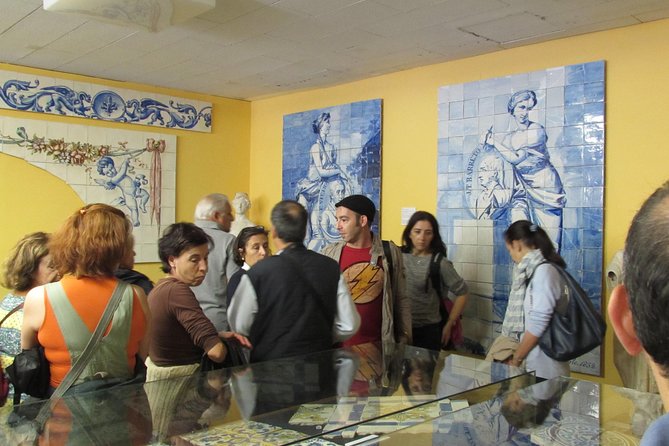
If you’ve ever walked past a tiled facade and thought, pretty, but what am I looking at, this tour is for you. Porto’s azulejos are not just decoration. They’re a visual record of craftsmanship and culture, and this walk trains your eye to read them. Over about three hours, you learn the basics of how tiles are painted and created, then you start recognizing technique choices in real buildings.
Two things make this experience work so well. First, you spend time at high-impact tile stops where the artwork is obvious, like São Bento station. Second, you connect those showpieces to everyday sights: churches, stores, and houses with tile panels that communicate wealth, identity, and artistic taste. The guide also connects tile art to the wider story of northern Portugal, so you don’t just memorize facts. You start understanding the pattern of why tiles became so central to Porto.
The only drawback I’d flag is pacing. It’s a walking tour, and you’ll be outside for most of the 2 hour 45 minute duration. If you need frequent breaks, plan your day so you’re not stacking too many activities right afterward.
You can also read our reviews of more walking tours in Porto


The Route Starts at Igreja do Carmo, Near Fonte dos Leões
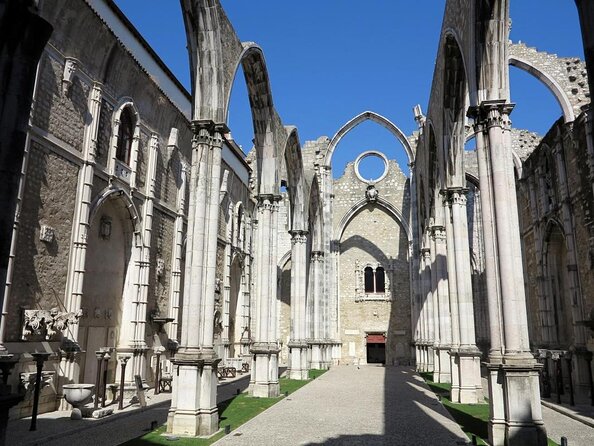
Your meeting point is Igreja do Carmo, R. do Carmo, 4050-164 Porto. You also get the opening moment at the Fonte dos Leões, the Fountain of Lions, outside of the church in Porto’s UNESCO listed center. That matters because it gives you a clear visual anchor. Before you even head into the biggest tile moments, you’re already looking at the city like a tile map.
From there, the tour keeps you moving through the historic core. You’ll learn how tile making developed over the years and the techniques used to paint and create tiles. You also get coached on what to look for while admiring azulejos. That coaching is the difference between snapping photos and actually understanding what you’re seeing.
Timing is another practical point. The itinerary includes short stops, some as brief as 5 minutes, but the guide’s job is to slow you down at the most important places. Admission is listed as free at multiple stops, so you’re not stuck budgeting extra ticket time. Also, the tour uses a mobile ticket, which simplifies your start once you locate the group.
Small-group size helps here. With a max of 10 people, the guide can answer questions as you go, instead of blasting through a script. If you want a tour that makes the city feel personal, this setup is a big win.
São Bento Station Tiles: Where You See History in Color
São Bento Railway Station is your first major stop on the route, and it’s hard to beat. You go inside to see the dazzling mosaics, with scenes that show dramatic battles and historical events. The stop is short, about 10 minutes, but it’s a stop you’ll feel in your eyes.
What makes this work for your brain is the connection to the artist. The tour highlights tiles made by Jorge Colaço. Once you know that a specific name is tied to what you’re seeing, the artwork stops being generic “pretty tiles” and becomes a created piece of visual history. You can look at the mosaic as a composition, not just a wall covered in scenes.
Here’s how I’d use the time. Don’t try to photograph everything at once. Look up, then scan left to right. If the guide points out technique or design cues, focus on those exact spots for a moment. That way, when you move to the next facade or panel, you’ll recognize similar choices instead of starting over from scratch.
One caution: indoor tile viewing can mean crowds in a real working station. The tour duration is set, so you get the highlights without lingering too long. If you want extra time after the tour, keep your stamina for the station area since it’s also listed as the tour end point.
Museu da Cidade do Porto: City Hall Material and Tile Craft Clues
After São Bento, you’ll spend time at Museu da Cidade do Porto, with the stop listed at about 15 minutes. The description includes the idea of a bank of material connected to the city hall. Even if you don’t catch every label in a quick visit, it gives context for how tiles are treated as part of civic heritage.
This is the kind of stop that can make the rest of the walk click. When tiles are displayed in a museum or cultural space, you start seeing them as objects, not just wall art. You also learn more about production and how techniques evolved over time. The guide’s job here is to tie museum-style context back to what you’ll see outdoors.
Because this stop is relatively short and admission is listed as free, treat it as a brief orientation. Use it to ask yourself what questions you want answered for the rest of the route. For example, you might start noticing color choices, pattern structures, and the way panels are framed on building facades.
If you’re the type who likes to leave a tour with a checklist in your head, this museum moment helps. You’ll be more prepared to spot the craftsmanship behind the scenes when you reach the church facade panels next.
Igreja do Carmo Facade Panels: Reading the Church as a Tile Canvas
Igreja do Carmo is one of the central stops on the tour, and it’s also part of where you begin. The itinerary lists a stop of about 5 minutes focused on a first panel covering a church facade. That brevity is intentional. The goal is not to turn it into a long church visit. It’s to make sure you understand tile placement and how a facade becomes a storytelling surface.
Start by looking at the panel as a part of the whole building. Tiles don’t sit randomly. They frame, guide the eye, and often highlight important architecture lines. Once the guide points out specific details, your view changes. A small panel starts to look like a deliberate message, not just ornament.
Also, since the start location is near the Fonte dos Leões outside of Carmo Church, you get a nice loop effect. You see the church area at the beginning, then you return to a tile-focused moment. That kind of repetition helps your memory. You’re not just walking past landmarks. You’re learning how to look at them.
One practical plus: this stop is listed with free admission. That means your time goes straight into observation and interpretation, rather than queueing or worrying about extra fees.
You can also read our reviews of more historical tours in Porto






From Street to Square: How the Tour Changes What You See Next
The tour concludes after about three hours of tile appreciation beside Ribeira Square. The listed end point is São Bento station, so in practice you’ll finish in the central area where you can keep exploring without a long transfer. Either way, you’re ending in a part of Porto where it’s easy to keep wandering on your own.
This is when the tour’s real value shows up. As you walk away, you’ll start spotting tile patterns on storefronts and house facades with more confidence. You’ll also notice that tiles in Porto can signal different moods and eras, depending on technique choices and how panels are used on architecture.
Here’s what I recommend right after the tour, during your next 60 to 90 minutes. Do a slow walk back through the streets where you saw tile panels. Don’t hunt for new landmarks. Revisit what you already learned and test yourself. If the guide taught you what to look for, your own eyes will start doing the work.
And if you love street art, this tour’s approach can help there too. Some guides connect tile art to the broader visual culture you’ll see around the city. Even if you’re not “on a tile hunt” anymore, you’ll be more alert to the visual language of Porto.
Price and Value: Paying for Interpretation, Not Just Photos
The price is $81.93 per person for about 2 hours 45 minutes. That’s not the cheapest walk in Porto, but it does include two human inputs: a professional art historian guide and a local guide. You’re also not paying for listed admissions at the key stops, since São Bento station and the other included stops are listed with free admission.
So where does the money go? Mostly into time and interpretation. With Porto tiles, the difference between an average visit and an excellent one is knowing what to look for and why it matters. A guide who can connect craft technique with what you’re seeing on a facade makes the city feel smarter, and it can save you time later. Instead of spending your next day trying to figure out what you noticed, you’ll already understand how to read it.
Group size matters for value too. With a maximum of 10, you get more attention and less waiting. If you were in a huge group, you might get a quick stop and move on. Here, the tour is designed for you to slow down at multiple points.
What is not included is food and drinks, and there’s no hotel pickup or drop-off. That’s normal, but it does affect planning. If you want a meal afterward, schedule it at a relaxed pace since the walk ends in the historic center.
Who This Tour Fits Best (And Who Should Consider Something Else)
This is a smart pick if you’re the type who loves visual details and wants to understand the craft behind what you see. It’s also a great “first days in Porto” tour because it gives you a framework for noticing tiles across the city. The group is small, it’s in English, and most travelers can participate.
It’s especially good if you like art history but you don’t want a classroom tour. This experience keeps it practical. You look, you learn, you walk, you look again.
If you’re traveling with kids, note that children must be accompanied by an adult. The tour may work for older kids who enjoy observation, but you’ll want to judge based on your family’s comfort with walking for most of the time.
If you have limited mobility or you require lots of frequent breaks, this might be tougher since it’s a walking format with multiple short stops. The good news is that the stops are planned, and you can always take a breather during the short museum or facade moments. Still, choose it with your own stamina in mind.
Should You Book the Porto History of Tiles Walking Tour?
Yes, if you want Porto tiles to make sense quickly. I’d book it when you want more than a scenic walk, when you want a guide to teach you what to look for at São Bento, on church facades like Carmo, and on the everyday buildings in between. The small-group format, free admission at key stops, and the dual-guide setup (art historian plus local guide) add up to solid value for the time.
Skip it only if you’re not interested in tile craft or you’re trying to avoid walking for nearly three hours. Otherwise, this is one of the best ways to turn Porto’s most recognizable visual feature into a real understanding, not just a photo back home.
FAQ
How long is the Walking Tour – History of Tiles in Porto?
It runs for about 2 hours 45 minutes.
Where does the tour start and where does it end?
The meeting point is Igreja do Carmo, R. do Carmo, 4050-164 Porto, Portugal. The listed end point is São Bento station, Praça de Almeida Garrett, 4000-069 Porto, Portugal.
What group size should I expect?
The tour is limited to a maximum of 10 travelers per booking.
What’s included, and what’s not included?
Included is a professional art historian guide and a local guide. Food and drinks are not included, and there is no hotel pickup or drop-off.
Are admissions included for the stops?
The listed stops include free admission. São Bento Railway Station, Museu da Cidade do Porto, and Igreja do Carmo are shown with free admission ticket information.
Is the tour offered in English, and can children join?
The tour is offered in English. Children must be accompanied by an adult, and service animals are allowed.
Is free cancellation available?
Yes. You can cancel for a full refund up to 24 hours in advance of the experience start time, with free cancellation available.
More Walking Tours in Porto


More Tours in Porto






More Tour Reviews in Porto


Keep comparing: recently reviewed experiences around Porto










Porto City Walks, compared.
 ★ 5.0Porto Walking Tour, Lello Bookshop, River Cruise and Cable CarFrom $723,354 reviews
 ★ 4.8City Highlights 3-Hour Guided Electric Bike TourFrom $513,092 reviews
 ★ 5.0Experience Porto’s Charm: 3-Hour Guided Walking TourFrom $352,432 reviews
 ★ 4.83-Hour Guided City Highlights Walking TourFrom $342,050 reviews
 ★ 4.4Wine Tasting with Tapas Walking TourFrom $531,541 reviews
 ★ 4.7Historic City Center Walking TourFrom $331,172 reviews
 ★ 5.0Porto’s #1 Walking TourFrom $01,026 reviews
 ★ 4.8Delicious Food and Wine Walking TourFrom $87977 reviews
Browse the lists this tour appears in