
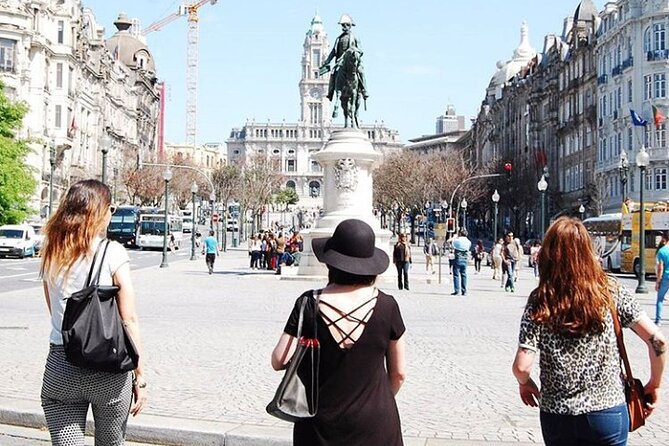
Reviewed · PORTO CITY WALKS
Small-group Porto’s Roots Walking Tour
Your walk through Porto starts with big context.
It’s a small-group route that makes landmarks feel personal, and your guide, Carlota, ties each stop to how Porto became the city it is today. The main thing to watch: one major sight, Torre dos Clérigos, has an admission fee not included.
You get a smart mix of viewpoints and buildings, with enough time for questions. It also runs at a manageable pace, but it is still a walking tour, so moderate fitness helps.
At about 3 hours, it starts at R. de Dom Hugo 3 and finishes at São Bento Train Station. You’ll use a mobile ticket, and the tour is offered in English.
Key things that make this Porto walk worth your time
- Max 10 travelers means real back-and-forth, not just headsets and hustle
- Carlota guides you with a Porto-focused, history-minded storytelling style
- Catedral, Ribeira, Miradouro give you a clean route from old city roots to perspective
- One paid add-on at Torre dos Clérigos keeps costs mostly predictable
- São Bento tiles get explained so you can actually read the station instead of just snapping photos
- Ends at São Bento so your tour aligns perfectly with an easy next move on foot or by train
Why this Porto roots route moves at the right speed
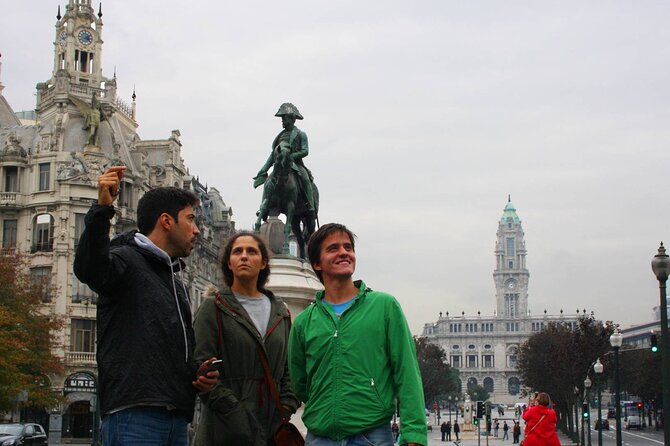
Porto can feel like a movie set, all corners and photo angles. What I like about this tour is that it doesn’t just point at sights, it connects the dots between them, especially for medieval Porto and the later chapters of the 1800s.
The format also respects your attention span. With around five focused stops across about three hours, you get time to ask questions and not feel rushed from one “important thing” to the next.
Most people come to Porto wanting the classic hits, like São Bento Station and Cais da Ribeira. This tour gives you those, but it also tries to explain why those places matter, including Porto’s commercial identity and the stories tied to Jewish community history.
The one potential snag is weather. If conditions are poor, the tour can be moved or refunded, so plan this early enough in your trip that you have options.
You can also read our reviews of more walking tours in Porto



Meeting at R. de Dom Hugo 3, then finishing at São Bento
The tour starts at R. de Dom Hugo 3, 4000 Porto at 10:00 am. That matters because you get your city bearings fairly early, and you avoid the later crowd swell around the most photographed areas.
You’ll finish at Estação de São Bento (Praça de Almeida Garrett), the train station famous for its tile hall. That end point is practical, because once you’re done walking, you’re already in a transit hub with an easy pathway to keep exploring.
You’ll get a mobile ticket, which is convenient if you prefer keeping everything on your phone. Since the tour is near public transportation, it’s also easier to stitch onto the rest of your day.
If you like structuring your sightseeing, this one gives you a natural arc: start in the old-city core, climb toward viewpoint context, then land at the station where the tiles bring the whole experience together.
Stop 1: Catedral do Porto and the medieval city’s growth
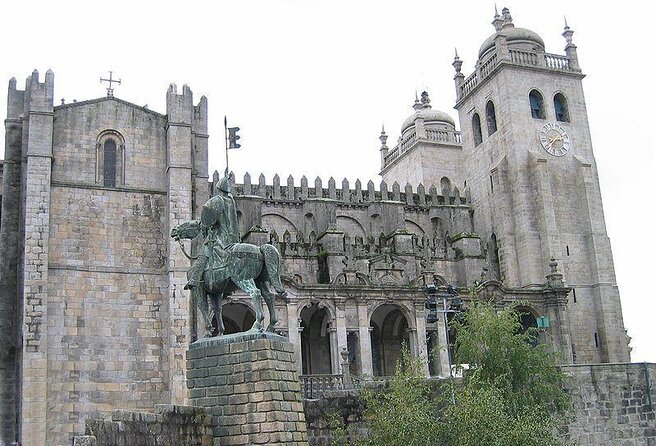
You begin at Catedral do Porto, and the goal here is to understand the city’s medieval development. Expect talk about how Porto expanded, how the social context shaped daily life, and how a place grows into a recognizable identity over centuries.
Why this start works: it gives you a frame before you move into the more scenic streets. Once you understand the medieval “why,” the old-city streets stop looking random and start looking purposeful.
This stop also sets up the later themes. Porto is known today for wine and trade, but the tour helps you connect those outcomes to older patterns of growth, community, and geography.
Timing is about 15 minutes, and admission is free for this stop. That means you get context without sinking your whole morning into a long museum-style visit.
Possible drawback? If you’re the type who loves to linger quietly inside religious buildings, you may wish you had extra time here. The tour is designed for understanding on the move, not for a slow sit-down.
Stop 2: Cais da Ribeira, old streets, trade, wine, and bridges
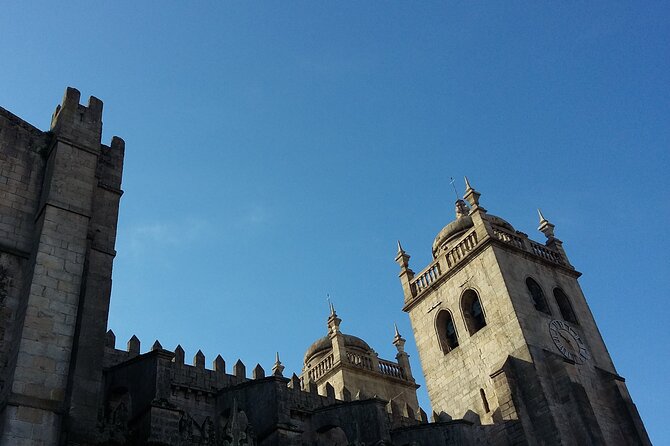
Next you head to Cais da Ribeira, where you’ll see the old medieval streets and learn why Porto became an important commercial city and wine center. You’ll also hear how the city’s bridges fit into that story.
This is one of those places where the scenery is obvious, but the meaning isn’t always. A guided walk helps you notice how the waterfront connects commerce, movement, and the rise of Porto as a working port city.
The Ribeira area is also where you’ll naturally feel Porto’s “two-layer” character. It’s picturesque now, but it once had a job to do, and the tour helps you imagine that working city behind the views.
Time is about 20 minutes, and admission is free. Since the stop is short, it’s best for getting oriented rather than for a full wandering session. If you want extra time later, plan a second visit on your own.
Stop 3: Miradouro da Vitória, Jewish community memory, and 1800s conflict
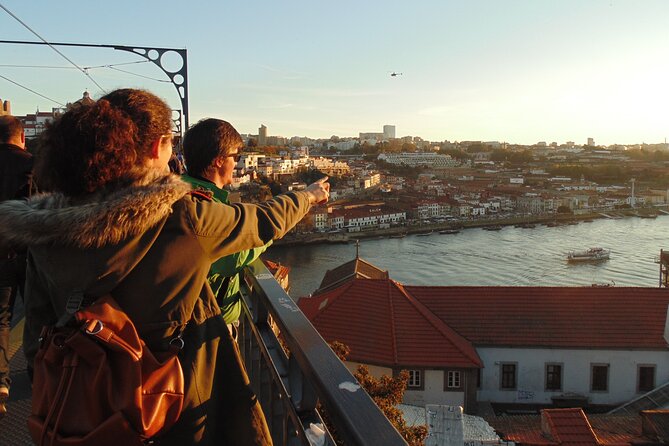
At Miradouro da Vitória, the discussion shifts from the street level to perspective and people. You’ll learn about Porto’s Jewish community across centuries, and how Portugal’s civil war in the 19th century appears in the broader historical picture.
A viewpoint stop can be a throwaway on some tours. Here, the view supports the story. When you stand above the city, it’s easier to grasp how communities lived, how neighborhoods developed, and how events reshaped lives far beyond a single street.
This stop is about 20 minutes, and admission is free. That makes it a useful breath in the middle of the walk, especially if you’re taking photos.
Consideration: history-heavy content can feel more intense if you’re mainly hoping for easy, scenery-only sightseeing. If you do like stories, though, this is one of the most distinctive parts of the route.






Stop 4: Torre dos Clérigos and the one ticket you may pay
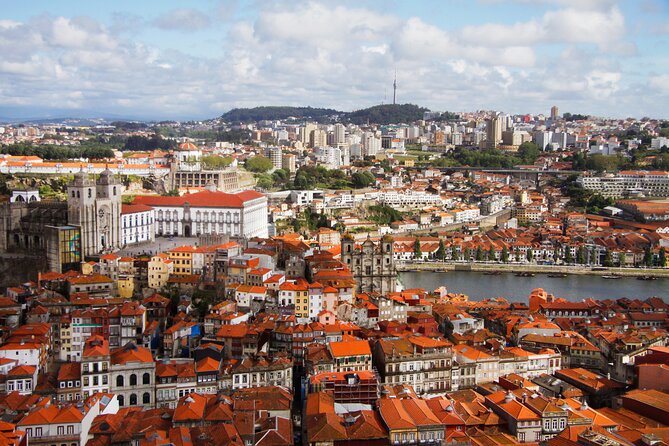
The tour then brings you to Torre dos Clérigos, Porto’s iconic tower. The focus here is the building’s history, and it’s short, around 10 minutes.
Here’s the practical part: admission is not included for Torre dos Clérigos. So if you plan to go up, budget extra. If you don’t, you can still enjoy the explanation and the sense of what makes this tower such a signature landmark.
This is a good stop for two kinds of travelers. If you love architecture and city symbols, you’ll get the backstory fast. If you prefer to keep walking time flexible, you can decide on the tower climb without derailing the rest of your day.
Stop 5: São Bento Station tiles, explained so you can actually read them
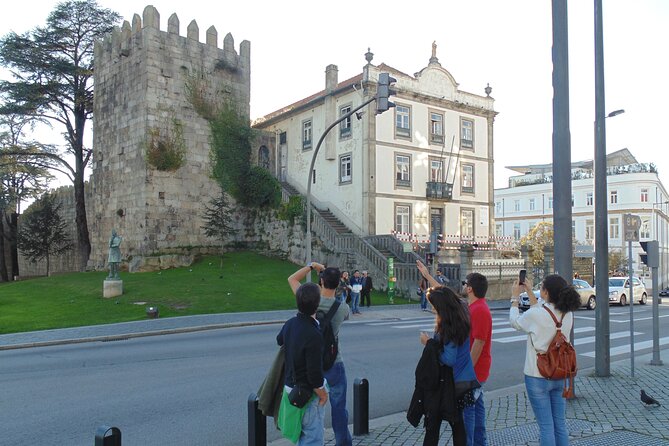
You end at São Bento Railway Station, one of the most famous stations in the world. The key difference with this tour is that it doesn’t treat São Bento as a quick photo stop.
You’ll hear what the tile scenes represent, plus other curiosities about the building. That’s huge for value, because tile halls can look like colorful decoration until someone points out what you’re looking at.
The stop is about 10 minutes, and admission is free. Ten minutes won’t let you fully explore every corner, but with the explanation, you’ll notice much more than if you walked in cold.
Since the tour finishes here, you can extend your time after it ends. If you have a train later, you’ll be perfectly placed to move on, and if you’re continuing on foot, you’ll still be in a central area.
The small-group magic: why max 10 travelers matters
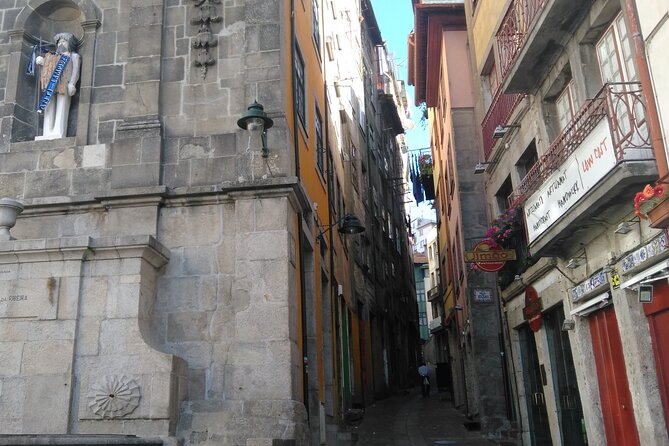
A group size of up to 10 travelers sounds small on paper. On the street, it’s the difference between feeling like a number and feeling like a person.
The reviews highlight that Carlota makes time for questions, and you can see why. With fewer people, your guide can slow down when something sparks curiosity, like how Porto’s commercial role shaped specific areas, or how the historical threads connect across centuries.
I also like that Carlota is from Porto and studied history. That combo typically means you get both place-based insight and a structured way of explaining it.
You should still expect to walk and listen. This isn’t a sit-down lecture with a coffee break every few minutes. But the small size keeps it from becoming a one-way talk.
If you’re traveling solo or with a partner and you want a guided start without a crowded feeling, this format is a strong match.
Price and value: $23.83 for context you can’t easily DIY
At $23.83 per person for about 3 hours, this tour is priced like a classic city introduction walk. The value comes from what you’re paying for: interpretation.
You could technically walk from Catedral through the Ribeira and end at São Bento on your own. But you’d likely miss the links between medieval growth, wine and commerce, Jewish community history across centuries, and the 19th-century civil war context.
Also, several stops are marked as free admission, so you’re not paying to enter multiple sites during the walk. The only likely cost surprise is Torre dos Clérigos, since its admission is not included.
So think of this as a low-cost way to get meaning stitched into your route. That’s the difference between “I visited landmarks” and “I understand why those landmarks are what they are.”
Who should book this Porto walking tour, and who should skip it
You’ll likely love this tour if you want:
- A guided orientation to Porto that goes beyond photo points
- A history-minded route that connects medieval Porto with later 1800s themes
- A small-group experience where you can ask questions and hear explanations at a normal pace
- A route that ends at São Bento, so your day naturally continues
You might want to skip or swap to something else if:
- You want a low-effort, purely scenic stroll with minimal talking
- You dislike walking enough to feel “moderate physical fitness” is questionable
- You’re not interested in history topics like community memory and civil war context
It also helps if you travel in good weather. The tour notes it needs decent conditions, so don’t schedule it as the only outdoor plan on a stormy day.
Should you book this small-group Porto’s Roots Walking Tour?
If you want a smart first pass through Porto that connects major stops with real explanations, I think it’s a solid booking. The combo of small group size, a guide who is from Porto and studied history, and an itinerary that ends at São Bento makes it efficient and satisfying.
The main decision point is Torre dos Clérigos. If you want to go up, plan for extra spending. If you don’t, you’ll still get the tour value from the surrounding landmarks and the station tile explanation.
For most travelers doing a few days in Porto, this is a good way to get grounded fast, then spend the rest of your trip exploring with a clearer sense of what you’re seeing.
FAQ
What is the duration of the Porto’s Roots Walking Tour?
It runs for about 3 hours.
How much does the tour cost?
The price is $23.83 per person.
Is the tour offered in English?
Yes, it is offered in English.
How many people are in the group?
The tour has a maximum of 10 travelers.
Where does the tour start?
It starts at R. de Dom Hugo 3, 4000 Porto, Portugal.
Where does the tour end?
It ends at Estação de São Bento, Praça de Almeida Garrett, 4000-069 Porto.
Do I need to use a paper ticket?
No. The tour uses a mobile ticket.
Is admission included at all stops?
Admission is free for Catedral do Porto, Cais da Ribeira, Miradouro da Vitória, and São Bento Railway Station. Torre dos Clérigos admission is not included.
What time does the tour start?
The start time is 10:00 am.
What if the weather is poor?
The tour requires good weather. If it is canceled due to poor weather, you will be offered a different date or a full refund. Free cancellation is also available up to 24 hours in advance.
More Walking Tours in Porto



More Tours in Porto



More Tour Reviews in Porto

Keep comparing: recently reviewed experiences around Porto











Porto City Walks, compared.
 ★ 5.0Porto Walking Tour, Lello Bookshop, River Cruise and Cable CarFrom $723,354 reviews
 ★ 4.8City Highlights 3-Hour Guided Electric Bike TourFrom $513,092 reviews
 ★ 5.0Experience Porto’s Charm: 3-Hour Guided Walking TourFrom $352,432 reviews
 ★ 4.83-Hour Guided City Highlights Walking TourFrom $342,050 reviews
 ★ 4.4Wine Tasting with Tapas Walking TourFrom $531,541 reviews
 ★ 4.7Historic City Center Walking TourFrom $331,172 reviews
 ★ 5.0Porto’s #1 Walking TourFrom $01,026 reviews
 ★ 4.8Delicious Food and Wine Walking TourFrom $87977 reviews
Browse the lists this tour appears in