
Reviewed · PASTRY & COOKING WORKSHOPS
Portuguese Cooking Class in Porto with Portuguese Wine
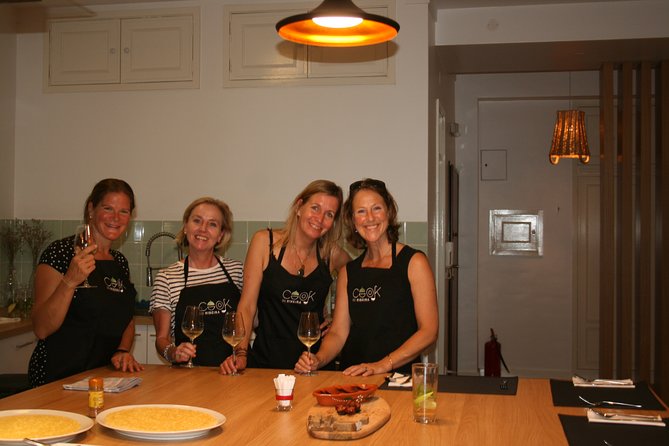
Porto tastes better when you cook it with a chef. This hands-on class at Cook in Ribeira gives you a traditional Portuguese meal you prepare yourself, then you sit down and eat it with Portuguese wines.
I especially like the chef-led instruction (Jorge, Vitor, and Andre are name-recognizable from past classes) and the way the night stays friendly, relaxed, and easy to follow. I also like that you get a full 4-course meal plus wine pairings, so your evening is not just watching, it is eating.
One thing to consider: the sampled menu centers on codfish and mussels or clams, so if seafood or codfish is a hard no for you, plan ahead and ask for options before you go.
Key things to know before you go
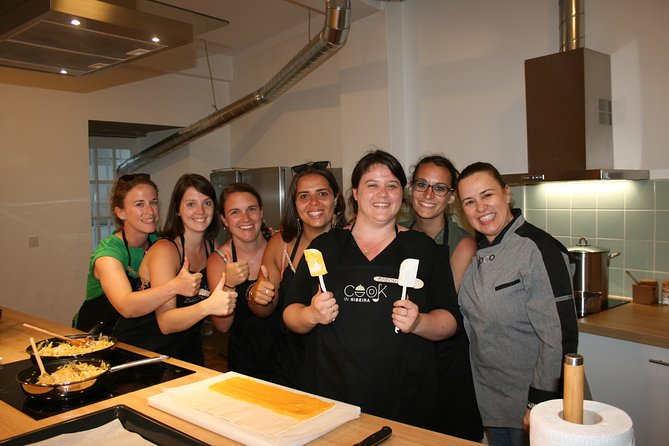
- Hands-on cooking at Cook in Ribeira with a chef teaching step-by-step at a large communal table
- Seasonal menu updates throughout the year, using fresh ingredients
- A true 4-course dinner you make, with coffee and plenty of drinks included
- Wine pairings tied to the food, including green wine with mussels or clams, and red port with almond tart
- English instruction plus patient guidance and a warm, family-style vibe
What makes this cooking class in Porto feel different
This is the kind of cooking class where the kitchen is not a lecture hall. You work with your hands, you get guidance as you go, and you end up with a meal that feels like it came straight out of a Portuguese home table.
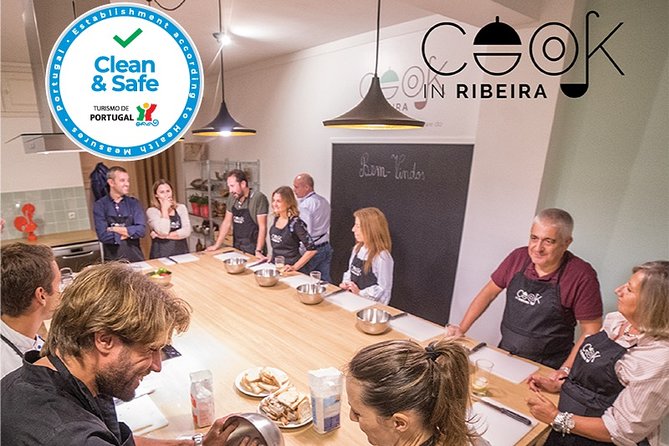
The setting helps. You cook seated around a big table, not tucked away in a corner. That matters, because you naturally chat while you work, and the chef’s tips land better when you can ask questions in real time.
The menu is also built to feel realistic, not touristy. Cook in Ribeira develops their class menu from traditional Portuguese cooking, and they adapt it all year to use fresher, seasonal ingredients. That is a small detail, but it changes the whole experience, since you are tasting flavors that match what is actually in season.
Finally, the drink plan is part of the education, not just an add-on. Wines from Portuguese demarcated regions are served across the meal, and the pairings are tied to what you are cooking.
You can also read our reviews of more cooking classes in Porto

Your 6:00 pm plan at Cook in Ribeira, and what to expect
The class starts at 6:00 pm and runs about 3 hours. It ends back at the same meeting point, so you are not dealing with long transfers at the end of the night.
You meet at Cook in Ribeira, Rua do Infante D. Henrique 16 1 Traseiras, 4050-297 Porto. There is no hotel pickup, so you will want to arrange your own way there. The good news is that it is near public transportation, so you can usually get in and out without drama.
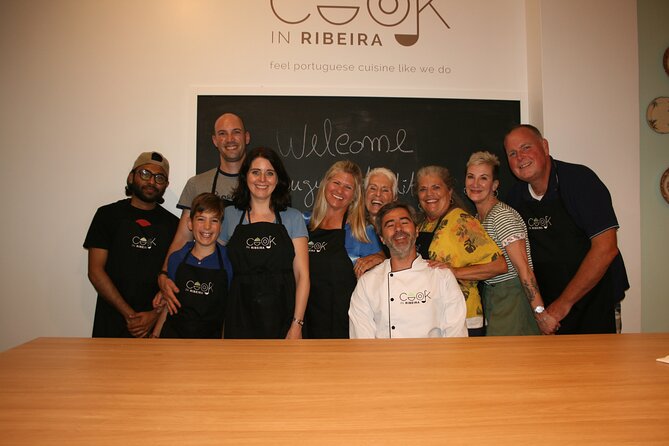
Because it is offered as a private activity for your group, you should expect the atmosphere to feel more like a coordinated class than a large, impersonal show. In past sessions, groups have been small enough that you notice the chef learning your pace and adjusting instructions.
One practical note: the evening can run a little long in real life. A previous group reported their experience continuing past an expected end time, so I treat this as an evening plan first, and a strict clock plan second.
The hands-on menu: codfish, mussels or clams, and almond tart
The class uses a traditional Portuguese menu built around iconic ingredients. Based on the sample menu, here is what you will be working toward in the typical session:
- Main: Codfish
Portuguese cured codfish (bacalhau) is the star here. The class frames it as a challenge with a simple goal: cook it in one of the many traditional ways so everyone can enjoy it as Portuguese families do. Expect technique talk, timing talk, and hands-on adjustments rather than just a single recipe copy.
- Starter: Mussels or clams
You may be offered mussels or clams, and the pairing is set up for the flavor you create. One of the most memorable pairing details is how a green wine works with the sauce, especially when you use bread to soak it up. That bread moment is very Portuguese, and it is also a practical food lesson in balancing acidity and richness.
- Dessert: Almond pies or tart
This is where the sweet side of Portuguese convent-style baking shows up. You learn how to shape and bake an almond tart, then taste it with red port wine. It is a very Porto-style ending, rich but not heavy, sweet but grounded by wine.
Also, the menu is adaptable across the year. The cooking class is designed to include fresh and seasonal ingredients throughout the year, so if you book in a different month, you might see variations.
How the chef instruction actually helps you cook better
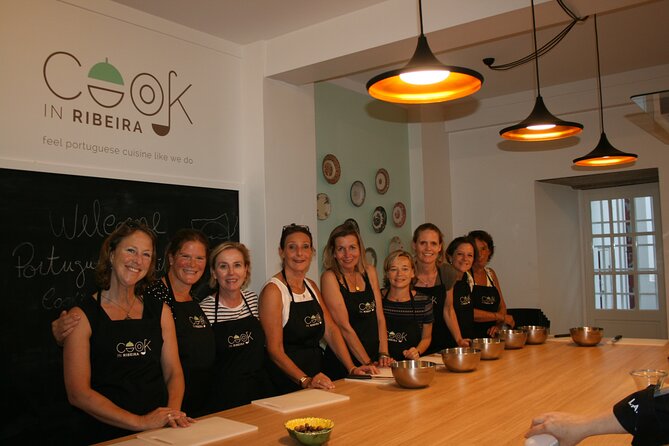
The chefs matter here. Multiple past participants highlighted Jorge and Vitor (and also mentioned Andre) for being warm, patient, and step-by-step. That is exactly what you want in a cooking class, because cooking is not a “watch and hope” sport.
The teaching style is built around real kitchen flow. You get instructions in the order you need them, not the order that looks good for a photo. When you chop, you hear why you are chopping that way. When you simmer or bake, you understand what you are trying to achieve, not just how long to wait.
A big theme in feedback is comfort. Chefs made participants feel like they were cooking in a home setting, not in a training center. That kind of calm helps you relax enough to focus on flavor and technique.
And yes, the atmosphere includes conversation and humor. It is not a stiff class where everyone whispers. That matters because Portuguese food stories are part of the point, and laughing while you learn makes it stick.
Portuguese wine pairings, including green wine and red port
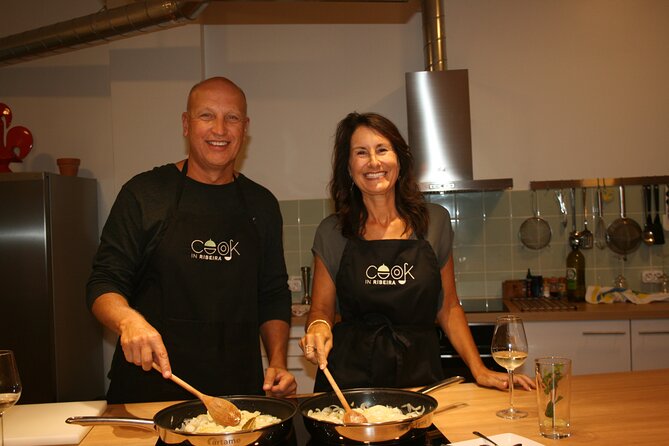
This is not a “wine tasting on the side.” The wines show up with the courses you cook, with pairings tied to flavors.
You should expect Portuguese wines from demarcated regions across the meal. The sample pairings include:
- Green wine with the mussels or clams course, especially with the tasty sauce and bread
- Red port wine with the almond tart dessert
That structure is useful for you, even if you are not a wine person. It teaches you a simple pattern: match wine character to what the dish is doing. If the dish is briny or sauce-heavy, you want the wine to cut through and brighten. If the dish is sweet, you want the wine to complement without turning cloying.
Also, drinks are included beyond wine. The class includes water, beer, juice, and coffee, which is a practical bonus for groups with mixed preferences.
You can also read our reviews of more wine tours in Porto
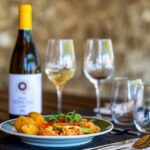





The meal part: you cook, then you eat (and eat well)
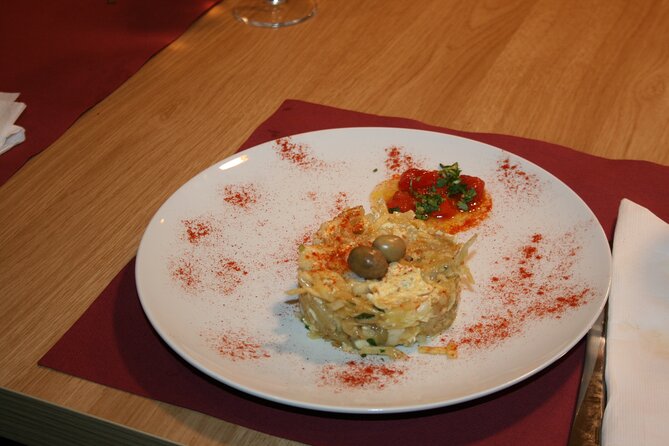
A cooking class fails if the meal feels like an afterthought. Here, it is the point. You cook your courses, then you sit down around the table with class companions and eat what you made.
Portion size comes up again and again. One group described leaving completely full, and others specifically called out generous amounts of food and wine. That matters for value, because you are paying for instruction, yes, but you are also buying a full dinner out.
You also benefit from sharing the meal with the people in your group. Since the activity is private for your group, the social mix is limited, which makes it easier to enjoy conversation without feeling like you are competing with strangers for attention.
Price and value: what $169.31 gets you in real terms
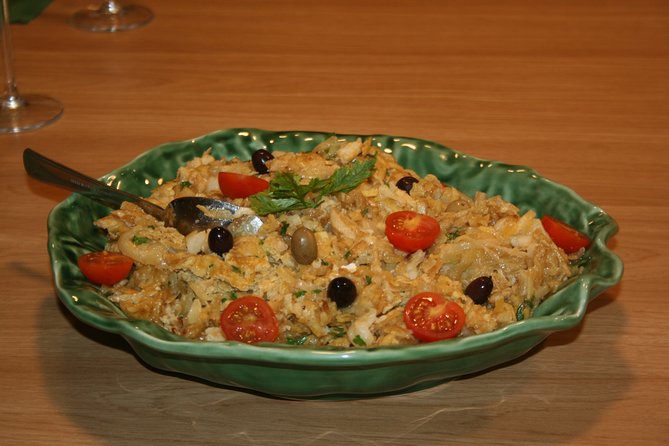
At $169.31 per person for about 3 hours, the price is not low. But it is not just paying for someone to cook in front of you either.
Here is what you are getting:
- A hands-on cooking class led by a local chef instructor
- A 4-course meal that you prepare
- Portuguese wines plus water, beer, juice, and coffee
- A relaxed, friendly atmosphere in a safe and clean environment
- English instruction
If you price it like a normal evening, you quickly see the math. Dining in Porto can easily run high once you add drinks. This class bundles dinner, drinks, and instruction in one go.
And the “learn it so you can repeat it later” part is real. The recipes are traditional, the chefs explain technique, and you leave with a better sense of how Portuguese dishes are built. You are not only tasting, you are learning to cook.
One more value note: the menu is built from traditional Portuguese cuisine, and it is adapted with seasonal ingredients. That means the class is likely to feel current during your trip, instead of stuck in a generic, all-year template.
What to watch for if you have food dislikes
The only real drawback I see is menu fit. The sample main course is codfish, and the starter is mussels or clams. If you dislike seafood or codfish, you should handle this before you arrive.
In past communication, the provider indicated they can create a previously agreed menu if you request it ahead of time. The practical move is to email [email protected] with your likes and dislikes as soon as you book, and ask whether they can adjust your menu for your group.
If your issue is mild, like you dislike one ingredient but can eat other seafood, ask anyway. Chefs often work around texture and flavor in ways that make the dish still feel Portuguese, without forcing you to eat something you hate.
Who this Porto class is best for
This is a strong pick if you want:
- A hands-on evening instead of a passive activity
- A dinner that includes drinks, not just food
- Traditional Portuguese flavors you can actually cook at home later
- A small-group, friendly vibe with direct chef guidance
It is also a good option for couples or friends who want a memorable evening that breaks up the usual Porto routine. The class includes meet-and-cook energy and ends with a proper sit-down meal.
If you are traveling as a family, the class can still work, but you may want to plan for the pace. One past participant noted small children can be more challenging for the chef’s attention, though the chefs still handled it well.
Should you book this cooking class in Porto?
I would book it if you want a dinner you can learn from, with Portuguese wine pairings that actually connect to the food. The combination of hands-on cooking, chef personalities like Jorge and Vitor, and a full 4-course meal makes it feel like more than a ticketed activity.
I would hesitate only if your diet is very limited or you have strong, non-negotiable dislikes of the core ingredients, especially codfish and mussels or clams. If that is you, contact the provider ahead and request a menu adjustment. With that handled, this becomes a smooth, high-satisfaction evening.
In short: this is a practical, value-friendly way to experience Porto cuisine in a real kitchen, not just a restaurant table.
FAQ
What time does the Portuguese cooking class in Porto start?
The class starts at 6:00 pm.
How long is the experience?
It lasts about 3 hours.
Where do I meet for the class?
You meet at Cook in Ribeira, Rua do Infante D. Henrique 16 1 Traseiras, 4050-297 Porto, Portugal.
What is included in the price?
The hands-on Portuguese cooking class includes a 4-course meal, Portuguese wines, water, beer, juice, and coffee.
Is the activity private or shared with other groups?
It is private. Only your group participates.
Is hotel pickup provided?
No, hotel pickup and drop-off are not included.
Can I cancel and get a full refund?
Yes. You can cancel up to 24 hours in advance of the experience for a full refund.
More Wine Tours in Porto
More Cooking Classes in Porto

More Tour Reviews in Porto



Keep comparing: recently reviewed experiences around Porto












Pastry & Cooking Workshops, compared.
 ★ 5.0Pastel de Nata Cooking Class with Grandma’s RecipeFrom $331,565 reviews
 ★ 4.9Pastel de Nata Pastry-Making WorkshopFrom $411,542 reviews
 ★ 4.8Pastel de Nata Cooking Class with Port Wine – SéFrom $41888 reviews
 ★ 4.9Workshops Pasteis de Nata in Porto, PortugalFrom $40520 reviews
 ★ 4.9Pastel de Nata Cooking Class from ScratchFrom $50468 reviews
 ★ 5.0Pastel de Nata | Workshop from scratch | Porto’s city centerFrom $48449 reviews
 ★ 5.0Pastel de Nata Cooking Class with Porto Wine (Sé do Porto)From $42340 reviews
 ★ 5.0Porto Local Market Visit & Cooking Class / Showcooking206 reviews
Browse the lists this tour appears in