
Porto gets personal on foot. This 4-hour Detours Porto walking tour turns the city into a story you can actually walk through, with a Porto born and raised local guide and hidden viewpoints you would not find alone. My only caution is the route has a moderate amount of walking plus staircases, so it can be rough if you have low fitness or motion sickness.
You start at the Estátua de Arnaldo Gama, near the Fernandina walls, then work your way through classic Porto highlights like Dom Luis Bridge and Ribeira, along with quieter lanes and viewpoints. The experience runs in English or French with a guide wearing a red Detours t-shirt, and it ends around Praça de Gomes Teixeira.
Key Things I’d Bank On
- A local Porto guide who knows the city’s rhythms, not just the postcard spots
- Photo stops that are timed well so you can actually take pictures, not just rush
- Stairways and narrow lanes, which is exactly where Porto’s character lives
- Garden pauses and river views, a nice rhythm shift from stone streets
- A donation included, so your ticket supports local development
Starting at Estátua de Arnaldo Gama and Fernandina Walls
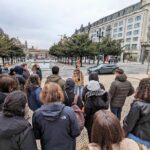
I like meeting tours that help you get bearings fast, and this one starts in a smart spot. You meet at the Estátua de Arnaldo Gama in the garden near the Fernandina walls, with your guide in a red Detours t-shirt. That matters because Porto can feel like you’re weaving through layers of streets and slopes, and a good early landmark keeps you grounded.
From the start, the tour’s tone is set: medieval origins, narrow alleys, stairways, and viewpoints. You are not just sightseeing. You are learning how Porto was shaped over centuries, including the part where the historical center evolved without urban planning. If you like cities where you can see the logic in the chaos, this pacing fits.
One practical thought for you: this is a walking tour with no hotel pickup. If you are staying far from the old core, plan your route to the meeting point ahead of time. And bring water from the start, because the day will likely include climbs and you do not want to be rationing it.
You can also read our reviews of more walking tours in Porto
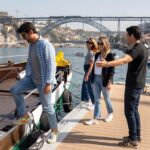
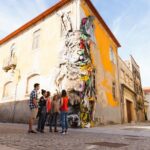

Dom Luis Bridge Photo Stop in 30 Minutes: The Icon, Without the Rush
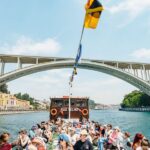
You get a photo stop and visit at Dom Luis Bridge for about 30 minutes. That is a solid time block because it gives you enough room to get your bearings, take pictures from a couple angles, and still feel ready for the older, tighter neighborhoods right after.
Here’s why this stop is useful: the bridge is Porto’s most obvious landmark, but it also helps you read the city. From there, the river makes more sense, and the Ribeira area feels less random when you reach it. If you’re the type who likes “connect the dots” travel, this is one of those tours that naturally builds that map in your head.
The only drawback is also predictable: it is an icon, so you should expect it to be busy at viewpoints. Plan your photos, then move. The tour keeps moving, and that helps you avoid getting stuck waiting around while your energy drains.
Ribeira on the River: How Porto Feels in 1 Hour
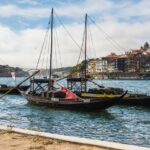
Ribeira is your next big moment, with a photo stop that lasts about 1 hour. The tour description emphasizes the river section as a shift, taking you from smooth moments toward a colorful, tight, chaotic historical center. That’s a good way to describe what you will feel here: the river gives you breathing space, while the surrounding streets squeeze you back into the city’s original texture.
I like that the tour gives Ribeira enough time to be more than a quick snap. One hour helps you do two important things: notice how the area hugs the river and watch how people move through narrow areas. It also sets you up for what comes next at Casa do Infante and the viewpoint climb.
For you, a tip: wear shoes you trust. Ribeira areas often mean uneven surfaces and places where you step from flat ground onto slopes. A walking tour works best when you stay steady and do not spend your attention on your footing.
Casa do Infante: A 30-Minute Walk That Keeps the Story Tight
Next is Casa do Infante, with about a 30-minute walk. This stop is not framed as a long museum-style visit, so treat it as a leg of the route where you pause, look around, and connect what you are seeing to Porto’s medieval layer.
What I appreciate here is the tour’s rhythm. You go from a major landmark (Dom Luis Bridge) to the river area (Ribeira), then to a historically meaningful point (Casa do Infante), and then into the viewpoint phase. That design helps if you get tired of nonstop “look, photo, next.” Instead, you get shorter blocks that still build context.
Because the tour includes staircases and moderate walking, these 30-minute segments are also realistic. You get enough time to absorb the area without locking yourself into a long activity that would make the later climbs feel harder.
Miradouro da Vitória Viewpoint Stop: The Stairs You’ll Earn
Miradouro da Vitória is one of the tour’s standout viewpoint photo stops, scheduled for about 1 hour. Viewpoints are where Porto rewards effort, and this one is a key part of the tour’s promise: discover hidden viewpoints and walk narrow paths and stairways that reveal the city in layers.
Why the timing works: after Ribeira and Casa do Infante, you are ready to rise. The tour description explicitly calls out narrow alleys and amazing stairways, and Miradouro da Vitória is the kind of stop where you can feel the payoff. You also get a separate break later, which is smart planning because viewpoint time often stretches if you’re enjoying the view and taking photos.
If you are sensitive to motion or struggle with nausea, this is where you should pay attention to your body. The tour is not suitable for people with motion sickness. If that applies to you, skip it and choose a flatter option instead.
You can also read our reviews of more guided tours in Porto

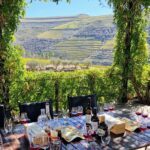

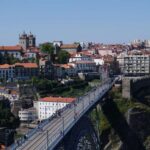
The Extra Viewpoint and 30-Minute Break
After Miradouro da Vitória, you get another viewpoint moment plus a 30-minute break. I like this because it prevents the tour from feeling like one long climb-and-sprint sequence. Porto can trick you into thinking the best parts are always uphill, but a scheduled rest keeps you refreshed for the final leg.
Use this break well. Hydrate, check your photos, and plan how you want to finish your day at the ending point in Praça de Gomes Teixeira. Since the tour ends there, it’s an easy place to continue walking, grab a coffee, or find your next stop without backtracking.
If you’re traveling with a camera, this is also a good moment to charge your brain, not just your phone. Viewpoints are quick to overdo. A short pause helps you choose a few “keeper” shots instead of taking hundreds that all look similar later.
Hidden Alleys, Stairways, and the Tripeiro Spirit
This is the part that makes the tour feel different from a generic highlights walk. The route is built around Porto’s narrow alleys, stairways, and small surprises, plus the “Tripeiro” spirit. That local attitude is about more than branding. It is about how people talk, how neighborhoods hold on to their identity, and how the city keeps its character even as it changes around it.
The tour also includes stops in nice gardens and time near the river, which creates a useful contrast. When you walk a city with this much slope and stone, pauses in calmer spaces help you reset. Gardens can also offer a break from crowds and a chance to regroup.
Here’s why this matters for value: if you only visit big attractions, Porto can feel like a checklist. This tour tries to make Porto feel like a place with personality, which is what makes you want to return.
Price and Value for a 4-Hour Guided Walk
At $41 per person for a 4-hour walking tour, the price lands in the “reasonable for what you get” zone, especially because the essentials are included: a local guide, the walking tour itself, and a donation to a local development association.
That donation piece is not a side note. It changes how the experience feels. Instead of treating Porto like a backdrop for photos, you are putting your support toward local development efforts. You still get the sights, but you also get that moral itch scratched, the one that says I want my trip to matter beyond my own memories.
What you should weigh: you are paying for a human guide plus a structured route that takes you through stair-heavy areas. If you love guided walking, this is a strong value. If you hate stairs or you prefer to roam freely with zero structure, you might find the route constraints less appealing.
Who This Tour Fits Best, and Who Should Skip It
This tour works best if you are comfortable walking about 4 to 5 km and climbing staircases. It is also clearly not suitable for children under 6, people with mobility impairments, wheelchair users, people with low level of fitness, and people with motion sickness.
If you are a steady walker who enjoys photo stops and wants a local perspective, you will likely have a good match. The guide being Porto born and raised is a big plus, because you get context and local explanations that connect landmarks to everyday city life.
On the other hand, if you need step-free routes or have limits on prolonged standing and climbing, choose a different type of tour. This one is built for old streets, old steps, and old neighborhoods where the city’s shape was not designed for modern comfort.
What to Bring, What to Wear, and How to Prepare
Bring a camera and water. Those are the only “must bring” items listed, and they are spot-on. A camera helps you take advantage of the multiple viewpoint photo stops, and water keeps you comfortable during the walk and climbs.
For clothing and footwear, the rule is simple: wear shoes that handle uneven stone and slopes. You do not want to arrive overconfident with sneakers that look fine but feel slippery.
Also note what is not allowed: bikes, alcohol, and drugs. Keep it simple and keep the day safe. A tour that involves stairways goes better when everyone is alert and steady.
Finally, if you are traveling in hotter months, plan your hydration. The tour includes gardens and pauses, but it still asks you to move steadily for four hours.
The Guides Matter, and It Shows
The tour experience is tied closely to the guide’s style. Names like Alfonso and Ricardo show up in strong feedback for two reasons you will feel in the walk: they take time to explain and they respond to questions in a personal way. That kind of guidance is what turns a route into a story you remember.
Even if you do not speak Portuguese, the tour runs in French and English, so you can relax. A good guide also keeps the pace realistic, especially around photo stops and viewpoints where you might want a little extra time.
Should You Book This Porto Secrets of the City Walking Tour?
Book it if you want Porto to feel like Porto, not just like a set of famous spots. You get Dom Luis Bridge, Ribeira, and viewpoint time, but the real draw is the local guide, the stairways and alleys, the garden breaks, and the way the route connects the city’s medieval feel to the way it lives today. At $41 for a four-hour guided walk with a donation included, it is a fair value if you are comfortable on your feet.
Skip it if you cannot handle stairs or long walks, or if motion sickness usually hits you during hilly sightseeing. This tour is designed for movement, not for quiet, minimal walking.
If you are ready to walk, take photos, and let a local show you the side streets, this is the kind of Porto experience that sticks.
FAQ
How long is the Porto Secrets of the City Walking Tour?
The tour lasts 4 hours.
Where is the meeting point?
Meet your guide at the Estátua de Arnaldo Gama in the garden near the Fernandina walls. The guide wears a red Detours t-shirt.
Which languages are the live guides?
The tour offers live guiding in French and English.
What should I bring?
Bring a camera and water.
Is hotel pickup included?
No. Hotel pickup and drop-off are not included.
How much walking and how many stairs should I expect?
Expect a moderate amount of walking and staircases. You should be fit to walk about 4 to 5 km and climb stairs.
Is the tour suitable for wheelchair users or people with mobility impairments?
No. It is not suitable for people with mobility impairments or for wheelchair users.
Can I bring a bike or alcohol on the tour?
No. Bikes are not allowed, and alcohol and drugs are also not allowed.
More Walking Tours in Porto



More Tours in Porto




More Tour Reviews in Porto

Keep comparing: recently reviewed experiences around Porto








Porto City Walks, compared.
 ★ 5.0Porto Walking Tour, Lello Bookshop, River Cruise and Cable CarFrom $723,354 reviews
 ★ 4.8City Highlights 3-Hour Guided Electric Bike TourFrom $513,092 reviews
 ★ 5.0Experience Porto’s Charm: 3-Hour Guided Walking TourFrom $352,432 reviews
 ★ 4.83-Hour Guided City Highlights Walking TourFrom $342,050 reviews
 ★ 4.4Wine Tasting with Tapas Walking TourFrom $531,541 reviews
 ★ 4.7Historic City Center Walking TourFrom $331,172 reviews
 ★ 5.0Porto’s #1 Walking TourFrom $01,026 reviews
 ★ 4.8Delicious Food and Wine Walking TourFrom $87977 reviews
Browse the lists this tour appears in