
Reviewed · PRIVATE PORTO TOURS
Porto private morning Tour, discover the most iconic attractions
Porto in four hours feels like magic. This private morning tour strings together UNESCO-listed Porto landmarks, local markets, and big river views with a driver who does the storytelling while you relax in the vehicle. You also get onboard Wi-Fi, so navigating and sharing photos is easy.
I love how much ground you cover without feeling rushed. You get tight stops at standouts like Mercado do Bolhão tiles, São Bento’s mural station, and the classic Porto-to-Gaia bridge views, plus you can choose which paid interiors to add.
One possible drawback: many highlights are short walk-and-photo moments, and a few top attractions require extra tickets, like Livraria Lello and the Clérigos Tower, so you’ll want to decide ahead if you care about going in.
Key things I’d book this for
- Private, driver-led route that turns Porto into a clear “best-of” map
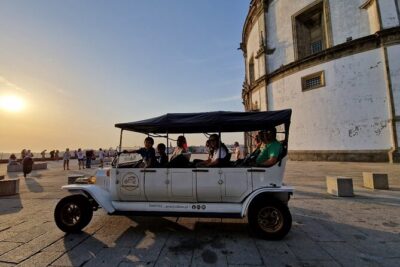
- Onboard Wi-Fi and comfort in a luxury vehicle with bottled water and refreshments
- Real architectural variety from medieval walls to Art Nouveau and Baroque churches
- Big view payoff crossing the Dom Luís I Bridge and looking over Gaia
- Smart ticket options for the places you actually want to enter
- Guides like Carlos who are praised for crisp history and helpful restaurant advice
Why this private Porto morning works so well
A Porto highlight tour only feels “good” when it does two things: it organizes your time, and it tells you what you’re actually looking at. This one is built around both. You start at Praça da Liberdade (address: Praça da Liberdade 19), and then the day moves through major districts that help you understand how Porto grew, how it defended itself, and why its river setting matters.
The other big reason I like it for a first visit is simple: you are not trying to sprint from one landmark to the next on your own. You get guided narration from the driver, then short breaks to see key sights up close. Past guests also call out that the van is clean and comfortable, and that the experience is especially practical if walking long stretches is tough.
Price-wise, $185.02 per person is not cheap, but it’s aiming to buy you time, comfort, and interpretation. When you’re in a private vehicle with Wi-Fi, water, and a driver who points out what matters, the cost starts to feel less like “just sightseeing” and more like smart touring.
Compare more private Porto tours with a guide in Porto
Meeting at Praça da Liberdade, then rolling through UNESCO Porto
You meet at Praça da Liberdade and the tour ends back at the same meeting point. Pickup is offered from downtown hotels and B&Bs in Porto and Gaia, which helps a lot if you’re staying outside the core center.
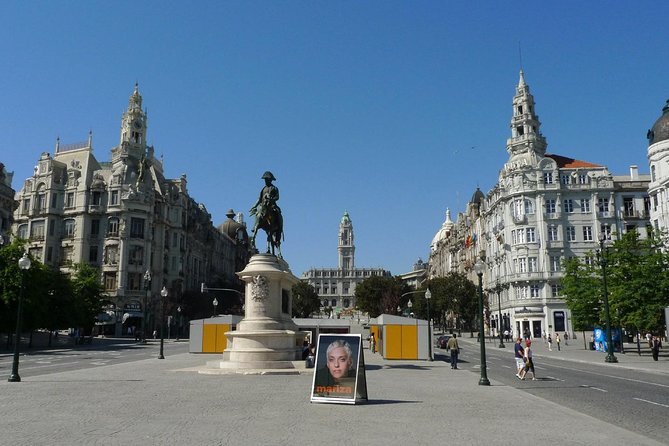
From the start, the route frames Porto like a guided walk without the walking. You’ll pass through the grand civic streets around Avenida dos Aliados, including the area with the Cardosas building and the Porto Town Hall. Right by D. Pedro IV’s statue in D. Pedro Square, it’s a quick orientation moment: you see the city’s public-facing side before the medieval details start pulling you in.
This is also where the UNESCO context becomes real. Porto isn’t just one pretty neighborhood. It’s a historic system of streets, monuments, and riverfront structures, and you’ll keep spotting how these parts connect as the morning progresses.
Mercado do Bolhão and Praça da Batalha: the city’s daily life meets its legends
Mercado do Bolhão is one of those stops that feels both classic and surprisingly usable, because it’s not a museum vibe. The market dates to 1850, and it’s known for a striking two-floor structure with monumental neoclassical architecture. You’ll see stalls selling fresh items, with specialized sections for fish, butchers, vegetables, and flowers, and the building sits between several streets that funnel activity in all directions.
If you want a quick taste of Porto beyond postcards, this is it. Even if you don’t buy anything, you get a sense of how locals shop and socialize.
Then you shift to Praça da Batalha, a square tied to the city’s older story. The name connects to a battle linked to the 10th century, with Porto suffering defeat and destruction under Almançor. The square was urbanized around 1861 and became a key public space.
It also matters culturally because Teatro São João is here. The theater, inaugurated in 1798, was built for opera and dramatic performances, then hit tragedy when it was destroyed by a fire on the night of April 11 to 12, 1908. Seeing a square like this with a driver’s context makes it easier to recognize why locals still treat these places as part of their living heritage.
Medieval defenses and the Porto Cathedral you actually need to see
Porto’s defensive architecture is easy to miss if you’re only hunting for big views. Here, you get a stop by a wall that began in the 14th century during the reign of D. Afonso IV, as a response to city expansion. It was almost completed around 1370, with final completion in the reign of D. Fernando in 1409, which is why the wall carries that naming. Later, when it was no longer needed for military purposes, it began to be demolished in the 18th century, leaving only parts still standing.
It’s a great “Porto grew outward” lesson, and it explains why certain neighborhoods feel pressed and layered, not airy and grid-like.
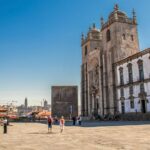
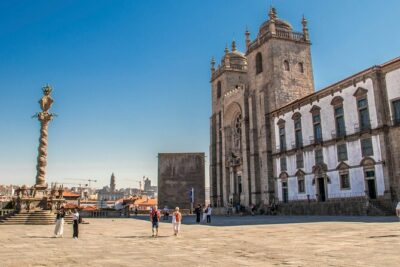
Next comes Catedral do Porto. This is a building with a long timeline: originally 12th/13th century, then expanded and renovated across centuries, with its medieval cathedral layout still visible even in later final configuration.
You’ll get special mentions that help you focus if you step inside, including the Gothic Chapel of St. John the Evangelist and its cloister, the expansion of the chancel, and the Chapel of the Blessed Sacrament with its silver altar. Even when time is short, the driver’s framing makes the cathedral feel like a continuing project, not a static monument.
São Bento tiles and Café Majestic: where Porto looks like art
São Bento Railway Station is one of those places that earns its fame. The station structure was designed by Marques da Silva, and it sits on the former Convent of São Bento de Avé Maria (16th century). The vestibule is covered with twenty thousand painted azulejos made by Jorge Colaço, showing the evolution of transport, historical events, and everyday life of Portuguese people in this region.
This is the kind of stop that turns “I saw it” into “I understand why it mattered.” You’ll walk in, look around, and suddenly the station feels like a civic gallery.
Then you roll into Rua Santa Catarina for Café Majestic, a Belle Époque landmark opened in 1921. It’s famous for opulent Art Nouveau styling, with marble, gilded mirrors, and intricate woodwork. You can treat this as a pause for traditional Portuguese pastries and coffee, while also enjoying how the building itself acts like a snapshot of old Porto sophistication.
Just nearby is the Relógio das Galerias Palladium, an ornate clock with a carillon and four statues that perform every three hours. The figures represent São João, Infante D. Henrique, Almeida Garrett, and Camilo Castelo Branco, so it’s also a mini-history show that you can plan around if the timing lines up.
More Porto river cruises, city walks, and northern Portugal day trips to compare

Clérigos Tower and Livraria Lello: decide what you want to pay for
This tour hits two of Porto’s most famous “go inside” choices: Clérigos Tower and Livraria Lello. Both are optional in practice because tickets are not included.
Clérigos Tower is Baroque, designed by Nicolau Nasoni, built in the first half of the 18th century. You climb 240 steps for panoramic views of Porto and the Douro River. There’s also a fun pop-culture note: the tower appeared in the 2021 Hollywood film Suicide Squad. If you like photo rewards, this is one of the best paid choices on the route.
Livraria Lello is an Art Nouveau story with Neo-Gothic details. The bookstore building opened in 1906 and is classified as a building of public interest. Inside, the library’s painted plaster imitates wood, and there’s a magnificent staircase connecting floors with early reinforced concrete work noted in the description. The stained-glass skylight is huge, with the monogram and motto of the library.
You can add tickets if you want the interior experience. The cost options listed are: a Lello Gold Ticket (Priority plus Book) for €16.00 per person, and a Clérigos Tower Skip the Line Ticket for €10.00 per person.
Here’s the practical tradeoff: the tour runs about four hours, so paid entries are most worth it if you already know you want those specific sights. If not, you can still enjoy the architecture from the outside and use the time for viewpoints and churches.
Churches, the Church of Gold, and Palácio da Bolsa for the big inside moments
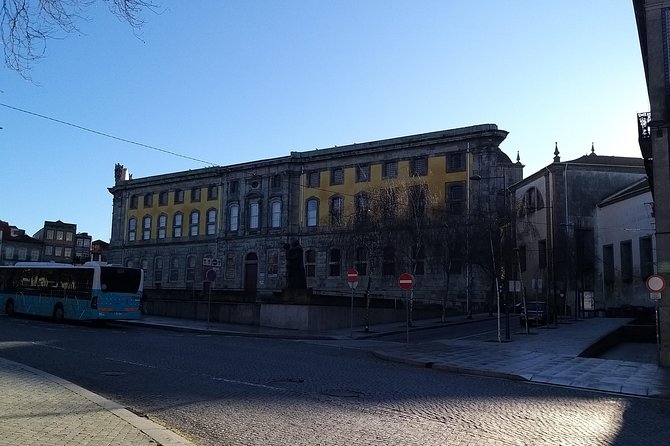
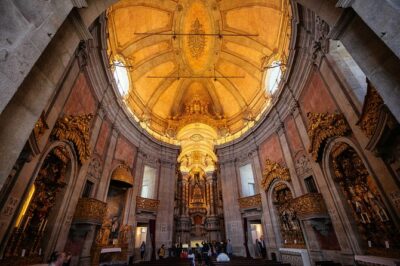
Porto’s religious architecture is a major theme of the morning. You’ll pass the Iglesia do Carmo and Igreja das Carmelitas, two Baroque churches known for their ornate facades and azulejos (painted ceramic tiles). Between them is Casa Escondida, often overlooked, tucked into the tight space between the churches. It’s small, but the surprise is the point: Porto’s buildings had to solve space problems long before modern planning existed.
One of the most famous interior experiences in the area is the Church of São Francisco, also described as the Church of Gold. Work began in the 14th century and the church is known for exuberant carved woodwork in the Baroque style, especially the golden interior from the 17th and 18th centuries. There’s also the Tree of Jesse and access to catacombs. This church is classified as a National Monument and part of UNESCO World Cultural Heritage since 1996.
Tickets for the Church of São Francisco are listed as €10.00 per person, so this is another choice to make based on your priorities.
Then comes Palácio da Bolsa, a neoclassical building designed in 1842 and built on the site of a former convent destroyed by fire during the Siege of Porto. The highlight is the famous Arab Room. The palace is part of the Commercial Association of Porto and also serves as a cultural and conference center. If you love interiors and architectural spectacle, it’s worth adding a guided tour ticket option listed as €14.00 per person.
If you prefer sticking to exteriors, you can still enjoy the structure and street approach, but you’ll miss the curated interior focus that makes Palácio da Bolsa a standout.
Bridges and riverfront viewpoints: the Porto-to-Gaia moment that keeps showing up
If there’s one repeatable reason people love this route, it’s the bridge sequences, especially the crossover between Porto and Gaia. Even when stops are short, the views hit fast.
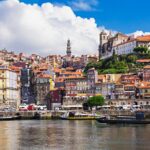
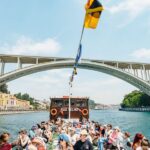
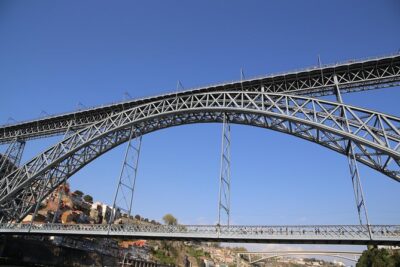
You’ll see Ponte D. Luís I, one of the UNESCO core elements for the historic center. The route also includes the older suspension bridge system, officially called D. Maria II. That suspension bridge was inaugurated in 1843 but deactivated after four years because people feared for their safety. Today, only two stone pillars remain, shaped like obelisks, so it’s a quiet reminder of how transport tech evolves with confidence.
Then the story turns into modern engineering pride. Ponte D. Luís I is known for being the largest wrought iron arch in the world, and it’s covered by the Historic Center of Porto on the UNESCO World Heritage list.
There’s also São João Bridge mentioned as a later replacement for the suspension bridge top, with a Maillart arch type described as extremely slender by experts. The deck is 371 meters long and 20 meters wide, with a span/arrow ratio of 11.2m and a 280m arch span. If you like structural design, these stops feel like architecture instead of just scenery.
Jardim do Morro and Mosteiro da Serra do Pilar: the calm side of the river
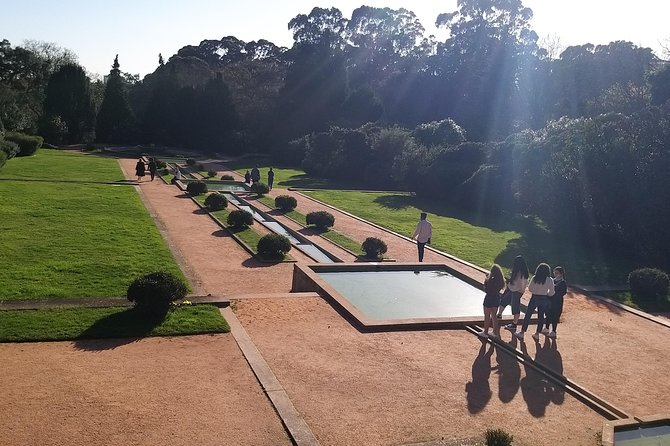
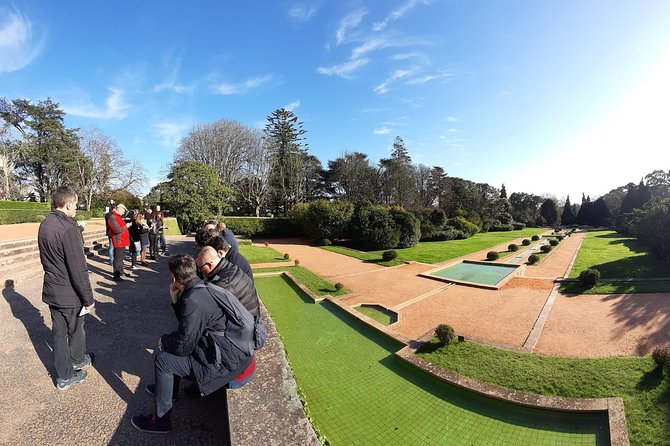
When you shift to Gaia, you get the more relaxed pace that Porto often hides behind its historic streets. Jardim do Morro is a public park developed in the 20th century with panoramic views. Wide pathways and greenery make it a great pause point for photos or just breathing between monuments. It’s also free, so you’re not forced into a paid decision.
Next is Mosteiro da Serra do Pilar, a monastery on Serra do Pilar on the Gaia side. It belongs to the Order of St. Augustine, with construction beginning in 1538 and changing through stages over centuries. The highlight in the description is the circular shapes of the church and cloister, which makes it feel unusual compared to many other religious sites.
Admission is listed as not included for the monastery portion, so if you’re expecting full interior time, treat it as an add-on moment rather than guaranteed included access.
A key UNESCO note ties the riverfront together: in 1996, the Historic Center of Porto and Luís I Bridge, together with Serra do Pilar, were classified as UNESCO World Heritage. It’s not just a pretty stop, it’s part of why the whole area is protected.
Forts, Leixões, Serralves, and Casa da Música: modern Porto beyond the postcard
Not everything here is medieval or Baroque. The morning also threads in modern Porto and coastal infrastructure, so you don’t leave with a one-note impression.
You can find Fortress São João Baptista, a Portuguese military architecture example built at the end of the 16th century to protect the coast and the Douro entrance. Access gate additions in the 18th century are mentioned, and it’s free.
Close by is Castelo Do Queijo, described as Fort São Francisco Xavier, built in the 17th century to protect the coast from pirates of North Africa. It sits on a rocky hill shaped like cheese, hence the name. It’s free and gives you a different kind of view, more rugged and defensive.
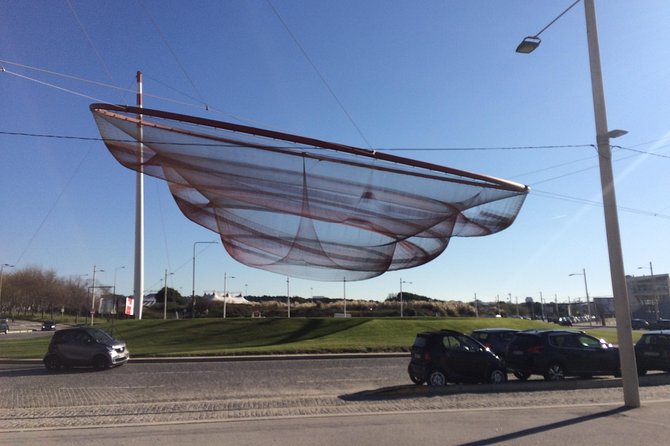
Then there’s modern art and maritime life. You may see She Changes (Anemone), a sculpture by Janet Echelman designed for Porto and Matosinhos, made from a fishing net that moves with the wind. There’s also Leixões Port, connected to Porto’s cruise scene, with notes about the new cruise pier and rising cruise passenger numbers.
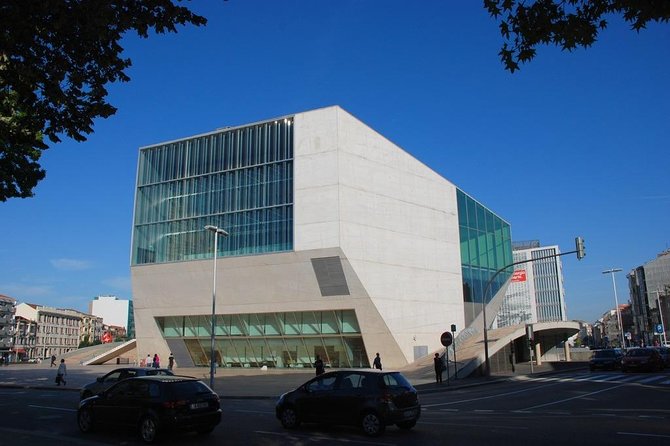
And for design lovers, Serralves is part of the route. It includes the Serralves House, built in the 1930s as a top example of Art Deco movement in Europe, plus a Museum of Contemporary Art and Serralves Park. The park is described as 18 hectares with gardens and forest, designed by landscape architect Jacques Greber. Casa da Música is also on the list, designed by Rem Koolhaas and inaugurated in 2005, described as Porto’s main concert hall and a contemporary architecture icon.
These stops help you understand Porto as a living city that keeps building, not only preserving.
Optional extras: Douro sunset time, Port wine tastings, and fado nights
If your morning leaves you wanting more, there are add-ons listed with clear timing.
A private Douro River Cruise at sunset is offered as a separate experience, described as 2 hours and priced €360 to €460. It’s framed around views of Porto and Vila Nova de Gaia and includes time on the water for the big six-bridge panorama and a chance to see historic riverside neighborhoods.
For wine fans, there’s an optional Port wine cellar tour called Exclusive Dona Antónia Tour, listed at €32 to €41, with 1.5 hours on site and tasting of five Port wines. It’s built around Dona Antónia Adelaide Ferreira and ends with that themed tasting.
For a night shift, you can add an evening with fado and traditional dinner, described at about 2.5 hours starting at 20:00, transport included, and priced €80. There’s also a 1-hour fado show in Porto with Port wine, scheduled daily at 18:00 and 19:30, priced €20 to €26.
If you’re trying to plan tightly, treat these as the way to extend your Porto story from morning architecture into evening culture.
Should you book this Porto private morning tour?
I think it’s a strong pick if you want a fast, organized introduction to Porto’s most important sights with real context, not just checkmarks. The biggest value for me is the combination of private transport, a driver who can explain what you’re seeing, and the convenience of onboard Wi-Fi.
Book it if:
- You want to see a lot in one half-day without stress
- You care about architecture and city layout, including medieval defenses and the bridge system
- You want flexibility to add paid interiors like Clérigos Tower and Livraria Lello
Skip or adjust expectations if:
- You only want museums and long indoor time. This route works best when you’re okay with short stops and street-facing views.
- You’re sensitive to pacing. One common critique is that some guides spend time on personal transitions and might not go as nonstop into facts as you’d like. If that’s your style preference, consider pre-deciding which stops matter most to you.
If you can, plan ahead for the paid ticket stops you truly want, and let the rest of the morning be about orientation. With the right guide, this is the kind of tour that makes Porto click quickly, so the rest of your trip feels like you finally know where you are.
FAQ
What is included in the tour price?
The tour includes transport in luxury vehicles with maximum comfort, plus Wi-Fi in the vehicle, bottled water, refreshments, and a relaxing atmosphere. It also includes personal accident and liability insurance.
Are attraction tickets included?
No. Tickets are not included for Livraria Lello Gold Ticket, Clérigos Tower (Skip the Line Ticket), the Palácio da Bolsa guided tour, Church of São Francisco (Church of Gold), and the Dona Antónia Port wine tour. Some stops are listed as free, like Mercado do Bolhão and São Bento Railway Station.
Do you offer hotel pickup in Porto and Gaia?
Yes. Pickup is offered for hotels and B&Bs in downtown Porto and Gaia. If you are not picked up, the meeting point is Praça da Liberdade 19, 4000-322 Porto.
How long is the private morning tour?
It’s about 4 hours.
Is Wi-Fi available during the tour?
Yes. The vehicle includes onboard Wi-Fi.
Where does the tour end?
The tour ends back at the meeting point, Praça da Liberdade 19.
Can I cancel and get a refund?
Yes. Cancellation is free up to 24 hours before the experience start time for a full refund. If it’s canceled due to poor weather, you’ll be offered a different date or a full refund.
What optional add-ons can I book?
You can book a private Douro River Cruise at sunset (€360 to €460), a Dona Antónia Port wine cellar tour (€32 to €41), a fado night with traditional dinner (€80), or a 1-hour fado show with Port wine (€20 to €26). You can also extend the tour by each added hour (€30 per booking).
More Private Porto Tours


More Tours in Porto





More Tour Reviews in Porto

Keep comparing: recently reviewed experiences around Porto





Private Porto Tours, compared.
 ★ 4.5Discover Porto’s Highlights on a 2-Hour Private Electric Tuk TukFrom $481,860 reviews
 ★ 5.0Porto PRIVATE TOUR With Locals: Highlights & Hidden GemsFrom $96984 reviews
 ★ 5.0Private tour in the Douro (1 to 4 people) on a boat just for youFrom $168744 reviews
 ★ 4.5Historic Porto by Private Electric Tuk Tuk to Top LandmarksFrom $42735 reviews
 ★ 4.8Private Tour of the Historic City in a Classic Ford TFrom $40716 reviews
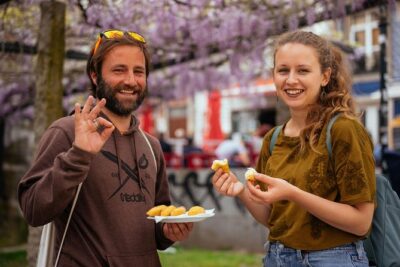 ★ 5.0Porto Private Food and Drink Tasting Tour with LocalFrom $139652 reviews
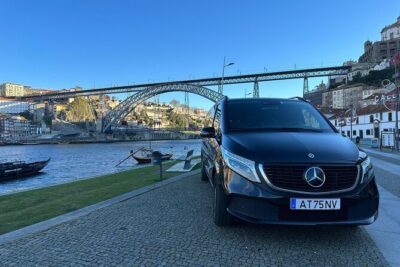 ★ 5.0Private Taxi Transfer to/From Porto AirportFrom $24649 reviews
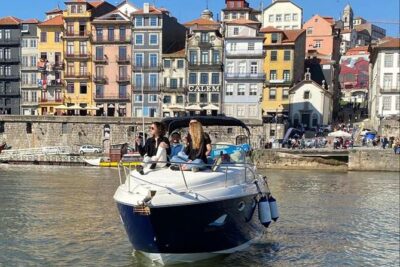 ★ 5.0Private tasting in the Douro (1 to 7 people) on a yacht for yourselfFrom $313559 reviews