
Porto has a talent for surprises in plain sight. This 3-hour walking tour helps you connect the dots across medieval streets, Jewish Quarter history, and the riverside world of Ribeira, with a local guide keeping the story clear and moving. I like how the route blends major landmarks and small alleys, so you see Porto as both a city and a living museum.
My second big takeaway is the mix of stops, especially the Mercado do Bolhão market visit and the riverside time in Ribeira, where you get context for the area shaped by flooding. One consideration, though: this is not a sit-and-watch tour. You will do a fair amount of walking, and it is not suitable for people with mobility impairments.
Key highlights worth your attention
- Local perspective on Porto from medieval times through more recent eras, including changes in government
- Porto Cathedral and the Old Jewish Quarter area to frame how the city developed
- A real stop at Mercado do Bolhão, described as a traditional product market
- Avenida dos Aliados photo pause, plus scenic driving past major viewpoints
- Ribeira riverside views and the story of the flooded neighborhood
Porto’s World Heritage feel, explained by a local
Porto can look like a postcard from the top of a hill. But at street level it is something else, full of layers. This tour is built to help you read those layers without getting lost in facts you cannot use later.
The guide walks you through the World Heritage Historical Center with a timeline that is easy to follow, from the medieval period to contemporary Porto. You also get the political sweep in a human way, with mentions of monarchy, dictatorship, and the Republic. That matters because Porto is not just beautiful, it is also shaped by power shifts and commerce over centuries.
Even better, the tour is designed for perspective, not checklists. You will move through older neighborhoods, then shift toward the river, where you understand why Porto wine and trade were so tied to the city’s identity.
You can also read our reviews of more walking tours in Porto

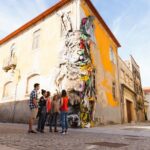

Price and what you truly get for $28
At $28 per person for about 3 hours, this tour is priced like a smart afternoon activity, not a big-ticket day. The key value here is the local guide and the curated route that strings together Porto’s most meaningful areas.
What you should expect is included guide time only: you get the walking tour with a local guide. Entry fees, transportation, and food and drinks are not included, so plan to cover those separately if you choose to go inside anywhere or grab a snack after.
Where the price feels especially reasonable is the way the tour uses a blend of on-foot walking and short scenic drives between viewpoints. That keeps the pacing friendly while still giving you coverage across the city center.
Where you start, and how the route keeps you oriented
You start at the Estátua de Vímara Peres, by the Porto Cathedral. This is helpful because it anchors your first “I am here” moment in a recognizable area, rather than dumping you in a random side street.
From there, the flow is practical. You begin with a historical anchor near the Cathedral, then you layer in transportation-era Porto with a visit to São Bento Station. After that, you jump into a working neighborhood with the market stop at Mercado do Bolhão, which is a great way to balance grand monuments with everyday city life.
Then, you pause for a photo stop at Avenida dos Aliados, and you get a scenic drive segment that helps you see major sights without turning the day into a long hike. The tour finishes in Ribeira, near Ribeira Porto Centro, where the river views make the whole story land.
Stop-by-stop: Cathedral, São Bento, and Mercado do Bolhão
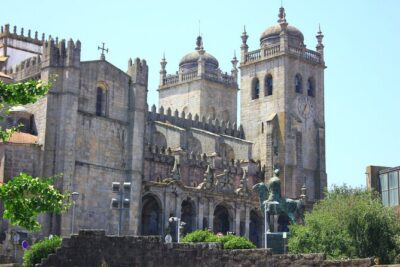
This is the section where you get your strongest “Porto foundations” first. You will spend about 15 minutes outside Porto Cathedral. Since the tour is focused on the surrounding area rather than a deep interior visit, you are mainly getting architectural and historical context plus street-level understanding of where the city gathered energy.
Next is São Bento Station for about 10 minutes. The value here is the way it connects Porto’s history to how people actually move through the city. Even with a short visit, it helps you realize that Porto’s story is not frozen in time. It keeps operating.
Then comes the standout daily-life stop: Mercado do Bolhão for about 15 minutes. This is described as a fresh product market, and I like this kind of stop because it gives you a break from monument mode. You can watch how the market works and how Porto people treat food shopping as part of normal life. If you want a quick taste of authenticity, this is it.
You also benefit from the tour pacing here. Each stop is long enough to make it worthwhile, but short enough that you do not feel dragged. It is a good rhythm for an afternoon walk.
From Aliados to Lello and Clérigos, you get big landmarks without the full fuss
After the market, you get a quick photo stop at Avenida dos Aliados for around 10 minutes. This is one of those spaces that reads instantly as “Porto center,” so even if you never return later, you learn how the city organizes itself.
Then the tour shifts into scenic drive time, about 10 minutes in segments, so you can see highlights without constantly losing daylight to transfers on foot. You get a pass by Livraria Lello & Irmão, then you move on toward Clérigos Church and the surrounding lookout area, and later toward Vitória, Porto.
You will also see Palácio da Bolsa via scenic drive. The benefit of these drive segments is clarity. You are not guessing where these famous sites sit relative to each other, and you get a sense of the route the city follows toward the river.
One more important storytelling piece: the tour connects these landmarks to the larger timeline, not just to postcard aesthetics. That is how you come away feeling like you understand Porto, rather than only seeing Porto.
You can also read our reviews of more guided tours in Porto

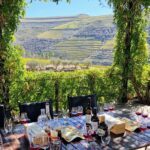


Ribeira Porto, plus the story of the flooded neighborhood
Ribeira is where Porto turns poetic, and the tour gives you enough time to let it make sense. You arrive with the historical context already in your head, so the river becomes more than scenery.
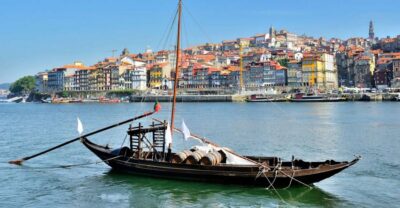
You spend about 15 minutes in Ribeira, Porto, and the emphasis is on the views by the riverside. The tour also points out the significance of the flooded neighborhood of Ribeira. That detail matters, because it explains why the river shapes the city in a very physical way. It is not only romantic, it is also practical and sometimes challenging.
This is also the part of the tour where Porto wine and trade themes feel less abstract. You learn how the city’s identity connects to what happens along the water. Even without a long lecture, you get the basic thread: Porto flourished because it could move goods, and the Douro and the riverfront were key to that.
If you like finishing tours with a payoff view and a story you can repeat later, this ending works well.
Pacing, comfort, and rain planning (Porto does not do timid weather)
This tour operates in rain, so you should treat weather as part of the experience. Dress accordingly. Comfortable shoes are not a suggestion here, they are the whole game. The tour is built for walking, plus short transfers, and sore feet can ruin a good guide day faster than any landmark disappointment.
Also note the safety and behavior rules. The operator reserves the right to refuse service for intoxicated guests, and alcohol and drugs are not allowed. That usually makes the tour feel calmer and more respectful, which you will appreciate if you want a guided experience rather than a party vibe.
One more practical tip: bring clothing you can move in. Even if the weather changes quickly, you are outdoors enough that you will feel it.
Who this tour fits, and who should choose something else
This tour is a solid fit if you want a 3-hour overview of Porto that feels grounded in real neighborhoods. It works well for first-time visitors who want to understand the layout between the Cathedral area, the market district, and the Ribeira riverfront.
It also makes sense if you enjoy history that stays connected to places, not just dates. The tour covers medieval to contemporary eras, and it touches monarchy, dictatorship, and the Republic in a way tied to what you are seeing.
It may not be ideal if you need step-free mobility, because it is not suitable for people with mobility impairments. And if you prefer ultra-slow sightseeing or long indoor stops, this format might feel brisk, since each stop is timed and the day moves from point to point.
A quick note on guides, and why it matters
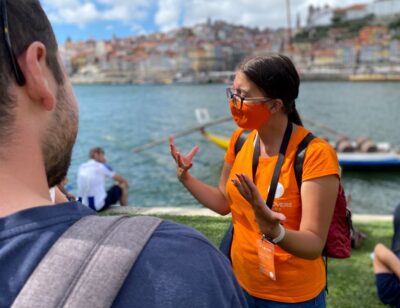
A great walking tour lives or dies on the guide’s ability to make the city readable. The tour uses local guides, and one past guide named Lucas was highlighted as both professional and pleasant, with a good walking pace. That lines up with what you want in Porto, a city where it is easy to wander but not always easy to understand.
If you care about learning how to navigate a place, choose this style of tour. The local guide approach is the core value here.
Should you book this Porto historical walking tour?
I think this tour is a smart booking for most first-time visitors to Porto who want a guided route that connects major landmarks with real neighborhood texture. The $28 price feels fair for a 3-hour local-led walk that includes a market stop and ends with Ribeira riverside views.
Book it if you want:
- a guided historical center route without overcommitting time
- market energy plus big landmark context
- a finish in Ribeira that leaves you with a view and a story
Skip it if:
- you cannot do extended walking or uneven streets
- you only want big-ticket museum-style interiors
If you are traveling with comfortable walking shoes and a curiosity for how Porto evolved over time, this is the kind of tour that helps the city click fast.
FAQ
How long is the Porto historical walking tour?
It lasts about 3 hours.
What is the price per person?
The price is $28 per person.
Where do I meet the guide, and where does the tour end?
You meet at the Estátua de Vímara Peres next to the Porto Cathedral. The tour ends at Ribeira Porto Centro.
What is included in the tour price?
The included part is the walking tour with a local guide. Entry fees, transportation, and food and drinks are not included.
Is the tour offered in multiple languages?
Yes. The live guide is available in English, Portuguese, and Spanish.
Does the tour run in bad weather?
It operates in the rain. The local partner may reschedule due to adverse weather, and rescheduling on the same day can be possible depending on availability. The tour also offers free cancellation up to 24 hours in advance for a full refund.
More Walking Tours in Porto



More Tours in Porto





More Tour Reviews in Porto


Keep comparing: recently reviewed experiences around Porto
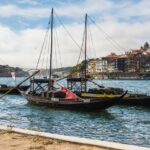








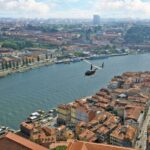
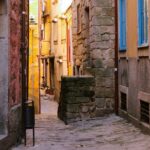

Porto City Walks, compared.
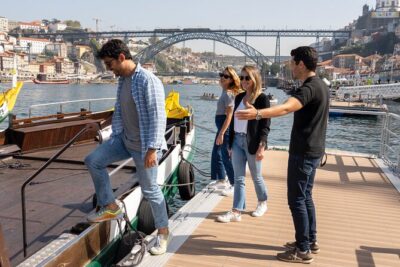 ★ 5.0Porto Walking Tour, Lello Bookshop, River Cruise and Cable CarFrom $723,354 reviews
 ★ 4.8City Highlights 3-Hour Guided Electric Bike TourFrom $513,092 reviews
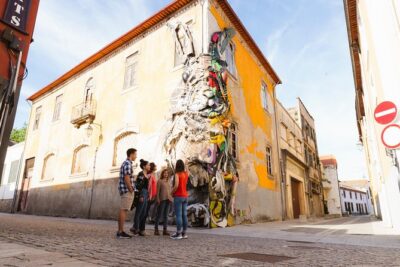 ★ 5.0Experience Porto’s Charm: 3-Hour Guided Walking TourFrom $352,432 reviews
 ★ 4.83-Hour Guided City Highlights Walking TourFrom $342,050 reviews
 ★ 4.4Wine Tasting with Tapas Walking TourFrom $531,541 reviews
 ★ 4.7Historic City Center Walking TourFrom $331,172 reviews
 ★ 5.0Porto’s #1 Walking TourFrom $01,026 reviews
 ★ 4.8Delicious Food and Wine Walking TourFrom $87977 reviews
Browse the lists this tour appears in