
Aveiro is small, but it packs character. This 2.5 hour tour blends Art Nouveau streets, classic Portuguese sweets, and a shared moliceiro boat ride so you feel the city in one go. You start at the Obelisco da Liberdade, get a guided wander through Beira-mar, then close with canals at the Aveiro Lagoon.
Two things I really like: the ovos moles tasting, and the way the guides bring the town’s details to life. Guides such as Rossana and António use local stories about buildings, tiles, churches, and even how the past worked, so the sights do not feel like random photos.
One possible drawback to plan for is the walking. The route runs through narrow, cobbled streets, so comfortable shoes matter, and weather changes can happen, meaning you should bring a jacket or umbrella.
Key things that make this Aveiro tour work
- Beira-mar on foot with a live guide, so Art Nouveau details and local symbols make sense
- Ovos moles tastings at a place with more than a hundred years of experience making the classic sweet
- Friendship Bridge ribbons, a quick ritual that turns into a memorable photo and keepsake
- São Gonçalinho’s Chapel, Republic Square, and major landmarks in a tight walking loop
- Moliceiro boat time at the end, so you finish where Aveiro’s story gets most visual
- English, Spanish, and Portuguese live guiding, plus a wheelchair accessible route
Aveiro’s Art Nouveau charm, plus canals you can actually see
Aveiro has a reputation for being pretty, but this tour is designed to help you understand why. In a short time, you get your bearings in the Beira-mar neighborhood and then you get the pay off, canals from the water on a moliceiro boat.
I like that it is not just a sightseeing checklist. The guide focuses on how the city grew, why you see so much Art Nouveau here, and what the locals mean when they talk about people like the marnoto. That context changes the way you look at façades, tiles, and even small monuments around town.
And yes, you get the sweet stuff. Aveiro’s signature ovos moles show up as an actual tasting, not just a name dropped on a map. That makes it easy to leave with a real sense of place, not only impressions.
You can also read our reviews of more walking tours in Aveiro

Starting near Praça Joaquim de Melo Freitas, then easing into Beira-mar
You begin near the Obelisco da Liberdade, in Praça Joaquim de Melo Freitas. That is a good setup because it gets you into the walk quickly, without you needing to figure out complicated transfers.
Once you start, the tour follows the typical Beira-mar neighborhood lanes. Expect narrow cobbled streets, Art Nouveau building façades, and tile panels that you might otherwise miss if you were wandering alone. The pace is kept casual, so you can absorb details, take photos, and ask questions without feeling rushed.
Practical tip: plan your shoes first. This is the kind of walk where comfort beats style. If you are traveling with people who need easy footing, this tour is still manageable because the group keeps moving at a steady, human tempo.
Art Nouveau buildings, tiles, and the marnoto story you will remember
Aveiro is often called the Portuguese capital of Art Nouveau, and this is where that label becomes real. The tour takes you through the kind of streets where you can spot decorative patterns, distinctive façades, and the overall design language that makes Aveiro look like a living museum.
One of the smartest parts is how the guide connects what you see to who lived there and how the city worked. You learn why certain symbols show up, how the salt extraction and canal life relate to the boats, and what the marnoto does in the local world. It is exactly the kind of explanation that makes architecture more than decoration.
You also visit key stops along the way, including the building of the Museum of Art Nouveau. Even if you are not buying museum tickets, the façade and surrounding context help you understand what this city invests in visually.
If you enjoy details, you will likely appreciate side moments too. In at least one account, the route included a look at walls of collectible tinned sardines and eels, which gives you a sense of local craft and collecting culture. You might spot similar street-scale surprises depending on the exact route that day.
Republic Square to the Cathedral of Aveiro, with Santa Joana at the center
A big part of the tour is moving through Aveiro’s identity points: public squares, churches, and landmark buildings that anchor the neighborhood. Republic Square is a key stop, and it helps you understand how the city organized itself over time.
From there, you see major structures such as the Mercy Church and the City Hall. The tour also includes the statue of José Estevão, an important Aveirense, which gives you a quick human connection to the place, not just stone and tiles.
The guide continues with another important religious and cultural anchor: São Gonçalinho’s Chapel. Then the tour shifts toward the Cathedral of Aveiro, so you get a sense of how Aveiro’s religious life and public identity overlap.
One highlight I would not skip even if you are short on time is the way Princess Santa Joana enters the story. You learn how prestige and presence linked to buildings like the Museum of Art Nouveau route and the former Convent of Jesus of the Feminine Dominican Order. Even without going inside, the explanation makes those structures feel meaningful rather than random stops.
Ovos moles tasting: the sweet that turns history into flavor
Ovos moles are the main reason many people come to Aveiro, and this tour treats them like more than a souvenir. You taste the signature sweet at a place with more than a hundred years of experience making the most genuine and famous ovos moles.
What I like about doing it on a guided walk is timing. You taste it after seeing the Art Nouveau streets and after hearing a bit of how the canals and local economy shaped daily life. Suddenly, the sweet is not just something you buy, it feels like a local tradition you are experiencing in the right order.
Ovos moles also work as an easy memory hook. You will remember the look of the streets, and then your brain will connect that image with the flavor of the city’s best known specialty.
Note on extra bites: the core tasting is ovos moles. In some accounts from the tour, people also mention small additions like ginja or tripa-like desserts. You should not count on those as guaranteed, but it is a good sign when the guide can steer you toward more local flavors once you are already in tasting mode.
You can also read our reviews of more boat tours in Aveiro


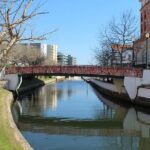
The Friendship Bridge ribbon ritual: quick, symbolic, and very photogenic
Just before the boat ride, you get a colorful ribbon and instructions for tying it on the Friendship Bridge. This is one of those small moments that feels silly for ten seconds, then instantly becomes real.
Why? Because it turns a viewpoint into a personal marker. After your walk through streets and squares, you are now adding something to the canal side of town. It is also a strong photo moment, especially if you like “before the boat” pictures where the bridge becomes a vivid focal point.
I also like that it creates a natural break in the flow. Walking ends, tying the ribbon happens, then the moliceiro ride begins. That rhythm keeps you from feeling like the tour is one long blur.
The moliceiro boat cruise at the Aveiro Lagoon, and what to watch for
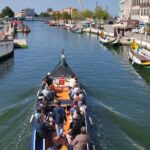
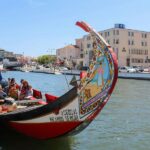
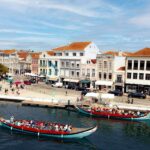
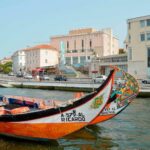
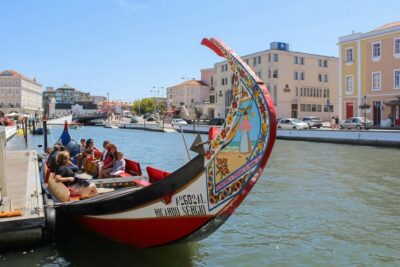
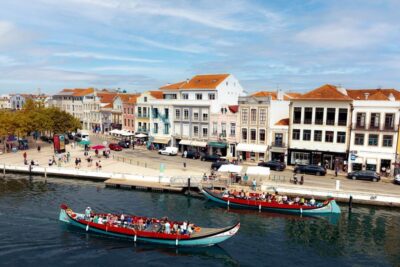
The tour ends with a shared moliceiro boat tour of about 45 minutes. This is the moment where Aveiro stops being a museum of façades and becomes a city of water.
Moliceiros are part of Aveiro’s canal identity, and your guide helps you understand what you are looking at as you glide along. You get the story behind why these boats matter and how the canals connect to salt extraction and daily life.
Here is what you should watch for during the ride. Look for how the coastline and buildings reflect into the water, notice how canal edges are shaped for boat access, and pay attention to the guide’s explanation of what the marnoto role connects to.
In at least one experience, the boat guide Joana translated into four languages, which is a nice reminder that the boat portion is meant to be informative, not just a scenic cruise. If you want a readable summary of local life, this is the section that gives it to you.
Price and value: what you get for $41 and why it feels fair
At $41 per person, this tour is priced in the “short and focused” category. What makes it good value is that you are not only paying for a walking guide.
You get:
- a guided walk through the main highlights of Aveiro’s Beira-mar area
- the ovos moles tasting
- the ribbon activity at Friendship Bridge
- the shared moliceiro boat ride
- an experienced live guide in English, Spanish, or Portuguese
If you only did a self-guided walk, you might be able to match the sightseeing for free, but you would lose the explanations that connect Art Nouveau details, tile symbolism, and local canal life. And if you only booked a boat ride, you would miss the context that makes the city feel coherent.
So the price is not just about movement and attractions. It is about getting the story in the right order, then finishing with the visuals that confirm it.
Who this Aveiro tour is perfect for
This is a strong pick if you want a compact introduction to Aveiro and you like guided explanations over wandering. It works especially well if you:
- want to see Art Nouveau highlights without planning a self-made route
- care about tasting local food, not just taking photos
- enjoy canal cities and want the water portion included
- prefer a relaxed pace, with time to ask questions
If you already know Aveiro well and want deep, hours-long museum time, you might find the stops a bit quick. The tour is about big impressions and clear context, not a full museum day.
Before you go: shoes, weather, and how to plan your day
Bring comfortable shoes. The walk includes narrow cobbled streets, and you will be on your feet long enough to notice if your footwear is wrong.
Also pack:
- a camera (there are lots of Art Nouveau façades and bridge photo angles)
- a water bottle (especially in warmer weather)
- a jacket or umbrella if the forecast looks iffy
If you want clean logistics in your day, aim to arrive a little early. You meet near the Obelisco da Liberdade, in Praça Joaquim de Melo Freitas, so you can regroup before the guide gathers everyone.
Should you book this Aveiro tour?
Book it if you want the best of Aveiro in about 2.5 hours, with clear guidance, a real local tasting, and a boat ride that ties everything together. This tour is especially appealing if Art Nouveau buildings and canal life are your priorities, because it gives you both, in the right sequence.
Skip it if you are looking for a long museum-heavy day or if you have very limited mobility for walking on cobblestones. Otherwise, it is a smart, cost-effective way to get Aveiro’s look, taste, and water story without overplanning.
If you want a simple rule: walk the city with a guide, then let the lagoon finish the job.
More Walking Tours in Aveiro

More Tours in Aveiro


More Tour Reviews in Aveiro
Keep comparing: recently reviewed experiences around Aveiro


Aveiro & Costa Nova Day Trips, compared.
 ★ 4.5Aveiro: Traditional Moliceiro Boat TourFrom $163,443 reviews
 ★ 4.5Aveiro and Costa Nova Half Day Tour from Porto with Boat RideFrom $551,522 reviews
 ★ 4.4Aveiro: Scenic Guided Boat TourFrom $171,047 reviews
 ★ 4.4Aveiro: Half-Day Tour from Porto with CruiseFrom $52963 reviews
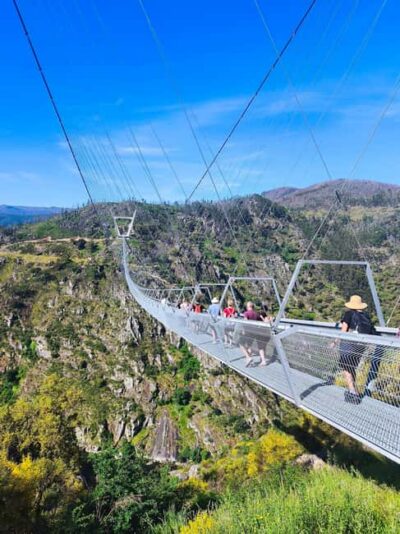 ★ 4.9From Porto: Aveiro, Paiva Walkways and Arouca 516 FootbridgeFrom $142957 reviews
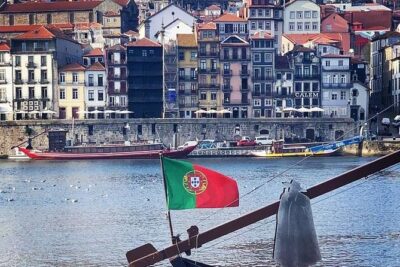 ★ 5.0Porto to Lisbon Up to 4 Stops: Aveiro, Nazare, Fatima & ObidosFrom $287810 reviews
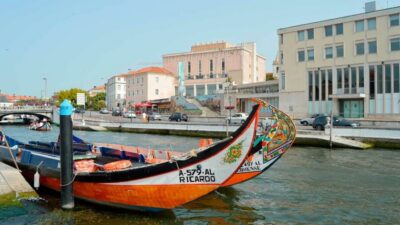 ★ 4.5Aveiro: Traditional Moliceiro Boat CruiseFrom $15797 reviews
 ★ 5.0From Porto: Aveiro, Paiva Walkways, Suspension Bridge and LunchFrom $130434 reviews
Browse the lists this tour appears in