Reviewed · PORTO
Ride through romantic Foz in an eco-friendly car
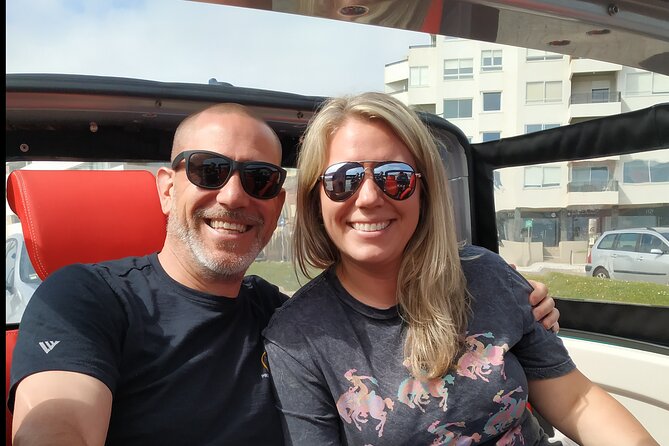
An electric ride along Porto’s riverfront saves time. You move past major sights without fighting stairs, and the E-Mehari keeps the trip breezy and calm as you travel from the Douro to the Atlantic.
I love two things most about this tour: the quiet, open-air electric car that feels fun without the rumble, and the built-in photo pauses that let you actually look, not just pass by. The pace works well when you only have a couple hours and want the coast right away.
One drawback to keep in mind is the good weather requirement. If conditions are bad, the experience may be canceled and rescheduled (or you get a full refund), so keep it flexible in your plan.
Key things I’d plan around
- Quiet, eco-friendly E-Mehari transport that makes Porto’s hills and waterfront feel easy.
- Small “watch and record” pauses at key viewpoints, especially Santa Catarina over the Douro estuary.
- Douro right-bank scenery with slope houses and riverside landmarks along the historic district.
- Arrábida Bridge (Edgar Cardoso) for bridge-lovers who like real engineering facts.
- Atlantic switch at Foz do Douro and Matosinhos so you see both river mood and sea mood.
- A glass of Port wine included, which turns a quick ride into a proper Porto moment.
Why this eco-friendly E-Mehari ride works in Porto
Porto is beautiful, but it can also be a walking workout. This tour is smart because it uses an eco-friendly electric vehicle to connect the city center to the water in about two hours.
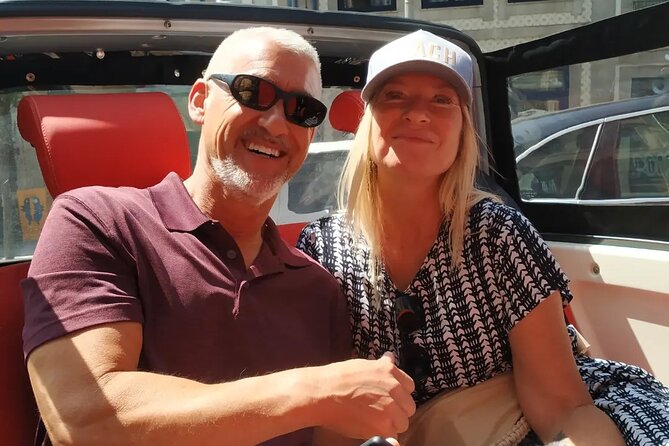
The vehicle matters. An electric E-Mehari style ride is open and lively, so you feel the breeze and see what’s around you. And because it’s not a noisy engine, you can hear your guide and still enjoy the views.
The other big reason this works is structure. You get a sequence of named stops: cathedral hill, riverside, a viewpoint break, then Foz and Matosinhos. It’s not random driving. It’s a route designed to show the river-right-bank story and then pivot to the sea.
Compare more reviewed experiences around Porto before fixing the rest of your day.



Meeting at Rua do Infante D. Henrique, then heading downhill to the Douro
You start at Rua do Infante D. Henrique 111, right in central Porto. That’s a practical location because it places you close to the historical core, before the tour begins its move toward the river.
From there, the drive immediately sets the tone: you go down toward the Douro and start picking up skyline and river views. You also pass through one of Porto’s classic squares, Infante D. Henrique square, where the statue becomes a quick visual anchor for the neighborhood change.
If you’re the kind of visitor who likes an efficient start, this is it. You’re not waiting around in a parking lot. You’re moving while your eyes are still fresh.
Catedral do Porto and the Morro da Pena Ventosa viewpoint-in-your-mind
The Cathedral do Porto is the meeting point, and it signals what you’re about to see. This area is tied to Porto’s oldest city growth, linked to the hill called Morro da Pena Ventosa.
It’s only a brief moment on the stop list (about five minutes), and admission to the cathedral itself is not included. That means I’d treat it as a “meet, orient, and get the feel” moment rather than a full interior visit.
Still, the location is useful. Even if you do not go inside, the cathedral hill helps you understand why Porto looks the way it does: it’s built around climbs, overlooks, and the drama of the river cutting through everything.
Infante D. Henrique Square, Palácio da Bolsa, and Igreja de São Francisco
As you head toward the Douro, you pass Infante D. Henrique square and then observe two major landmarks that many people plan around on separate days.
You’ll see Palácio da Bolsa, the Stock Exchange Palace, and Igreja de São Francisco, the Church of St. Francis, known as a 14th-century church. The route has you observing them as part of the ride, so you get their presence without turning this into a museum day.
Here’s the practical value: you’ll likely recognize these buildings later when you walk around. A short “on the route” sighting helps you connect the map to real places, especially in Porto where streets can start to blur after a few days.
The right bank of the Douro: slope houses, customs history, and what you’ll spot
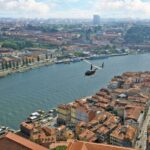
After you’re past the city core, the tour follows the right bank of the Douro. This is where Porto changes from “streets and squares” to “river and hillside.”
On this stretch, you can appreciate the houses built on the slope of the Douro. Those stacked facades make the city feel dramatic in a way photos do not fully explain.
You’ll also have chances to spot several named points of interest, including S. Pedro de Miragaia Church, the old customs house called Alfandega (now used as the Congress Center and a Museum of Transport), and the Museum of Discoveries.
A quick note on expectations: the tour’s phrasing here is about appreciation and glimpses along the way. So think of this as a visual tour first. If you want interior time at any museum, you’ll need extra time on your own.

Massarelos, the Arrábida Bridge, and Edgar Cardoso’s engineering moment
Once the route continues along the river and passes through Massarelos neighborhood, you spot Arrábida Bridge. This is not just a pretty crossing. It’s tied to a specific engineering story: it was designed by Porto engineer Edgar Cardoso.
The bridge is described as having, in the 1960s, one of the longest reinforced concrete arch spans in the world at the time. That’s a fun fact to carry because you start looking at the bridge differently. You stop seeing it as just a backdrop and start seeing it as a real engineering landmark.
Also, the timing works. You’re not rushed off the bridge view. You’re moving, but you have the chance to register the structure while the river is still in your peripheral vision.
Santa Catarina viewpoint over the Douro estuary, Lordelo do Ouro fishing views
Then you arrive at Miradouro de Santa Catarina for a pause of about ten minutes. In ancient times, this part of town was a typical fishing neighborhood near the mouth of the river, called Lordelo do Ouro. This viewpoint is where the river begins to widen into the estuary.
From here, the tour points out specific areas you can see: the Local Natural Reserve of the Douro Estuary, the fishing district of S. Pedro da Afurada, and Calém Garden, among other points of interest.
The practical benefit of this stop is simple: it resets your bearings. Porto can feel like a tangle of hills and viewpoints. One solid wide view helps you plan the rest of your day with confidence.
Bring your eyes, not your itinerary. Ten minutes is not enough to do deep sightseeing here, but it is enough time to take a few photos and understand where the river runs before you head out toward the sea.
Foz do Douro gardens and Passeio Alegre along the aristocratic edge
After the viewpoint break, the ride continues toward the Atlantic. You pass a small fishing port area called Cantareira and then arrive at Foz do Douro.
This is where you start seeing Porto’s seaside personality. You get glimpses of Passeio Alegre gardens and surrounding houses linked to Porto’s aristocracy. It’s a different vibe from the riverfront neighborhoods, more open and more coastal.
If you like places where the city meets the sea in a gentle way, Foz do Douro is a good match. The tour keeps you moving, so you’re not stuck in one single overlook. But you still get enough visual variety to feel like you’ve changed locations, not just changed scenery.
Matosinhos Beach, Avenida do Brasil to Montevideou, then the sea break
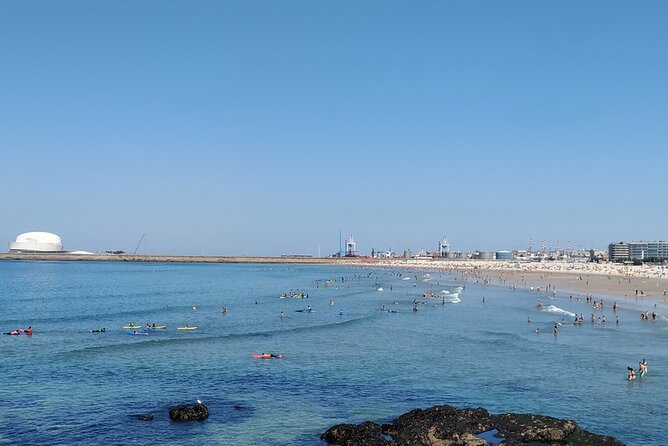
Finally, the route reaches the city limits and continues along the Atlantic avenues: Avenida do Brasil and Montevideu. On one side, you get the city park setting. On the other side, Matosinhos beach comes into the background.
From there, the tour continues through Matosinhos to the beach area for another break, again about ten minutes. Admission is listed as free for this stop area, which is great because you’re not losing time figuring out tickets.
This last segment is what makes the whole day feel complete. You’re ending on the Atlantic after the Douro. That river-to-ocean shift is the big emotional arc of the tour, and it’s hard to recreate in the same amount of time by walking.
Port wine included, plus the reality check on food
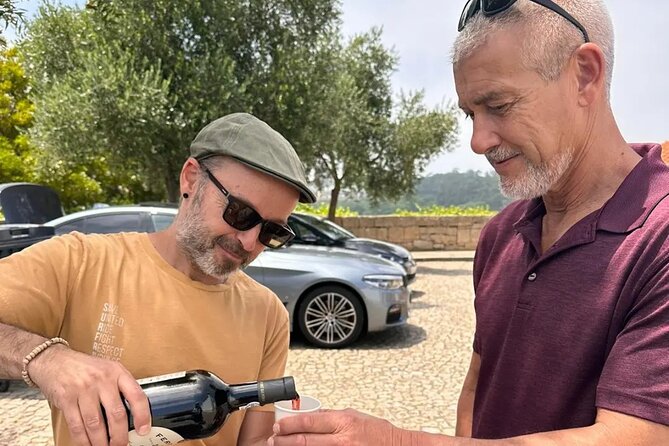
The tour includes alcoholic beverages, and that includes a glass of Port wine. This is a very Porto choice. You’re doing a “river to sea” route, and Port is the city’s signature drink tied to the Douro region.
What’s not included is lunch. So you’ll want to think like a local for planning: if you’re hungry, eat before you go or have a snack afterward. Since the tour is about two hours, it’s not a meal replacement. It’s more like a high-impact sightseeing session with one nice drink built in.
Also, your timing matters if you want to add anything on top. If you plan to visit an interior attraction later, you’ll still want a meal sorted so you’re not making decisions while hungry and tired.
Price and value: what $56.47 gets you in two hours
At $56.47 per person, you’re paying for efficiency plus a specific kind of transport. You get private transportation, and the tour is private, meaning only your group rides together rather than sharing the vehicle with strangers.
That alone can make the cost feel fair, especially if your group is small. Private tours usually cost more, but two things often justify it here: (1) Porto’s geography makes car access meaningful, and (2) the route hits multiple named areas that would take longer to stitch together on foot.
The included glass of Port wine adds a small but real “Porto tax” relief, since wine tasting is usually not free. And because the tour relies on good weather, the overall value improves when your day is sunny and clear, not gray and rainy.
Timing, weather, and how to make the most of 2 hours
This is an approximate two-hour experience with short stops. That can feel limiting if you’re hoping for long museum visits. But if your goal is to see the river, hit a viewpoint, and end at the ocean, the timing is actually ideal.
The big condition is weather. The experience requires good weather, and if it’s canceled due to poor weather, you’ll be offered a different date or a full refund. That means you should plan it on a day you can still adjust.
My practical advice: treat this as your “move the map into your head” day. In two hours you’ll get a coherent route through Porto’s waterfront story, and you can build your later walking plans based on what you see from Santa Catarina and around Foz.
Private group comfort, photo pauses, and guide energy
Because it’s private, you can expect the vibe to feel more relaxed. You’re not stuck in a line with strangers or competing for side-of-the-road photos. The route is paced with stops for looking and recording the scenery.
Guide style matters on a tour like this, because you’re passing many named places and you need context fast. Based on typical feedback for this operator, the best moments come from a guide who is friendly, quick with explanations, and willing to stop for photos without making it feel like a delay.
If you’re traveling as a family, or you want an easy way to introduce Porto’s highlights to someone who tires quickly, a private electric-car route is a smart solution.
Who this tour is best for
I’d especially recommend this if you fit one of these situations:
- You want a high-scenery Porto experience but you don’t want to do a long walking day.
- You’re short on time and want the river-right-bank plus Foz plus Matosinhos in one loop.
- You like views, bridges, and city sections with distinct identities (old core, Douro slope neighborhoods, then sea air).
- You want a small drink moment without planning a separate tasting stop.
If you are a hardcore museum person who wants long interior visits, you might still enjoy the ride, but you’ll need extra time for sites you want to go into. This is not designed to replace a full day of museum tickets.
Should you book this eco-friendly Porto to Foz ride?
If your schedule has room for one weather-dependent outdoor experience, I think this is a strong booking.
Book it if you want the Douro and Atlantic connection in a short time, enjoy the idea of a quiet open vehicle, and like having a Port wine included so you don’t have to add a tasting stop. It’s also a good fit for groups who benefit from private pacing.
Skip it only if you already know you want deep interior time at multiple landmarks, because the stops here are short by design. Also, if rain is likely and you cannot shift dates, you may find the weather requirement annoying.
FAQ
How long is the Porto, Douro, Foz, and Matosinhos ride?
The experience runs for about 2 hours.
What’s included in the price?
The price includes private transportation and alcoholic beverages, including a glass of Port wine.
Is lunch included?
No, lunch is not included.
Do I need tickets for the stops?
Catedral do Porto admission is not included. The Miradouro de Santa Catarina viewpoint and the Matosinhos Beach break are listed as free.
Is this tour private or shared?
It’s private, meaning only your group participates.
What if the weather is bad?
The tour requires good weather. If it’s canceled due to poor weather, you’ll be offered a different date or a full refund.
Are service animals allowed and is it suitable for most people?
Service animals are allowed, and it’s listed as suitable for most travelers. It also notes it is near public transportation.