
Reviewed · PRIVATE PORTO TOURS
Private transfer from Porto to Lisbon with two Sightseeing stops
Porto to Lisbon is a long hop, but it can feel like a whole day out, not a sad commute. This private transfer lets you trade sitting on a bus for two planned stops in standout places along the way, with a professional driver in a comfortable car. I also like that you start with pickup help (airport arrivals with a name-board or hotel/hostel pickup) and then move at the pace you actually need.
One thing to consider is time. You only have about an hour at each stop, and lunch is not included, so you’ll want a light plan for eating and be realistic about seeing a lot in limited time.
Key highlights at a glance
- Private door-to-door comfort: Air-conditioned car, WiFi on board, and water for the ride
- Two sightseeing stops included: You choose the pair that fits your interests and season
- Great driver flexibility: Reports include drivers like Gabriel, Gustavo, and Fabio tailoring the day
- Iconic regional moments: Canals in Aveiro, university views in Coimbra, and big-ticket pilgrimage at Fátima
- Coast or inland balance: Nazaré and Óbidos for sea-air, or Batalha and Alcobaça for UNESCO monuments
- Real-world reroutes happen: If access is disrupted by wildfires, the plan may shift to keep sightseeing quality high
A Porto to Lisbon transfer that feels like sightseeing, not logistics
This is the kind of trip that makes sense if you want the convenience of a transfer without losing the fun of travel days. Instead of rushing from Porto to Lisbon in one straight line, you build in two stops that are genuinely different from each other. One minute you’re near canals or university views, the next you’re in a pilgrimage complex or staring at the Atlantic from a cliff town.
I like private transfers best when the route includes planning pressure. Here, someone else handles the driving, and you get a controlled window of time at each stop. That means you can focus on the walkable parts, the viewpoints, and the stories that give a place its personality.
Compare more private Porto tours with a guide in Porto


Price and value: what you’re really paying for
The price is $794.71 per group (up to 3), with an expected duration of 3 to 8 hours depending on the stop pair you choose. On paper, that can sound high compared to public transport. In practice, you’re paying for three things that add up fast:
First, you’re paying for privacy and door-to-door pickup. Second, you’re paying for a comfortable car, with WiFi on board, plus water, so you arrive less frazzled. Third, you’re paying for a driver who can shape the day, not just point a GPS screen at you.
Where this becomes strong value is when you’d otherwise spend time coordinating transit plus squeezing in a couple of half-day side trips. If you’re traveling with up to three people, it can work out surprisingly sensible compared to individual tickets, taxis, and time lost to transfers.
How the two included stops work (and how to choose your pair)
You get two sightseeing stops included, each planned for about 1 hour. Most of the stops in the set are listed with admission ticket free, except Alcobaça where the admission ticket is not included.
That hour per stop is the trade-off for keeping the transfer smooth. You won’t fully “do” any single city like you would with an overnight plan. But you will get the key experience if you choose well and move with purpose.
Here are the stop pairs you can select:
- Aveiro and Coimbra
- Aveiro and Fátima
- Batalha and Alcobaça
- Batalha and Nazaré
- Nazaré and Óbidos
Think of it like this: if you want a mix of water views and cultural landmarks, choose Aveiro and Coimbra. If you’re aiming for spiritual history and atmosphere, Aveiro and Fátima is a natural combo. For a monument-heavy day, Batalha and Alcobaça is your route. For sea views plus small-town charm, go with Nazaré and Óbidos or Batalha and Nazaré.
What you get on the road: car comfort and driver support
This is a private transportation experience, limited to just your group. Pickup is flexible: you can meet the driver at airport arrivals with a name-board, or get picked up at your hotel, hostel, or private accommodation in Porto.
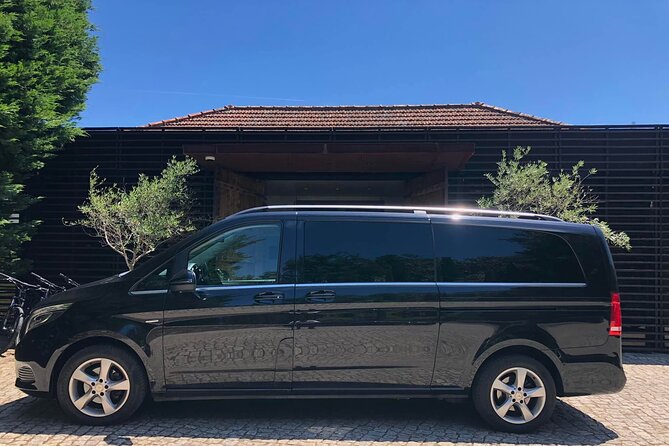
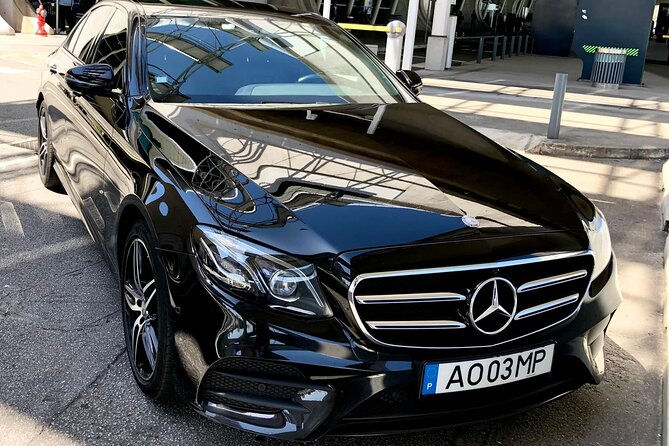
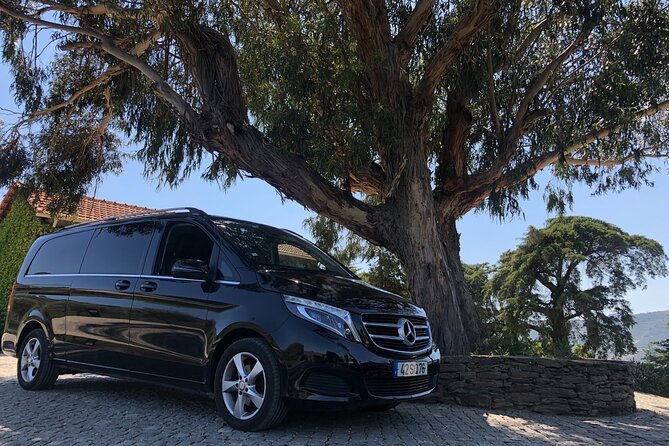
Your vehicle is described as a luxury car with a professional driver, and you’ll have WiFi on board plus water. There’s also premium insurance coverage, required by Portuguese law.
A detail I really appreciate in this type of service is the human factor. In the provided trip notes, drivers such as Gabriel and Gustavo come across as accommodating and able to tailor the day to what the group wants. One account even highlights a driver going the extra mile when an accommodation address got mixed up, staying longer to help get everyone sorted. That’s not something you get from a random rideshare.
If wildfires or road closures hit, expect a plan B
Portugal can have sudden weather or wildfire issues in the warmer months. In one real example, access to Aveiro was affected by a forest fire, and the driver adjusted by spending more time in Óbidos instead. That kind of shift matters, because it protects your day from becoming an empty transfer.
So if you’re booking during a high-risk season, go in with a flexible mindset. You may not see exactly the place you planned first, but the goal is still to keep the sightseeing portion meaningful.
More Porto river cruises, city walks, and northern Portugal day trips to compare






Aveiro canals and moliceiro boats: the Venice-style stop
Aveiro is one of those places where the experience is visual first. You’re in canal territory, with moliceiro boats that look like the classic gondola idea. It’s calm in a way that feels different from both Porto and Lisbon, which makes it a great “reset” stop.
With only about 1 hour, I suggest you aim for two things: a focused canal stroll and one viewpoint where you can take in the water and the boats. If you want photos, this is the time to do it. Aveiro also tends to be an easy stop for families or mixed ages because it’s largely walkable and not a maze of major monuments.
A small consideration: if your goal is to add lots of extra activities, the hour can slip away. Keep your plan simple. You’re collecting a feeling of place here, not trying to do a full day.
Coimbra and the old university overlooking the Mondego
Coimbra gives you a very different mood. It’s built around learning, history, and a big river setting. The draw is the old university area and the views over the Mondego River, with the city’s story stretching back to the early days of Portugal’s capital power.
An hour is enough to do a short “great hits” visit: walk toward university-facing viewpoints, get your bearings, and then enjoy the river context. Coimbra works especially well if you like places where you can feel the weight of time without standing in a museum hallway all day.
The bonus is contrast. If you’re combining Aveiro with Coimbra, you’ll go from canals to a river city with a strong sense of intellectual heritage. That change alone is worth the stop.
Fátima sanctuary: when faith becomes an entire town
Fátima is on a different scale. The Sanctuary of Our Lady of Fátima is one of the world’s biggest Catholic pilgrimage sites, drawing millions of visitors each year. The story centers on the 1917 period, when three shepherd children are believed to have seen apparitions of the Virgin Mary between May 13 and October 13.
What you’ll experience in that hour is the atmosphere: large religious spaces, big crowds or big emptiness depending on the time of year, and a place that’s both spiritual and practical, like a city built for visitors.
If your group cares about history, you’ll appreciate how specific the narrative is: the messages and predictions connected to the 1917 appearances, plus the story about observers seeing the sky in a dramatic way. Even if you approach as a cultural observer rather than a pilgrim, it’s hard not to feel the gravity of the site.
One practical note: dress codes and respectful behavior matter at sacred sites. Comfortable shoes matter even more. This is a stop where you’ll want to move steadily, not sprint for selfies.
Nazaré and Praia do Norte: coastal views with wave legend energy
Nazaré is a classic “Portugal by the sea” day. The town has beaches, seafood restaurants, and lookout points with serious ocean views. For most of the year, it’s known less for sunbather crowds and more for surf culture.
The headline wave myth is tied to Praia do Norte, where surfers have been reported riding waves nearing 30 meters. Even if you’re not there during peak surf season, the views and cliffside energy make the stop worth it.
In an hour, you’ll want to do the obvious: pick one lookout, scan the coastline, and then walk a short section of town to soak up the atmosphere. Nazaré works best when you want a strong exterior visual experience, something you can feel from a distance.
If you’re traveling with people who dislike long museum days, Nazaré is usually an easy win. It’s outdoors, it’s photogenic, and it’s simple to enjoy even without a big plan.
Batalha monastery: Gothic grandeur tied to a national victory
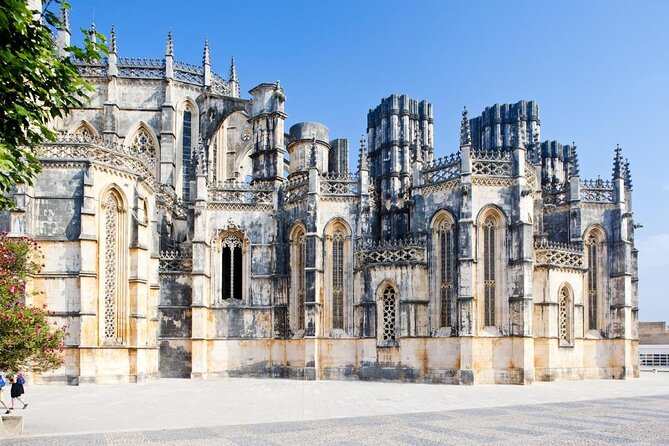
Batalha adds Portugal’s monument story. The Monastery of Santa Maria de Vitória was constructed in the late 1300s after a vow linked to the Battle of Aljubarrota in 1385. The legend is specific: King Dom João I vowed to build it if Portugal defeated Castile, and the monastery becomes the architectural payoff.
This is a good stop if you want one strong cultural anchor in a short time. The monastery’s setting also helps. Even if you’re not a medieval-history superfan, the idea of a vow made on a battlefield becoming a grand religious site is a compelling frame for the visit.
With only an hour, I’d focus on the most significant parts you can reach without rushing. If your group loves architecture, you’ll probably want more time here than you’re given, but as a transfer stop it still delivers.
Alcobaça monastery: UNESCO-level tomb drama and monument scale
Alcobaça is the “main reason people come” stop in this set. The Monastery of Santa Maria d’Alcobaça is a UNESCO World Heritage site, and the big draw inside is the connection between the tombs of King Pedro I and Inês de Castro.
The story has everything: political assassination, a later shift in power, and a legend that Pedro ordered Inês’ remains moved to Alcobaça after he became king. There’s also the famous, grimly poetic detail about a popular legend of her being crowned and homage being paid to her, tied to the tomb location and the story tradition around it.
Here’s the practical catch: in the tour details, Alcobaça admission ticket is not included. That means your planning should include a little extra thought about entry costs. It’s still a worthy stop, but go in knowing this one may ask for additional payment beyond what the rest of the itinerary lists.
If you want the most “this is why I’m traveling” monument moment on your transit day, Alcobaça is your best bet.
Óbidos: medieval walls, cobbles, and a small-city magic feeling
Óbidos is one of those places that makes you slow down without trying. It’s a walled town with cobbled streets, whitewashed homes with brightly painted trim, and the dramatic backdrop of a medieval castle.
The story behind the place adds charm. Óbidos is described as a gift from King Denis to his queen on their wedding day in 1282. That means even a short visit comes with a romantic frame that you can feel while walking.
Because you have about 1 hour, I suggest you pick a loop: enter, walk the main historic streets, and stop at viewpoint spots that give you the wall and castle perspective. If the group likes photos, this is the stop that delivers them fastest.
A practical thought: Óbidos can be busy, especially seasonally. If it feels crowded, don’t fight it. Walk the perimeter and look for quieter side streets.
Lunch reality: plan to snack or eat on your schedule
Lunch is not included. Since each sightseeing stop is around an hour, you’ll likely either:
- squeeze in a simple meal option during one stop, or
- grab something quick before your next segment begins.
In one example from the trip notes, lunch was added at a family restaurant during a stop like Coimbra. That shows the day can accommodate food, but it depends on your timing and what’s open.
My suggestion is to travel ready. Carry water, plan for a snack, and don’t assume a full sit-down lunch fits perfectly into a one-hour window.
Timing, morning start, and how to stay relaxed
The transfer starts at 9:00 am. You’ll likely feel the day more than you would on a slower itinerary, because you’re moving between different environments. That’s normal. The win is doing it in a way that still feels like a vacation day.
To keep it smooth, I’d do three things:
- Wear comfortable shoes you don’t mind walking on for a solid hour.
- Keep your phone charged and use the onboard WiFi when you want to check directions fast.
- Decide ahead of time what matters most at each stop, so you don’t spend the first 20 minutes just browsing.
Also, this is booked with a decent lead time on average, so if you’re traveling in a high season month, don’t wait too long to lock your route choice.
Who this private transfer suits best
This is a strong fit if you’re:
- traveling with up to 3 people and want privacy without the hassle of coordinating separate parts of the day,
- short on time but still want meaningful detours, not just a straight transfer,
- interested in Portugal’s variety, from canal towns to university views to pilgrimage sites and sea cliffs.
It’s less ideal if you expect deep, unhurried sightseeing at multiple places. One hour per stop is about experiencing the highlight and moving on with a sense of satisfaction.
Should you book this Porto to Lisbon transfer with two stops?
If you want a Porto to Lisbon day that feels intentional, this is worth serious consideration. The big strength is that the plan gives you two classic stops with a private car and driver handling the hard parts. The other strength is flexibility, with reported drivers like Gabriel and Gustavo tailoring the day and staying helpful even when travel gets messy.
I’d book it if you like variety and you want to arrive in Lisbon with stories you actually earned. I would think twice if your group hates tight schedules or needs lots of time in a single place.
If you’re ready for a highlight-style day, choose your two-stop combo based on your mood: canals and university, pilgrimage and coast, or medieval monument and UNESCO tomb drama. Then let the driver do the driving, you do the walking, and Lisbon will feel like the next chapter, not the end of the trip.
FAQ
How many people is this private transfer for?
It is a private experience for your group, priced per group up to 3 passengers.
What time does the transfer start?
The start time is 9:00 am.
Where will the driver pick me up?
You can be picked up at airport arrivals with a name-board, or from a hotel, hostel, or private accommodation in Porto.
Are the sightseeing stops included in the price?
Yes. The price includes two sightseeing stops along the way, based on the option you select.
Is lunch included?
No, lunch is not included.
What language is the experience offered in?
It is offered in English.
Is WiFi available during the drive?
Yes, WiFi is available on board, along with water in the vehicle.
More Private Drivers in Porto

More Private Porto Tours



More Tour Reviews in Porto





Keep comparing: recently reviewed experiences around Porto










Private Porto Tours, compared.
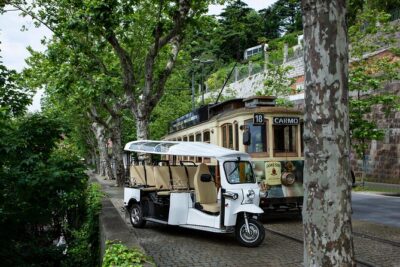 ★ 4.5Discover Porto’s Highlights on a 2-Hour Private Electric Tuk TukFrom $481,860 reviews
 ★ 5.0Porto PRIVATE TOUR With Locals: Highlights & Hidden GemsFrom $96984 reviews
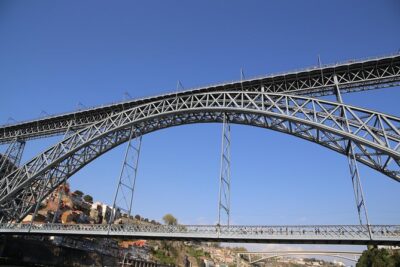 ★ 5.0Private tour in the Douro (1 to 4 people) on a boat just for youFrom $168744 reviews
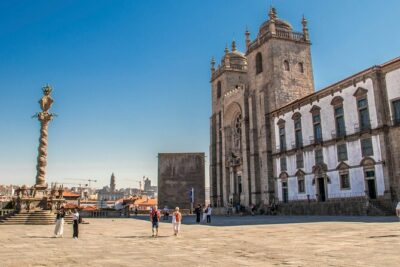 ★ 4.5Historic Porto by Private Electric Tuk Tuk to Top LandmarksFrom $42735 reviews
 ★ 4.8Private Tour of the Historic City in a Classic Ford TFrom $40716 reviews
 ★ 5.0Porto Private Food and Drink Tasting Tour with LocalFrom $139652 reviews
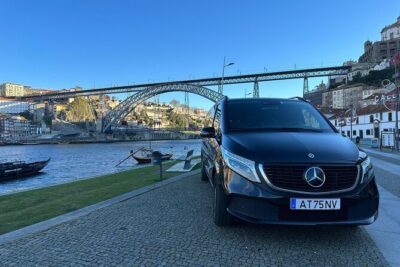 ★ 5.0Private Taxi Transfer to/From Porto AirportFrom $24649 reviews
 ★ 5.0Private tasting in the Douro (1 to 7 people) on a yacht for yourselfFrom $313559 reviews
Browse the lists this tour appears in