
Reviewed · LIVRARIA LELLO & LANDMARKS
Private Tour to Santiago de Compostela and its stunning Cathedral
Santiago de Compostela from Porto is a long day, but this private tour makes it easier to see the key places with less stress. I especially like the hotel pickup and drop-off, which means you are not hunting for meeting points in a foreign city. I also like the mix of stops, from the local market at Mercado de Abastos de Santiago to the Cathedral area, including the famous Portico de la Gloria. One thing to weigh: the big-ticket items can add cost later, since the Cathedral and Museum tickets and an optional official guide are not included.
You also get the kind of comfort that matters on a road trip day. The vehicles are described as luxury, with Wi-Fi, bottled water, refreshments, and a relaxing ride, plus personal accident and liability insurance. In short, it is built for people who want a meaningful day, not just a checklist.
Key highlights that shape the whole experience
- Hotel pickup in Porto and Gaia saves time and keeps the day moving smoothly.
- Carlos as a praised driver-host helps make the long day feel calm and well handled.
- San Martín Pinario’s choir and wood carving is a standout moment, with details tied to Fernando de Casas Novoa.
- Portico de la Gloria delivers medieval sculpture at scale, with Maestro Mateo’s work dated 1168 to 1188.
- Camino connections show up in multiple places, from the Cathedral traditions to the pilgrimage certificate setup.
Porto to Santiago de Compostela: why this tour is such good value
First, the practical part. This is an 8 to 10 hour day trip from Porto, and it runs as a private tour, meaning only your group is in the vehicle. The price is $337.39 per person, and that number can feel steep until you look at what you are buying: long-distance transport in a luxury vehicle, plus hotel pickup and drop-off. For many people, that is the difference between a pleasant day and an exhausting one.
The tour is also structured so you get more than “arrive, take photos, leave.” You start in Santiago with a local food market, then move into major religious and civic architecture, and finish with the old-town streets that pilgrims have followed for centuries. The result is a day that feels coherent, not rushed chaos.
That said, plan for add-ons. The listing shows several optional or additional costs like lunch, Cathedral and Museum tickets, the official Spanish guide for a walking tour, and the Museo del Pueblo Gallego entry. If you want a full, guided experience inside the Cathedral complex, those extra items are part of the math.
Compare more private Porto tours with a guide in Porto

The comfort factor: luxury vehicle, Wi-Fi, and a host behind the wheel
On a day trip this long, comfort is not a nice-to-have, it is the whole point. The tour includes transport in luxury vehicles with maximum comfort and extra equipment tailored to your needs. There is Wi-Fi, bottled water, and refreshments in the vehicle, so you are not scrambling for basics during the drive.
One name that comes up in the reviews is Carlos, described as an excellent driver and host. Even if you do not know Santiago yet, having someone who handles the logistics well makes the day feel smoother from the start.
Practical tip: keep your day bag light but ready. You will be switching from car time to market time to Cathedral time. Bring something small for shade or rain, and wear shoes you can walk in. The itinerary is timed in chunks, but you will still be on your feet in old streets and historic interiors.
Start easy in Santiago’s food market: Mercado de Abastos de Santiago
The first stop is Mercado de Abastos de Santiago, about 20 minutes. This is where the trip becomes more than religious monuments. The market has a rural-chic feel, with traditional stores run by ladies from surrounding farms paired with stylish stalls. New restaurants have also opened recently, so it is not frozen in time.
Why I like this stop for a first arrival: it helps you get oriented fast. You see local products right away, and you get a feel for Galicia as a working region, not just a sightseeing destination. If you are hungry, this is a good moment to grab a quick bite or a small tasting item. The tour description frames the market as a place to find Galicia’s best products, which is exactly what you want early in the day.
Possible drawback: 20 minutes is enough for a quick look, but it is not enough for a slow food crawl. Treat it as a taste and a reset, then save more time for the streets later if you want to snack again.
Monasterio de San Martín Pinario: baroque architecture with real craft
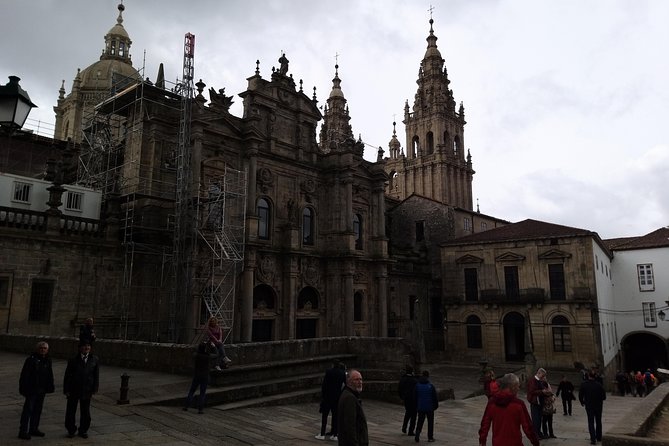
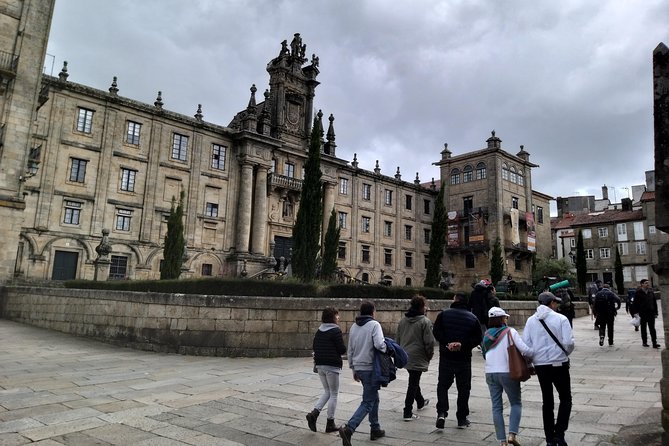
Next up is Monasterio de San Martin Pinario, around 30 minutes. The monastery story ties directly to the legend and aftermath of St. James’ remains. It was founded in the 9th century by Benedictine monks who settled in the city after news of the discovery.
But what you see today is mostly late-15th century work, described as baroque architecture and one of the most spectacular in Spain. For me, the most practical reason to love this stop is that it is detailed in a way that rewards your attention even without a formal guide. You can step up to the choir and see wood-carving details, and you will also admire altarpieces attributed to the 18th-century architect Fernando de Casas Novoa.
What to look for:
- The wood carving at choir level, where the craft is the whole point
- Altarpiece work, where names like Fernando de Casas Novoa help you place what you are seeing in a broader artistic timeline
Time check: 30 minutes moves quickly. If you want slower appreciation, go in with a plan: choose one main area to look at first, then let everything else become bonus details.
Portico de la Gloria: the sculpture that turns into a history lesson
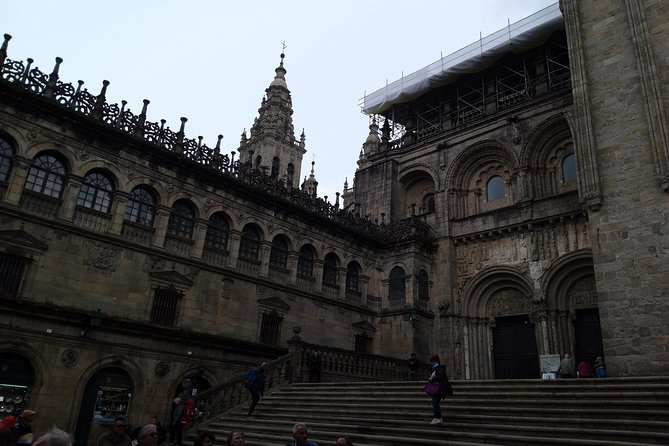
The tour then goes to Portico de la Gloria, about 15 minutes, and this is one of the most “wow in a short time” stops on the day. It was conceived as a portico, almost like a narthex of the Cathedral. The key detail is the authorship and dating: the sculpture is by Maestro Mateo, created between 1168 and 1188.
You are looking at three arches and more than 200 granite figures. That number matters because it hints at why this is not just decorative. You cannot absorb it all in a glance. Instead, focus on one arch or one cluster of figures and let your eyes adjust. Short stop or not, this is where the medieval world feels concrete.
Practical tip: take a moment to slow down, even if the rest of the day moves fast. The difference between seeing it and understanding it is often 20 seconds of patient looking.


The Cathedral of Santiago de Compostela: the heart of the Camino
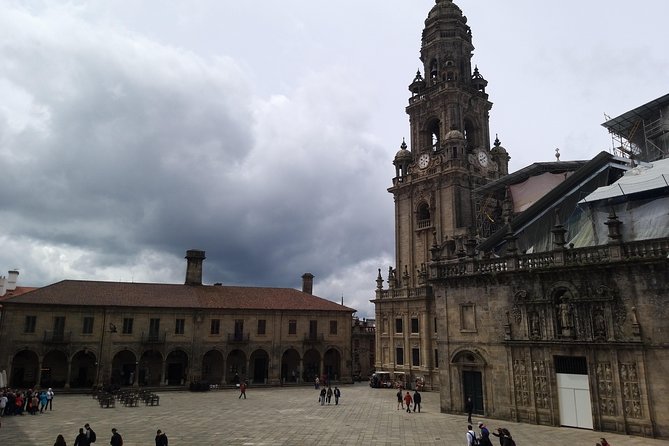
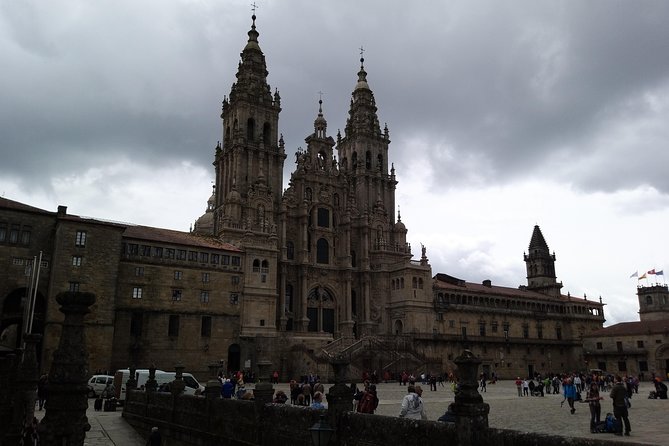
Then comes the big one, Cathedral de Santiago de Compostela, around 1 hour. The Cathedral is described as Catholic worship space in the center of the province of La Coruña in Galicia, and it is traditionally associated with the tomb of the Apostle Santiago.
That traditional connection is why the Cathedral became one of Europe’s major pilgrimage destinations during the Middle Ages through the Camino de Santiago. So even if you are not walking the Camino, you are still stepping into the reason the Camino exists: the pull of a sacred destination.
What to focus on in your hour:
- The Cathedral interior and the altar work
- The sculpture and architecture that connect to older Romanesque foundations and later additions
- In the Cathedral, also keep an eye out for the pipe organ, which has been highlighted as one of the most impressive sights during this visit
If you like your travel days to have emotional payoff, this is where you get it. Not because it is dramatic for the sake of photos, but because the place is tied to a long tradition people kept returning to for centuries.
Trade-off: an hour is enough to see the highlights, but not enough to read every detail. If you want the level-up, the optional official Spanish guide is listed as available as an additional cost.
Plaza del Obradoiro: architecture meets the pilgrim gathering point
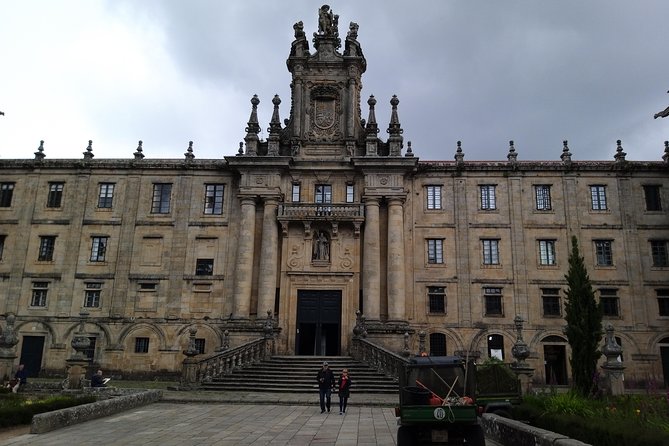
Right next is Plaza del Obradoiro, about 10 minutes. This is the main square of Santiago de Compostela and it is dominated by the Cathedral. Even though the Cathedral square is not described as being in the city center, it functions as the central stage.
From here, the building story becomes easier to grasp. The tour describes the Cathedral as having a Romanesque structure with later Gothic and Baroque elements. Seeing that blend from the square helps you understand why Santiago feels older and more layered than a one-style monument city.
Practical tip: take your photos from here, then leave the square for a less chaotic interior view. It is a good strategy for timing, especially on a day trip.
Hostal de los Reyes Católicos: from pilgrim healthcare to a 5 star hotel
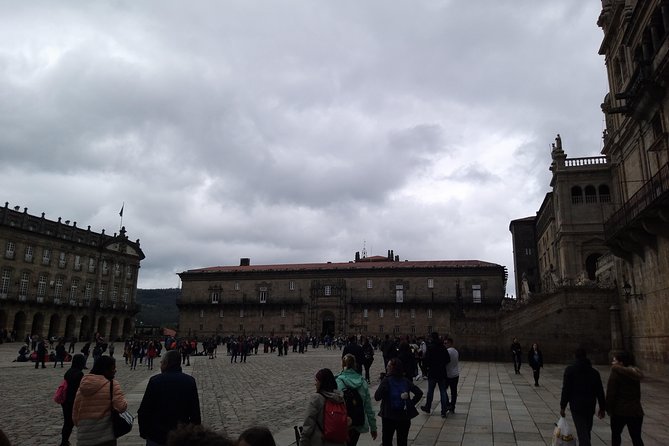
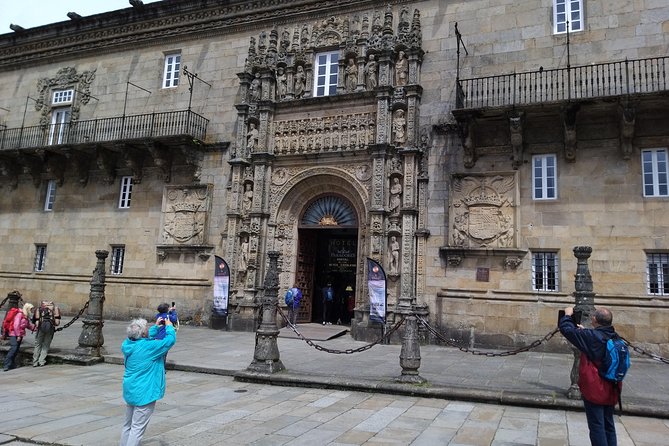
A quick stop at Hostal de Los Reyes Catolicos gives you one more piece of Camino life. Construction of the Royal Hospital began in 1501 by order of the Catholic Monarchs. They visited Santiago in 1486 and saw the need for better healthcare for residents and pilgrims.
Today, it is converted into a 5 star hotel. Even if you do not plan to stay overnight, it is a meaningful sight because it connects the religious pilgrimage with real, human needs. People did not only come to pray. They came in worn-out conditions and needed care.
Time is short here at 10 minutes. Treat it as an architectural and historical checkpoint, not a full deep reading.
Palacio de Raxoi and the architecture around the square
Next is Palacio de Raxoi, about 30 minutes. The description calls it a neoclassical building and explains the name comes from an archbishop who founded it. The building enclosed the square in the 18th century, which makes it a great example of how civic power helped shape Santiago’s public spaces.
This stop is less about one interior highlight and more about context. You see the Cathedral square as a complete composition, not just a single impressive building. If you enjoy architecture with names and dates, you will enjoy how this ties the setting together.
The old town streets: Rúa Nova, Rúa do Franco, and Rúa do Vilar
Now the tour shifts into street level, still with meaning.
Rúa Nova
Rúa Nova takes about 15 minutes. The focus is palaces and two cultural anchors: Teatro Principal and Salón Teatro. This is a reminder that Santiago is not only a religious destination, it is also a cultural center.
Rúa do Franco
Rúa do Franco is also about 15 minutes and it is described as the old town’s gastronomic street par excellence. The clue is in the name. The tour explanation says the restaurants continued the medieval innkeeper tradition of welcoming pilgrims.
It also explains the term Frank, used for pilgrims from beyond the Pyrenees. In that framing, Franks meant free men, or the Frankish Nation. So the street name is essentially a historical map of who came through.
Practical tip: even if you do not stop for a long meal here, glance at the street layout and shop windows. It helps you feel how pilgrim traffic influenced everyday commerce.
Rúa do Vilar
Finally, Rúa do Vilar takes about 15 minutes. This is where the Santiago Cathedral Foundation is located, and it is where pilgrims can get a certificate of their pilgrimage.
If you like the Camino culture as a lived tradition, this is a quietly satisfying stop. You get to see the modern institutional side of pilgrimage, not just the iconic Cathedral.
Museo del Pueblo Gallego: learn the regional culture if you want depth
There is also a time slot for Museo del Pueblo Gallego at about 30 minutes. Entry is described as extra cost of €4 per person.
This museum is dedicated to the culture and traditions of Galicia. If you want your day to connect the dots between architecture, food, and identity, it is worth considering. If you prefer to prioritize Cathedral time and street atmosphere, you can treat this as optional depth rather than a must.
What’s included, what costs extra, and how to plan the budget
This tour includes luxury transport, Wi-Fi, bottled water, refreshments, personal accident and liability insurance, and hotel pickup and drop-off.
The price is $337.39 per person. But several important items are not included in that headline cost:
- Typical lunch with Alvarinho wine is listed as €30 per person (starter, main course, drink, dessert, coffee)
- Ticket to Cathedral and Museum is listed as €20 per person
- An official Spanish guide for the Cathedral and a 2-hour walking tour is listed as €200 per booking
- Museo del Pueblo Gallego costs an extra €4 per person
- Gratuities are left to your discretion
So how do you judge value? If you want an efficient, chauffeured day with major sites and comfortable transport, the base price can feel fair. If you also want the official guide experience inside the Cathedral and you add lunch, it becomes a higher-budget day. The good news is that you control the extras based on how much you want to learn versus how much you want to simply see.
Who this day trip suits best
This is a good fit for:
- People staying in Porto who want a meaningful day trip without navigating trains or buses
- Anyone who likes history that connects across centuries, from monastery foundations to medieval sculpture to Camino-era pilgrimage routines
- Small groups or families that value private tour time and predictable pacing
It may be less ideal if:
- You want lots of free time to wander on your own
- You prefer a fully self-guided day with no added entry or guide costs
Practical tips to make your Santiago day feel smooth
- Wear comfortable shoes. Historic streets and square areas mean you will walk more than the timed stops suggest.
- Have a backup for weather. The experience requires good weather, and if it is canceled due to poor conditions, you will be offered a different date or a full refund.
- Decide early about the official guide. If you want a richer explanation inside the Cathedral area, the listed official Spanish guide option can be worth it for your learning style.
- If you plan on lunch, treat it as a planned break, not a last-minute scramble.
Should you book this tour?
I would book it if you want a classic Santiago day trip that is organized, comfortable, and focused on the Cathedral core without the stress of logistics. The pairing of key religious sights with the local market and old-town pilgrim streets makes the day feel complete, not like a single-site stop.
I would think twice if you are trying to keep costs ultra-low, because the Cathedral and Museum ticket, the optional official guide, the Pueblo Gallego museum entry, and lunch can add up. But if you are okay building in those extras, the overall setup is strong: private transport, smart pacing, and major “hard to reach details” like Maestro Mateo’s Portico of la Gloria and Fernando de Casas Novoa’s carved works at San Martín Pinario.
If Santiago de Compostela is on your bucket list and you want the Camino story told through real places, this is a solid way to do it from Porto.
More Private Porto Tours


More Tours in Porto



More Tour Reviews in Porto

Keep comparing: recently reviewed experiences around Porto






Livraria Lello & Landmarks, compared.
 ★ 4.6Torre dos Clerigos Entrance TicketFrom $116,395 reviews
 ★ 4.6Spiritus Multimedia Show Entry TicketFrom $113,791 reviews
 ★ 5.0Porto Walking Tour, Lello Bookshop, River Cruise and Cable CarFrom $723,354 reviews
 ★ 4.5World of Discoveries Entry TicketFrom $212,922 reviews
 ★ 4.8Walking Tour, Lello Bookshop, Boat and Cable CarFrom $70965 reviews
 ★ 4.8Guided Walking Tour and Lello BookshopFrom $70895 reviews
 ★ 4.9Traditional Fado Show at Sao Bento with Port WineFrom $19882 reviews
 ★ 4.5Spiritus Porto: Videomapping Immersive Show at Clerigos ChurchFrom $12223 reviews
Browse the lists this tour appears in