
Reviewed · DOURO VALLEY VINEYARD TOURS
Private Tour to Lamego and Viseu, the Dão wine region
Baroque stairs, cathedrals, and real views. This private day trip stitches together Lamego, Viseu, and the Dão wine region with a comfortable ride, guided stops where it counts, and plenty of time to look up and take it in. I especially loved the climb to the Sanctuary of Nossa Senhora dos Remédios, plus the mix of Romanesque and Gothic details inside the Lamego Cathedral. One thing to plan for: it is a long 8 to 10 hour day, and the famous 686 steps are no joke if you are not feeling steady on your feet.
You also get a practical advantage: you are not herded onto a bus schedule. In the Porto area, Carlos was responsive about the booking and handled the hotel pickup smoothly for a group of two couples, which is exactly the kind of low-stress start you want when you are leaving town early.
Finally, the value is strong if you like history that you can actually see. Several top sights have free admission on the route, but the palace visit and most wine tastings are extra, so your final spend will depend on how wine-forward you want the day to be.
Key things I would put on your must-know list
- A full private day with luxury vehicle comfort and Wi-Fi, starting at 8:00 am from Porto
- Free entry at several major stops, including Lamego Cathedral, the Lamego Castle area, the Remédios sanctuary, and Viseu Cathedral
- Nicolau Nasoni connections, with painted cathedral ceilings and ornate sanctuary details
- 686 steps in Lamego, which means the sanctuary is the physical highlight of the day
- Real Dão orientation, with options like Casa do Santar and Solar do Vinho do Dão
A Full Day From Porto: Lamego, Viseu, and Dão Wine Country
This is the kind of itinerary that makes sense if you want a lot of “Portugal on foot” in one day, without the chaos of switching cars or translating your way through every ticket line. The day begins with pickup in Porto around 8:00 am, and you settle into a vehicle built for comfort: Wi-Fi, bottled water, and refreshments are included, plus personal accident and civil liability insurance.
The route works because it alternates big visual moments with enough sitting time to recover. You get medieval architecture at altitude in Lamego, then you move to Viseu for another old cathedral and a chance to add optional museums and wine stops. If you like structure, this tour is your friend: most core stops are timed around short visits, with longer blocks reserved for the palace and optional wine experiences.
Compare more private Porto tours with a guide in Porto
Price and Logistics: What $304.85 per Person Really Includes
At $304.85 per person, this is not the cheapest way to travel, but it is also not “paying for nothing.” You are mainly paying for two things: direct private transport from Porto, and a day built around specific architecture and wine targets.
Here is what you get included:
- Luxury vehicle transport with Wi-Fi, bottled water, and refreshments
- Insurance coverage
- A private setup, meaning only your group rides along
What is not included (and affects your total):
- Palácio dos Condes de Anadia ticket cost
- Grão Vasco Museum admission
- Most wine tastings and vineyard tours
- Lunch is optional (a typical lunch option is listed)
My practical take: if you treat this as a history-focused day and only add one or two wine tastings, you keep costs under control. If you go full wine mode with multiple estates, you will add fees, but at least you will be spending on experiences that are structured for tasting and learning, not wandering without a plan.
Douro River Bridge Stops: Two Pieces of Infrastructure With Stories
Before you hit Lamego Castle and the big cathedral sights, the drive gives you a couple of memorable “how Portugal builds and repurposes” moments.
One stop covers a metal bridge built by King D. Luís I at the end of the 19th century to cross the Douro River by road. The original metal structure had a wooden deck, and over time it degraded enough that the bridge was deactivated in the mid-20th century. Later rehabilitation works gave it a new life in an urban setting, and it became part of a network of footpaths along the Douro. It is a small, quiet lesson in how routes evolve, and how walking culture can spring from older infrastructure.
A second bridge stop, also on the Régua side of the story, is the Régua road bridge. It was built in 1934 by the Companhia Nacional de Caminhos de Ferro to connect Peso da Régua and Lamego. The rail plan was not completed for its intended use, so the bridge was adapted for road use. What I found useful here is the technical contrast: this bridge is known for its masonry construction, unlike the iron bridges common in that era. If you like details, these bridge stops are a nice warm-up before the architecture becomes your main event.
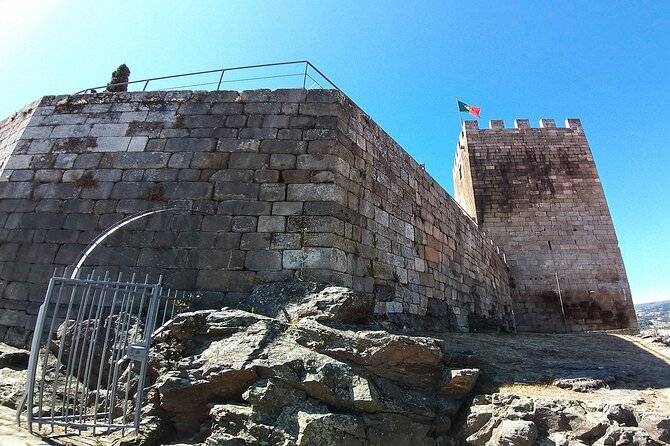
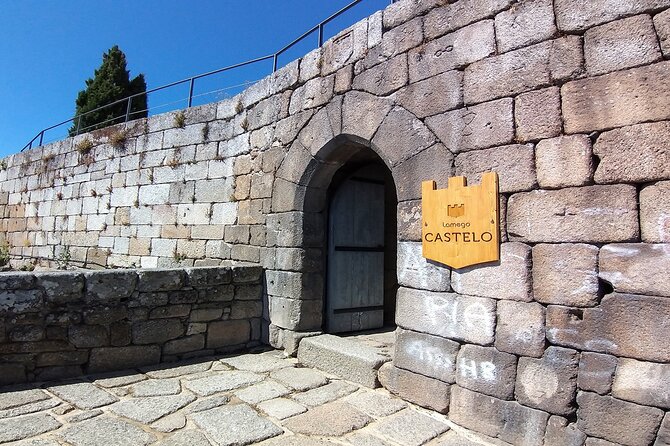
Castelo de Lamego: National Monument Views at 543 Meters
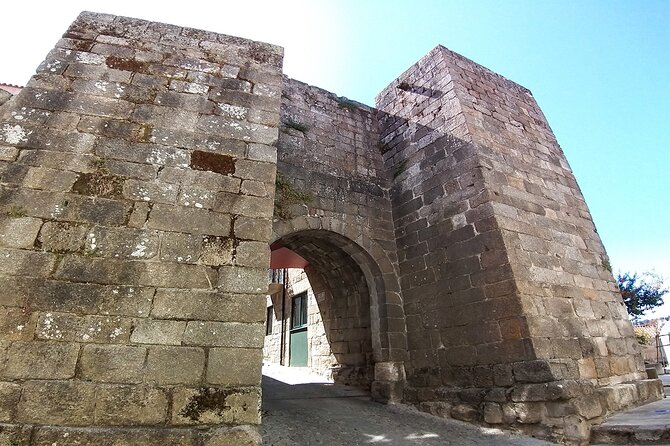
The first major “wow” in Lamego is the Castelo de Lamego, a National Monument classified in 1910. It began in the 12th century under Portuguese rule, but you are not looking at a single-era site. The location was previously occupied by a Lusitanian fort, then the Visigoths moved in between the 5th and 7th centuries, and later the village came under Muslim rule until the Christian Reconquest. That layering matters because it explains why the castle is as much about geography as it is about walls.
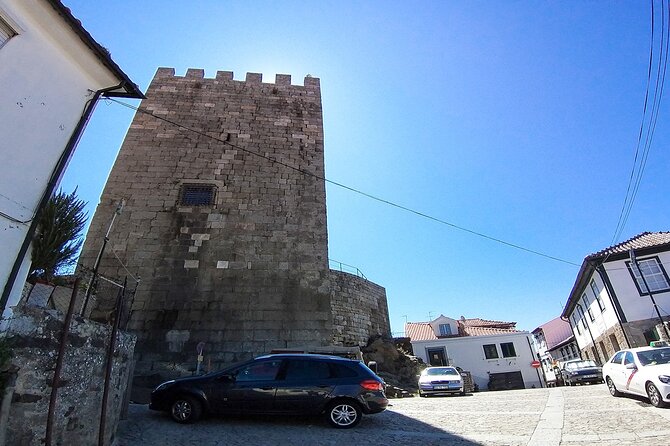
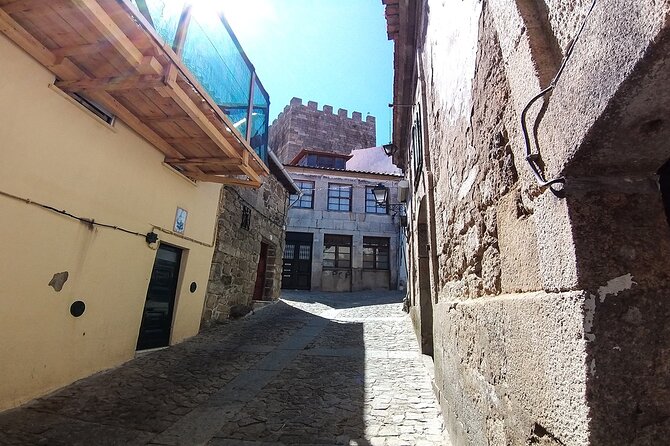
Today it is a medieval mountain castle at 543 meters above sea level, with a walled perimeter and an irregular plan that adapts to the terrain. In the 19th century, after its military function fell into disuse, it went through restoration work. There is also a keep where municipal palaces were located in the 16th and 17th centuries.
Practical tip: wear shoes you trust. This is a viewpoint stop where you might move around edges for photos and to get your bearings, and your time is better spent looking than wobbling.
Good news for budget planning: admission is free at this stop, so you do not have to decide up front whether you want to spend money to see the best exterior perspective.
Lamego Cathedral: João Lopes Facade and Nicolau Nasoni Ceilings
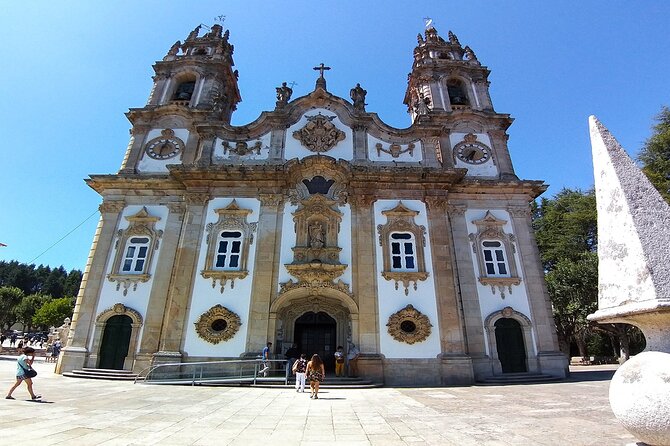
Right after the castle, Lamego Cathedral gives you a different kind of power. The Lamego Cathedral dates from the 12th century, likely built by D. Afonso Henriques, but it changed over time. Reconstructions in the 14th, 16th, 17th, and 18th centuries mean the original Romanesque profile is not fully what you see today.
Still, the details are worth your attention, especially the main facade. Built in the early 16th century by architect João Lopes, it blends flamboyant Gothic forms with early Renaissance touches. Inside, ceilings were painted in the first half of the 18th century by Italian painter-architect Nicolau Nasoni, with an architectural framing theme built around episodes from the Bible.
Two other interior bonuses help this stop feel complete:
- A 16th century cloister
- Two magnificent chapels from the same period
The best part for your schedule is that this is also free admission, so you can spend your time thinking about the art instead of doing math. If you are only doing one “church moment” that day, this is a strong candidate.
You can also read our reviews of more wine tours in Porto




Sanctuary of Nossa Senhora dos Remédios: 686 Steps to Church Views
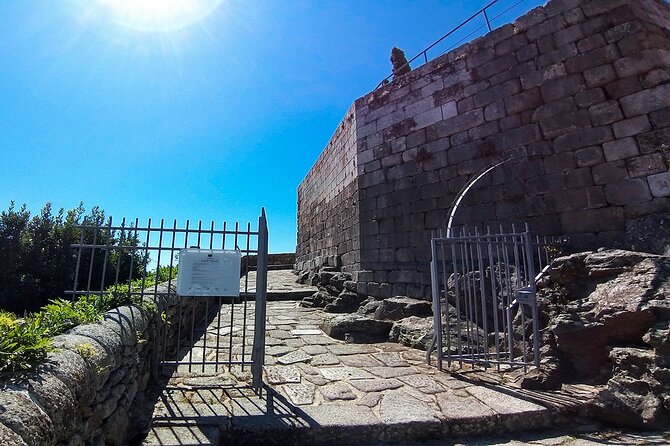
If you want one signature experience in Lamego, this is it: the Sanctuary of Nossa Senhora dos Remédios. It is described as the city’s ex libris, and you feel that immediately when you see how intentionally the whole site is designed.
The headline is the staircase of 686 steps, taking you up from the city to the church at the top. It was built in the 18th century to replace an earlier chapel from the 14th century, and it is linked to the famous church style of Bom Jesus in Braga. The staircase itself is fully decorated, including fountains, chapels, obelisks, and other monuments placed along the flights.
Nicolau Nasoni is part of this story too. You can see his influence in some of the works here, and one standout is a granite fountain near the sanctuary.
The big consideration is physical effort. The climb is accessible for many people, but “accessible” does not mean “easy.” Plan your pace, and if you are with someone who has limits, agree early about how far you want to go. You do not want the day to turn into an argument at the bottom of a staircase.
On the bright side: admission at this sanctuary stop is free, which is exactly what you want when the main “payment” is time and energy.
Se Catedral de Viseu: Towers, Fortified Feel, and Multi-Era Foundations
Moving to Viseu, the Se Catedral de Viseu hits you from a distance. It has large towers that give it the appearance of a fortified church, and that look is part of why it is a visual landmark in the city.
It is also one of the oldest buildings in Viseu. The cathedral sits on the site of a primitive temple from the Suevo-Visigothic era, and archaeological excavations have revealed the earlier structure. Construction began in the 12th century, and it reached a major phase during the reign of D. Dinis in the 13th century, with profound renovations that took many years. That long build period is why elements from different periods show up together.
What I like about this stop is that you do not just learn a date. You see architectural logic: the old foundation under a later plan, with different styles layered by renovation rather than clean replacement.
This cathedral stop is also free admission, so it is another high-return moment in a day where you might otherwise spend money on tickets.
Palácio dos Condes de Anadia: When Baroque Turns Into 18th Century Life
The palace portion is where the tour leans from “architecture sightseeing” into “what life looked like for the wealthy.” The Palácio dos Condes de Anadia is an 18th century estate tied to one of Portugal’s richest families, and you visit with a guided tour option.
From the outside and at first sight, you notice the Baroque-style facade with intricate carvings and decorations. The interior continues the theme: ornate ceilings, frescoes, and furniture from the 18th and 19th centuries. There is also a chapel dedicated to Saint Francis of Assisi.
This is the main place where you should expect extra costs. The palace ticket is listed as €10 (not included), and the guided tour is described as optional at €15 per person. If you already love palaces, this is worth budgeting for because you get the context and a structured route through the rooms, not just a walk-by.
Optional Dão Wine Stops: How to Pick the Right Tasting for Your Mood
After the cathedrals and the palace, the day turns into wine country choices. You are not forced into all of them. Instead, you can build your tasting plan around your interests.
Casa do Santar (Casa do Santar, Santar Vila Jardim)
This option focuses on a specific historic wine estate in the Dão wine region. The property dates to the 16th century, and it is known especially for Dão red wines made from the local Touriga Nacional grape variety. The estate includes a 17th century mansion, a chapel, and vineyards, and you can tour the property, learn about local winemaking history, and taste award-winning wines. Optional pricing is listed at €25 per person.
Solar do Vinho do Dão (Rota dos Vinhos do Dão)
This one is more of an orientation stop, and I like it if you want tastings without a long formal vineyard schedule. The Solar do Vinho do Dão acts as a reception center for visitors to the wine route, and it also functions as a small wine cellar with wines from the farms on the route. There are eight highlighted references available for free tasting or for a symbolic price, and you get a glass at the counter.
If you want a simple way to decide what you like before committing to more structured tastings, this is a smart step.
Museum time option: Grão Vasco
If you prefer art to wine, the Grão Vasco National Museum is an optional detour. It is in Viseu’s historic center in the former bishops’ palace from the 16th century, next to the cathedral. The centerpiece is altarpiece painting by Vasco Fernandes (c. 1475 to 1542), Grão Vasco, along with collaborators and contemporaries. The museum also includes objects used for liturgical practices and pieces spanning Romanesque through Baroque, plus archaeology pieces, Portuguese earthenware, jewelry, numismatics, and more.
Ticket for the museum is listed as €4.00 extra.
Other wine upgrades you can add
The tour data also lists additional optional vineyard and cellar tasting add-ons, including:
- Quinta do Perdigão aromas and tasting introduction (€13)
- Murganheira cellars guided visit with four Portuguese sparkling wine tastings (€10)
- Quinta do Soito guided visit with two wine tastings, red and Encruzado (€15)
These can be great if you are serious about Dão and sparkling Portuguese styles, but they also add time and cost, so I would choose based on what you actually want to taste.
How Long Stops Feel in Real Life (and What to Wear)
Most core visits are timed around 30 minutes, with the palace and certain wine options taking longer (around an hour for those guided experiences). That matters because you are not just traveling between places. You are walking, reading a few highlights, taking photos, and moving on.
What to wear:
- Comfortable shoes, especially because of the Remédios staircase
- A light layer if you are out in the sun, since the cathedral exteriors and castle viewpoints can get hot
- Bring a small bottle of water mindset, even though bottled water is provided on the vehicle
For photos, I suggest prioritizing:
- Castle and sanctuary viewpoints for wide shots
- Lamego Cathedral facade for architectural details
- Viseu Cathedral from the outside, since the towers do most of the work for the “fortified” look
And remember: private means your group sets the pace. If someone needs a slower rhythm on the steps, the day is still manageable because you are not stuck following a crowd.
Who This Tour Fits Best
This private route fits best if you want three things:
- You care about architecture you can see up close, including Gothic elements and Baroque details
- You want a structured day trip from Porto with comfort and less stress
- You like optional adds, especially wine tastings in the Dão region
It is also a good match for mixed groups. The core stops include plenty for art and history lovers, and then you can decide how much time to spend on wine, museum time, or both.
Should You Book Private Tour to Lamego and Viseu?
Yes, if you want a day that balances free classic sights with guided moments that actually explain what you are seeing, and you like the idea of choosing your wine level at the end of the day. The overall value is strongest when you treat this as a history and architecture tour first, then add one optional wine experience, not five.
I would skip or adjust your plan if the Remédios staircase sounds like too much effort, or if you are trying to keep the entire day to near-zero extra spending. The palace and wine options can add up.
If you book, plan for the full day rhythm, wear real walking shoes, and keep your favorites flexible. You will probably find yourself spending extra minutes where the details are, because the architecture rewards you when you slow down for a moment.
FAQ
What time does the tour start?
The tour start time is listed as 8:00 am.
How long is the private tour?
The duration is approximately 8 to 10 hours.
Is pickup offered from Porto?
Pickup is offered, and the tour notes hotel pickup in Porto.
Is this a private tour?
Yes. It is private, and only your group participates.
What is included with the tour price?
You get transport in luxury vehicles with Wi-Fi, bottled water, refreshments, and personal accident and civil liability insurance.
Which stops have free admission?
The tour data lists free admission for Castelo de Lamego, Lamego Cathedral, Santuario Nossa Senhora dos Remédios, and Se Catedral de Viseu.
Is the Palace of the Counts of Anadia included?
The palace ticket is listed as not included, with an optional guided tour available. The palace ticket price is shown as €10, and the guided visit is listed as optional at €15 per person.
Is the Grão Vasco Museum included?
No. The Grão Vasco Museum admission is listed as not included, with an extra cost shown as €4.00.
What optional wine experiences are available?
The tour lists optional wine stops such as a guided visit to Casa do Santar with tasting, Solar do Vinho do Dão (Rota dos Vinhos do Dao), and other vineyard and cellar tasting add-ons with listed prices.
Does the tour depend on good weather?
Yes. The experience requires good weather, and if it is canceled due to poor weather, you are offered a different date or a full refund.
More Private Porto Tours


More Tours in Porto

More Tour Reviews in Porto
Keep comparing: recently reviewed experiences around Porto






Douro Valley Vineyard Tours, compared.
 ★ 4.7From Porto: Douro Valley w/ Boat Tour, Wine Tasting & LunchFrom $8219,061 reviews
 ★ 5.0Complete Douro Valley Wine Tour with Lunch, Wine Tastings and River CruiseFrom $10112,920 reviews
 ★ 4.6Douro Valley: Wine Tour with Lunch, Tastings & River CruiseFrom $1136,081 reviews
 ★ 5.0Douro Valley: Historical Sites, Wine Experience, Lunch & CruiseFrom $1075,133 reviews
 ★ 5.0Authentic Small Group Douro Wine Tour with Lunch & River CruiseFrom $1334,775 reviews
 ★ 5.0Douro Valley Small-Group Tour with Wine Tasting, Lunch and BoatFrom $1693,642 reviews
 ★ 5.0Douro Valley Tour: 2 Vineyard Visits, River Cruise, Winery LunchFrom $1013,542 reviews
 ★ 4.7Douro Valley Tour with Wine Tasting, Cruise and LunchFrom $762,714 reviews
Browse the lists this tour appears in