Reviewed · PORTO
Porto’s Amazing Amphibious Adventure
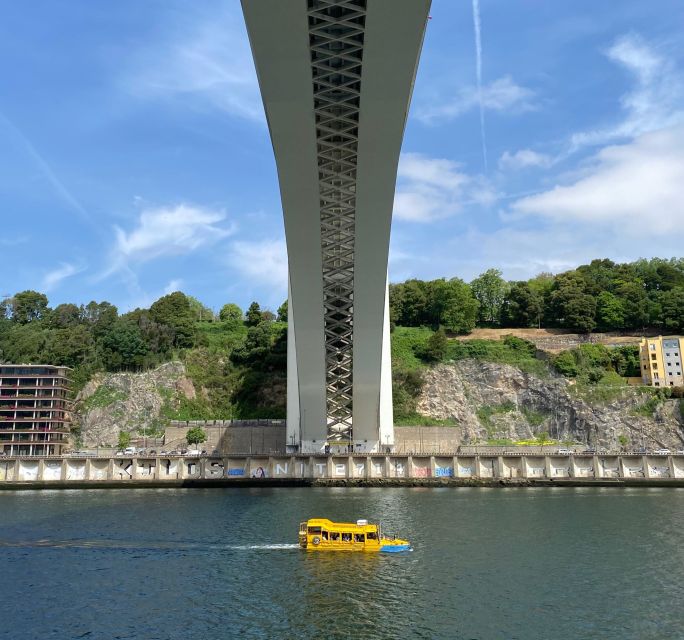
Porto’s Douro splashdown is harder to forget than photos. You board a bright yellow amphibious vehicle, hear live commentary, then feel the moment the Duck goes from road to river. I especially love the instant action of that splash down and the way the route threads together big Porto sights with real water views of the Douro. The main downside to plan around is that the experience is not suitable for people with mobility impairments, so it may be tight or uncomfortable for some mobility needs.
If you like “short but different,” this is a strong pick. At $34 per person for about 50 minutes, you’re not buying a long day tour, you’re buying a one-of-a-kind ride plus live interpretation in multiple languages.
Key highlights you will actually care about
- Splash down onto the Douro from the Afurada slipway, then ride back with scenic stops
- Live guide commentary in Portuguese and English, with Spanish available on the day
- World War II D.U.K.W. heritage, rebuilt from scratch for today’s safety rules
- Route passes real Porto landmarks, including the Arrabida bridge and the Massarelos heliport area
- Freshwater meets sea water at the estuary stretch, a neat geography moment from the deck
Enter Afurada, Board the Duck, Then Hit the Water
This tour starts and ends in Afurada, right by the ramp in front of Madureira’s Mercado d’Afurada. You’ll board the Duck at the Afurada ramp, then get ready for the signature move, the splash down from the Afurada slipway. Even if you have seen other amphibious rides, the “now we are actually going in the river” moment hits fast.
The vehicle is based on a World War II D.U.K.W., but what matters for your comfort is that it is fully rebuilt and modified to meet safety regulations set by road and river authorities. That safety focus is part practical reassurance, part peace of mind. And since the whole trip is about 50 minutes, the experience stays punchy instead of dragging.
Plan to arrive with a little buffer. The meeting area is specific, the ramp in Afurada, and the tour depends on getting everyone staged before the splashdown.
Compare more reviewed experiences around Porto before fixing the rest of your day.

The 50-Minute Douro Route, From Arrabida Bridge to the Estuary
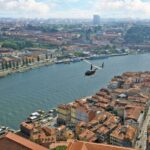
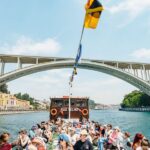
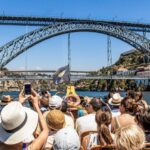
Once you splash down, the Duck heads upstream first. You pass under the Arrabida bridge, then you go by the heliport of Massarelos and past a church (the exact church is not specified, but you will definitely clock it from the water). This part of the route is great if you like seeing Porto not as postcards, but as a city shaped by its river.
Then the Duck turns back and heads toward the estuary. This is where the ride picks up a neat sense of “what you are seeing is physical geography.” As you approach the coastal region, you can see the point where the river’s freshwater mixes with the salt water of the sea. That mixing zone is the kind of thing you might miss from a viewpoint on land, because you only get the full effect from being out on the water.
On the way back, you pass the marina area, then you exit the river at the same Afurada slipway where you splashed down. The round-trip design matters. You get both direction views, upstream for the bridge and skyline angles, then estuary for the water-meets-sea moment.
What you should watch for during the ride
- The bridge underpass, because it frames the river traffic and Porto skyline
- The Massarelos area landmarks, because they break the trip into recognizable segments
- The estuary mixing zone, because it is the most “teachable” geography on the water
Live Commentary That Keeps the Trip Moving
One reason this tour works for so many people is that it is not just a ride, it is a guided one. You get live commentary from a tour guide, and the language set is Portuguese and English. Spanish is also offered. That matters if you are traveling with someone who prefers a different language, or if your group has mixed comfort levels.
I like that the commentary is tied to what you are physically passing. You are not stuck listening to generic history while staring at empty water. The guide talks about the city and the river as the Duck moves, which helps the views land as context, not just scenery.
There is also a simple logistical advantage. Because the guide is on board and talking in real time, you are less likely to miss key sights. You can relax and look, the information comes with the motion.
What the DUKW Experience Feels Like (And Why That Heritage Matters)
The D.U.K.W. connection is more than marketing. A vehicle designed for amphibious operations signals what you are doing on the trip: crossing between road and water in one ride. In this case, the Ducks are rebuilt and modified for safety, but the “Duck” identity stays.
What I find most appealing is the physical contrast. From your seat you can feel the shift as the Duck transitions into river mode. It is playful, but it is also memorable because you understand what you are experiencing in the simplest terms, wheels become buoyant travel.
If you like quirky, hands-on travel moments, this is a good fit. One booking note included the idea of driving a bit near the end, which is the kind of thing that can make the trip feel personal. I would not assume it is guaranteed every time, but it is worth asking the staff on arrival if there is any guest participation at the end of the route.

Price, Value, and Who This 34 Dollar Adventure Actually Helps
At $34 per person for about 50 minutes, you are paying for a compact, high-impact activity: a genuine amphibious ride plus live multilingual commentary and a route that covers several recognizable river points.
Here is how I think about value in situations like this:
- You are getting a “two-environment” experience (land staging plus river time) rather than just a sightseeing boat ride.
- The time window is short, so it is easier to slot into a Porto day without losing half your schedule.
- You get guidance while you watch, so you are not only paying for motion, you are paying for interpretation.
If you are traveling with kids, this timing is often a sweet spot. If you are with friends, it is easy to laugh and talk throughout. If you are on a quick trip, you get a memorable “Porto from the water” feeling without a long commitment.
If you hate crowds or are sensitive to noise, a live guide means constant voice. It is not a silent, slow museum-type experience. You are on a moving vehicle with group energy.
Practical Tips Before You Show Up in Afurada
A few details can make or break how smoothly this tour feels.
First, no food or drinks in the vehicle. Bring nothing to snack on during the ride. If you want a bite, do it before you board.
Second, you should be ready for a mobility-unfriendly setup. The activity is not suitable for people with mobility impairments. That does not just mean “it might be tricky.” It signals that the structure, boarding process, or movement is not designed for accessibility needs.
Third, the route is fixed around the river and bridge sights. That is great for planning, but it also means you should dress for being outside and moving around. Porto weather can change, and the best view times often happen when you are exposed on the deck.
When Things Go Off the Rails (The One Issue to Watch)
The one drawback that shows up is not the ride itself, it is timing and staff interaction. One booking described missing the trip because the time on the ticket was wrong, and another issue described a rude guide. I cannot verify how often that happens, but it tells you what to protect yourself against.
My advice: double-check your scheduled departure time right before you go, and confirm where to line up at Afurada ramp. If you are traveling with a language barrier, make sure you have your details clear so you can ask the guide or staff the right question quickly.
A Duck tour is a bit more time-sensitive than a long bus tour because the splashdown is a timed operation. Treat it like you would a train departure, not like a museum entry.
Who Should Book This Porto Duck Tour, and Who Should Skip It
This is a smart booking if you want:
- Something fun and different that still gives you context about Porto and the Douro
- A short, high-energy experience that fits into a tight schedule
- A guided ride with live commentary in Portuguese and English, and Spanish on the day
You should think twice or look for an alternative if:
- You need mobility-accessible features, since it is not suitable for mobility impairments
- You prefer very quiet activities, because live commentary is part of the package
- You are strict about having food or drink during the ride, since it is not allowed
For special occasions, this kind of activity can also work well. The vibe is group-friendly, and the splashdown moment gives everyone a shared story.
Should You Book Porto Duck Tours?
I think you should book this if you are in Porto and you want a real “only here” experience, not just another viewpoint. The mix of a rebuilt WWII D.U.K.W. style amphibious vehicle, the splash down from Afurada, and the Douro-to-estuary geography makes it feel genuinely distinct for the price. Add in live multilingual commentary and a 50-minute format, and it is an easy “yes” for most people.
Skip it if accessibility is a concern, or if you want a slow, quiet, strictly land-based sightseeing day. Otherwise, this is the kind of Porto outing that turns the river into the main character, and that is exactly what makes the Douro worth your time.
FAQ
How long is the Porto Duck Tours amphibious adventure?
The tour lasts about 50 minutes.
Where do I start and end the tour?
The starting and ending points are in Afurada on the ramp, right in front of Madureira’s Mercado d’Afurada.
What is the vehicle used for the ride?
It is a World War II D.U.K.W. amphibious vehicle, rebuilt from scratch and modified to meet road and river safety regulations.
Do you splash down into the river?
Yes. You splash down onto the Douro River from the Afurada slipway.
What sights does the route pass?
The Duck sails upstream passing under the Arrabida bridge, by the heliport of Massarelos, and past a church. It then turns back toward the estuary, where you can see the freshwater and saltwater mixing, and it passes by the marina before exiting at Afurada.
Is live commentary included?
Yes. A live tour guide provides commentary throughout the tour.
What languages are spoken during the tour?
The commentary is provided in Portuguese and English, and Spanish is also available.
Are food and drinks allowed on the Duck?
No. Food and drinks are not allowed in the vehicle.
Is the tour suitable for people with mobility impairments?
No, it is not suitable for people with mobility impairments.
What is the cancellation and payment flexibility like?
You can cancel up to 24 hours in advance for a full refund, and you can reserve now and pay later, keeping your travel plans flexible.