
Reviewed · PRIVATE PORTO TOURS
Porto private afternoon tour, discover the most iconic attractions
Porto is a city that teaches fast. This private afternoon tour strings together the landmarks you actually want to see, from tile-covered halls to big river views. You get an easy, efficient route with hotel pickup and luxury transport, plus stops timed for photos and real atmosphere.
I love how the tour helps you get your bearings early, starting in the heart of downtown around Avenida dos Aliados and Praça de D. Pedro. I also love the mix of styles, neoclassical facades, baroque churches, and Belle Époque interiors, so you don’t leave feeling like you only saw one type of Porto.
One consideration: several of the top stops have extra paid entry (like Livraria Lello with a priority option and the Clérigos Tower), so your final cost will depend on which sights you want to enter versus simply view from the outside.
Key highlights that make this tour worth your afternoon
- Avenida dos Aliados orientation, with the statue of D. Pedro IV setting the tone for the city center
- Mercado do Bolhão tile-and-neoclassical market energy, plus free entry for the market area
- São Bento Station tiles, a free, time-saving wow stop that explains Portuguese life at a glance
- Clérigos Tower and Lello Bookstore on the same route, so you can choose viewpoints and bookish beauty
- River- and bridge-view Porto, including the D. Maria Pia area and the look across to Gaia
- Optional add-ons like a private Douro sunset cruise if you want to extend the story
Why This 4-Hour Porto Route Works So Well
Porto can be a lot on your own. Hills, spread-out neighborhoods, and long walks between the big-ticket sights can burn your energy fast. This tour solves that by grouping the iconic places into one afternoon loop you can actually finish without feeling like you’re sprinting.
At $185.43 per person for about 4 hours, you’re paying for time, comfort, and logistics more than for museum minutes. The transport is the big deal here: you travel in a luxury vehicle with Wi-Fi, bottled water, and refreshments, so the ride feels part of the experience rather than a chore. And since it’s private for your group, you’re not sharing your pace with strangers.
The other value play is choice. Some stops are free to enter, some are view-from-outside, and some are optional with paid tickets. That means you can tailor how much you spend on entrances while still getting the full Porto picture.
Compare more private Porto tours with a guide in Porto
Starting in the Center: Avenida dos Aliados to Praça de D. Pedro
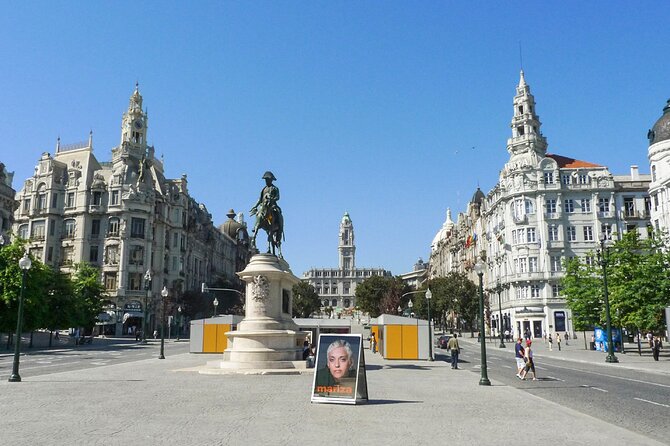
The tour begins at Avenida dos Aliados, Porto’s big ceremonial boulevard. If you want to understand the city’s “front porch” feeling, this is where you start. The avenue is lined with buildings from the 20s through the 40s, so it gives you a sense of how Porto looks when it’s formal and proud.
Right nearby is Praça de D. Pedro, where the square merges into Avenida dos Aliados. In the center stands the statue of D. Pedro IV, the Liberator. This is a small stop that does a big job: it places you in the center of the city’s civic identity and makes the rest of the walk and drive feel connected instead of random.
If you enjoy symbolism, this part is especially satisfying. It’s not just landmarks, it’s how Porto tells you who it thinks it is.
Mercado do Bolhão: Where Porto Shops Like Porto
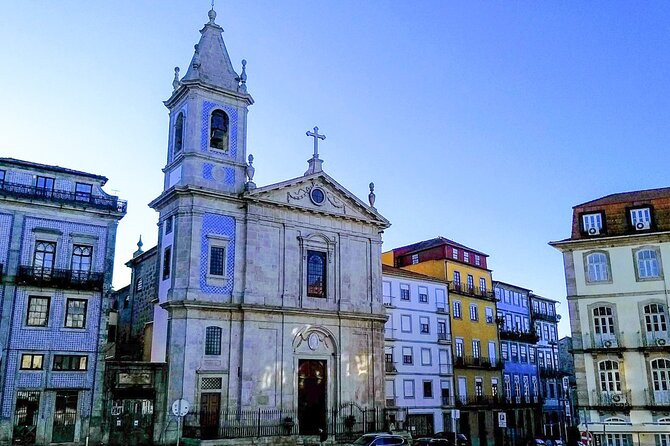
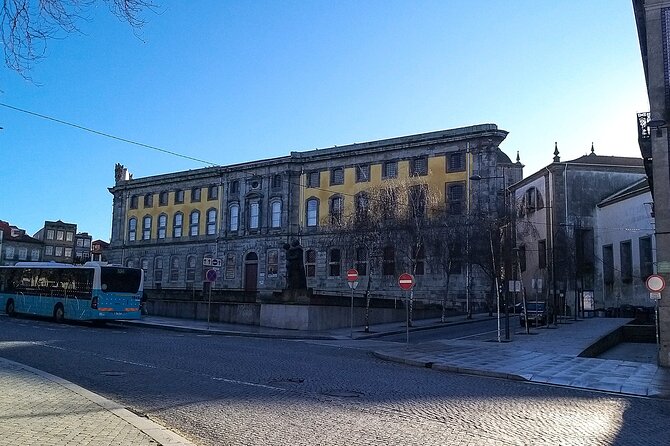
Next up is Mercado do Bolhão, one of the city’s most emblematic markets. It dates back to 1850 and is known for its two-story neoclassical architecture, the kind of building that makes you look twice even if you’re not a market person.
The practical reason I like this stop: it focuses on fresh produce. You’ll see merchants organized into specialized sections like fishmongers, butchers, horticultural goods, and floral items. That layout gives you a quick, realistic snapshot of daily life.
And it’s easy to work into a busy day because entry is free. Spend 15 minutes to soak in the sights and smells, grab a quick snack if you want, and then move on. You’re not stuck in a long shopping loop.
Batalha Square and the City Walls: Porto’s Old Meets New
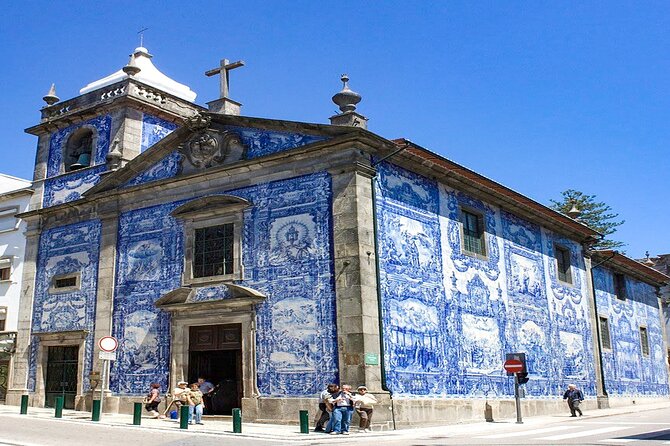
Porto has layers, and Praça da Batalha is where those layers show. The square’s name connects to a battle in the 10th century involving forces of Almançor, linked with a defeat that led to destruction across multiple cities. Even if the details are debated in how people interpret the name, the point is clear: Porto’s history is right there in the street naming.
The area was urbanized around 1861, turning it into a major public space. You also get access to big cultural context with Teatro São João, inaugurated in 1798 and later destroyed by fire in 1908. Even if you don’t go inside, the theater’s presence adds weight to the neighborhood.
Then the tour passes the remains of the old defensive wall. Work began in the 14th century in the reign of D. Afonso IV, and the wall was largely completed around 1370. Later, after military needs faded in the 18th century, parts were demolished, leaving surviving sections you can still spot.
Why it matters for your trip: these walls remind you Porto used to be a protected city with expansion happening in phases. When you see modern squares and avenues afterward, they make more sense.
The Cathedral and Medieval Courtyards You Can Actually Appreciate
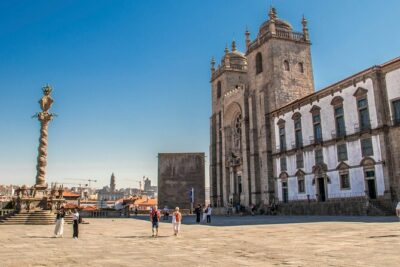
At Catedral do Porto, you get a medieval core that was expanded over centuries, reaching its final configuration in the 20th century while keeping the original medieval cathedral layout. It’s not a single-era building, and that’s exactly why it’s interesting.
Key features include the Gothic chapel of São João Evangelista and its cloister, the enlargement of the chancel, and the Chapel of the Blessed Sacrament with a silver altar. These are the details that make the stop feel like more than a photo op.
The cathedral entry is not included in your tour price, so you’ll want to decide if you’re a “go in and look” visitor. If churches are your thing, this is a good one to pay for. If you’re all about exterior architecture, you can still enjoy the architecture and move on.


São Bento Station Tiles: The Free Stop That Feels Like a Museum
São Bento Railway Station is one of those Porto experiences that works even for travelers who claim they don’t like trains. It sits on the site of the former Convent of São Bento de Avé Maria from the 16th century, and the station itself was built in the early 20th century with a glass and iron structure designed by Marques da Silva.
But the real reason to care is the tiles. The vestibule is decorated with about 20,000 painted tiles by Jorge Colaço. They illustrate the evolution of transport and events in Portuguese regional history and ways of life. That’s a lot of meaning crammed into a space you’ll pass through anyway.
Best part: admission is free. You’ll have about 10 minutes here, and that’s usually enough time to find a few tile scenes that really catch your eye without turning it into a half-day.
Café Majestic and the Belle Époque Pause
Porto has coffee-and-culture moments, and Café Majestic is one of the big ones. Opened in 1921, it’s an example of the city’s Belle Époque era, with ornate Art Nouveau style and an interior full of marble, gilded mirrors, and intricate woodwork.
This stop is not about history homework. It’s about taking five to ten minutes to slow down. If you’re mid-tour and your feet are thinking about retirement, this is where you reset. You can have traditional pastries and coffee while the place does what it does best, make time feel a little nicer.
Just nearby is the Palladium, an ornate clock with a carillon and four statues that perform every three hours. If your timing lines up, it’s a fun extra watch.
Rivoli Theater and a Neoclassical Learning Complex
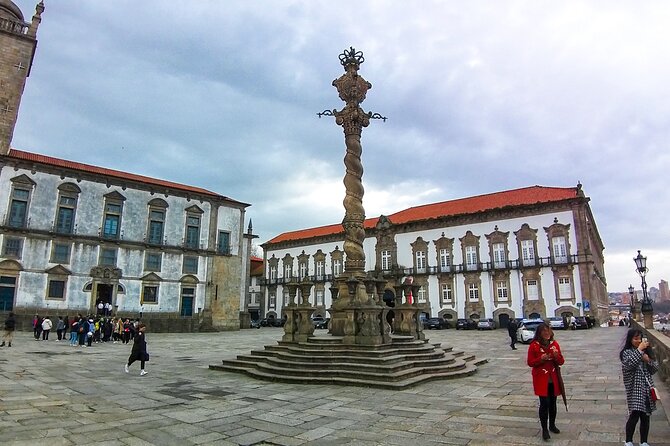
As you move through central Porto, you pass by cultural architecture with shifting identities. There’s a theater opened in 1913 that later required modernization. It became Rivoli Theater and was adapted for cinema with programs that included opera, dance, theater, and concerts. After a change in ownership and a major closure for refurbishment, the building reopened following renovations.
You’ll also see a neoclassical building designed by Carlos Amarante, financed by a tax on wine called the literary subsidy in 1803. This is a great example of how money systems shaped public buildings in earlier centuries. In 1911 it housed the Faculty of Sciences, and now it’s tied to the University of Porto through the rectory and the Natural History Museum.
If you love architecture that shows you how cities grow institutions, this part is satisfying.
Church of Carmo, the Hidden House, and the Baroque Tilt
The Igreja do Carmo area gives you baroque church intensity without demanding a long commitment. The Church of Carmo and the neighboring Church of the Carmelites are known for intricate architecture and impressive exterior tile work.
The real why-you-should-pay-attention detail is the Hidden House. It’s a tiny house wedged between the two churches, built in a dense urban situation and shaped by the need to fit between big structures. You’ll probably want to look for it on the street level rather than from afar.
Admission is free here. With only about 10 minutes allocated, it’s the kind of stop you should keep flexible, because you can spend your time either reading facades or snapping photos, but you don’t need long lines or ticket queues to enjoy it.
Clérigos Tower: Pay for the View or Save Your Budget
Torre dos Clérigos is one of Porto’s most emblematic monuments. It’s Baroque, built by Nicolau Nasoni in the first half of the 18th century. You climb 240 steps for panoramic views over the city and the Douro River.
If you’re considering paying for tickets, here’s my take: this is the viewpoint payoff in the middle of a sightseeing-packed afternoon. You get your landmark energy from the tower shape from street level, but the top is where it turns into “I get Porto now.”
Just be sure you’re okay with stairs. The stop can feel like a little workout, and it’s not listed as included.
Livraria Lello: The Bookstore Facade and the Staircase Moment
Livraria Lello is famous, and it’s famous for a reason. The building opened in 1906 and is known for its Art Nouveau facade with neo-Gothic details. Inside, the library uses painted plaster that imitates wood, and the standout is the magnificent staircase connecting floors, described as an early reinforced concrete work in Porto.
There’s also a huge stained glass skylight with the library monogram and motto. It can be crowded, so the tour offers a paid Gold Ticket option for priority and booking help.
Admission is not included for the ticketed entry you might want. If you’re a serious architecture and design lover, this can be worth the extra spending. If you’re mostly chasing the exterior photo, you can get part of the effect for free and keep your budget for other paid entries.
The Palácio dos Carrancas Museum: Fine, Decorative, and Archaeology
Porto has a lot of “big name” attractions, but this stop gives you a more human pace. The museum housed in Palácio dos Carrancas is the oldest public museum in Portugal, installed in the building since 1942. It focuses on fine arts, decorative arts, and archaeology.
If you’re the kind of traveler who likes museums that don’t feel like homework, this is a good match. You get cultural depth without needing a full day of ticket time.
Admission is not included, so again you decide based on your interest level.
Palácio de Cristal Gardens and the Calm Break
After the intensity of churches and famous interiors, Palácio de Cristal Gardens is a nice reset. These Romantic-era gardens cover about 8 hectares in the center of Porto and were designed in the 19th century by German landscape architect Émille David in the context of the Palácio de Cristal building.
The gardens remain preserved according to the original design, with Jardim Émille David at the main entrance, Avenida das Tílias, forest sections, and balconies overlooking the Douro River. If you want a few minutes of air and space, this is where you get it.
The stop includes no admission fee, so it’s an easy win for your afternoon flow.
Modern Porto on Rails: The Electric Car Museum and Transport Building
Porto isn’t only old stone. It has a story of transit, technology, and how the city moved people.
The Electric Car Museum opened in 1992 and contains a set of trams and auxiliary vehicles from Porto’s history of light rail. It also includes an example of American horse-drawn trolley buses first introduced in 1872. This museum sits in the former Massarelos power station, a listed municipal building, and shows some original equipment.
Close by is the Museum of Transports and Communications, set in a neoclassical 19th century building designed by engineer Jean FG Colson with two facades, one facing the Douro River and one facing the city. The mix of iron with stone, brick, and wood based on building function is something you can actually notice.
Admission is not included at these stops. But if you like how cities work behind the scenes, these can be a surprisingly satisfying break from the “stand and stare” rhythm.
The Golden Church: São Francisco’s Cathedral of Carved Wood
If you’re going to pay for just one big inside church experience, Igreja de São Francisco, often called the Golden Church, is the one described as a national monument and UNESCO World Heritage Site since 1996.
It’s a major Gothic temple with construction started in the 14th century, and it’s known for its exuberant golden interior from the 17th and 18th centuries. The stop highlights include the Tree of Jesse and visits to the catacombs. Count Raczinsky called it Gold Church after being impressed by its carved wood richness.
Admission is not included, so budget for it if this style is your preference. If you’re even mildly curious about how Portugal mixes Gothic structure with baroque gold energy, this is a worthwhile pay.
Igreja de São Nicolau and the Saint Nicholas Altarpiece
The tour also includes another church stop tied to the religious architecture of Porto in the late 17th century, with a mannerist trend and baroque influence. The main reason you’ll want to pay attention is the nave altarpiece showing Saint Nicholas, patron saint of metalworkers.
This is a “look up and focus” kind of church. You might not need a long time here, but it’s a good variety contrast after all the heavy gold and grand baroque spaces.
Admission is not included, so consider it based on your time and interests.
Palácio da Bolsa: Neoclassical Power and the Arab Room
One of the most visually rewarding stops is Palácio da Bolsa, designed in neoclassical style in 1842 by Joaquim da Costa Lima. It sits where the former São Francisco Convent once stood, destroyed by fire during the siege of Porto. Today, it’s the headquarters of the Porto Commercial Association and a major cultural and conference center.
Your main highlight here is the famous Arab Room. If you’re only doing one ticketed “wow room,” this is a strong candidate.
Admission is not included, so if you’re choosing between Palácio da Bolsa and another paid interior, it comes down to whether you care more about decorative interiors (Arab Room) or big church scale (Golden Church).
Bridges and the Douro Side: From D. Maria Pia to Modern Engineering
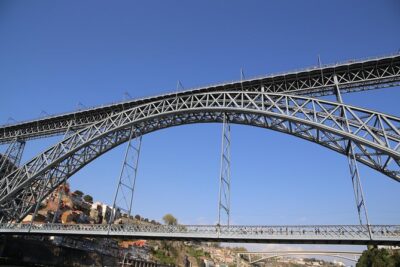
Porto’s skyline story continues at the river. The tour includes a stop around Ponte D. Maria Pia and the broader bridge area. This bridge is known as Gustave Eiffel’s first masterpiece, inaugurated in Porto in 1877 and later replaced after 114 years of use.
It’s made up of a bi-articulated arch supporting the single-track rail deck through lattice pillars. You get major structure details without needing a technical background to understand what you’re looking at.
You’ll also pass the former suspension bridge idea, D. Maria III, which was deactivated after four years due to insecurity concerns, leaving two stone pillars shaped like obelisks. Then the tour includes the famous wrought iron arch of Ponte D. Luís I, with the detail that it’s included in the UNESCO Historic Center listing.
Finally, there’s the Ponte do São João section, inaugurated in 2003, described as a Maillart-type arch bridge and noted for a record in its typology for span/arrow ratio and slenderness.
If your brain lights up at engineering, this portion is a treat. If you’re not, it’s still a great photography and viewpoint payoff because the bridges frame Porto and Vila Nova de Gaia in a way that street-level sights can’t.
Jardim do Morro and Serra do Pilar: Views and Circular Church Design
Two classic viewpoint and viewpoint-adjacent stops round out the river approach.
Jardim do Morro is a public park developed in the 20th century that complements a monastery setting and gives panoramic views. It’s a relaxing, easy place to breathe, with wide pathways and lush greenery.
Across the water area is Mosteiro da Serra do Pilar, a monastery in Vila Nova de Gaia. Construction began in 1538, continued over centuries, and includes circular shapes in the church and cloister. That circular design is a big part of why it’s considered remarkable European classical architecture. It’s listed as a national monument and recognized with UNESCO status along with Porto’s historic center and the Luís I Bridge.
Admission is not included for this monastery stop, so decide whether you want the inside versus keeping it as a viewpoint-based payoff.
Modern Forts and Coastal Shapes: São João Baptista and Castelo do Queijo
The tour extends toward the coast side with forts that show Porto’s defensive history.
Fortress São João Baptista is described as late 16th century Portuguese military architecture with modern additions in the 17th century. Castelo do Queijo, also called Fort São Francisco Xavier, was built in the 17th century to protect against North African pirates, and its rocky-hill cheese-like shape is why it’s named that way.
Castelo do Queijo is free to enter based on the provided data. Fortaleza São João Baptista is not included in your tour price, so if you’re budgeting, you can prioritize.
Leixões Cruise Terminal to Serralves and Casa da Música
Here’s where Porto shows you its modern face.
The Leixões Cruise Terminal is tied to the growth in cruise operations. Porto’s port area has two docking piers, and it notes major passenger growth in the early 2010s. Even if you’re not taking a cruise, it gives context to how Porto’s waterfront tourism has expanded.
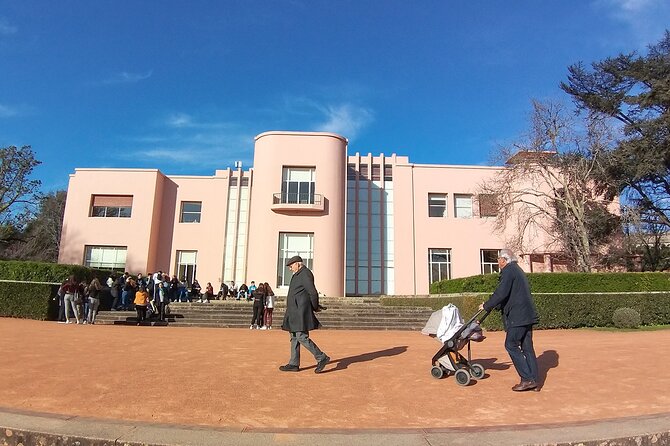
Then comes Serralves (Foundation), with a house built in the 1930s as a strong example of Art Deco in Europe. Parque de Serralves spreads across about 18 hectares and includes gardens designed by Jacques Greber, plus a traditional farmhouse and forest. This is also where you find Casa Arte Deco and the Museum of Contemporary Art in the same area.
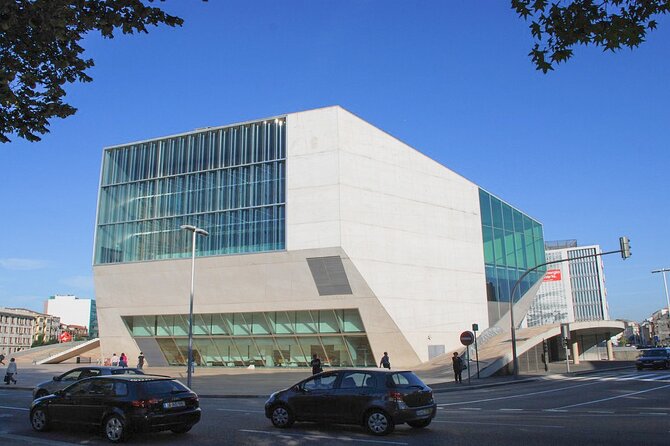
Finally, Casa da Música is Porto’s main concert hall in the Boavista area, opened in 2005 and designed by Rem Koolhaas. It’s a key modern landmark, and it’s included here because it shows the city’s culture now, not only then.
Praça de Mouzinho de Albuquerque: A 45-Meter Monument to Joint History
The tour finishes with a dramatic civic sculpture stop at Praça de Mouzinho de Albuquerque. A monumental 45m-high statue, the Monument to the Heroes of the Peninsular War, was inaugurated in 1951. It represents the union of Portuguese and English forces against French Napoleonic armies, using an obelisk and groups of sculptures.
If you like big public art, this is a satisfying closer because it ties Porto’s identity to wider Iberian and European events.
Optional Add-Ons: Douro Sunset, Port Cellars, and Fado Night
This tour is built for an afternoon, but it’s also designed so you can keep going.
If you want a signature Porto finale, add a private Douro River Cruise at sunset. It’s about 2 hours and described as a way to enjoy views over Porto and Vila Nova de Gaia, including iconic bridges and riverside neighborhoods.
If you want wine culture, add the Dona Antónia exclusive port wine tour, about 1.5 hours, with a walk through historic cellars and a tasting of five port wines.
And if you want an evening plan that matches Porto’s soul, add Fado. There’s an option with transport and a traditional dinner plus fado starting around 20:00 for about 2.5 hours, or you can book a simpler fado show around 18:00 or 19:30 with port wine tasting included.
These add-ons are priced separately and not included in the base tour. Still, they’re the easiest way to extend your story from architecture and bridges into music, food, and river romance.
Price, Inclusions, and What You’ll Probably Pay Extra
The base price is $185.43 per person for about 4 hours. That’s not cheap for Porto, but you’re paying for private pacing and comfortable door-to-door movement. The inclusions matter: luxury vehicle transport with Wi-Fi, bottled water, and refreshments, plus personal accident and civil liability insurance.
What’s not included is mostly admissions. Examples in your list include paid tickets for Clérigos Tower, Livraria Lello (especially if you want the Gold Ticket priority option), São Francisco Golden Church, Palácio da Bolsa, and other interior museums and churches.
So here’s the practical math tip: if you plan to enter many of the paid highlights, your total spend rises. If you focus on the outside views plus just one or two paid interiors, you can keep costs under control while still getting the full icon set.
Who This Tour Fits Best
This is a great match if you want a structured Porto overview in one afternoon, especially if you hate the idea of building your own bridge-to-church-to-market route across hills.
It also suits people who like variety. You’ll see markets, medieval streetscape history, big churches, engineering landmarks, and modern cultural spaces like Casa da Música and Serralves.
If you prefer ultra-deep museum time, you might find the 10-minute and short pacing format a bit quick. But you can offset that by choosing your paid inside stops carefully and using free stops like São Bento Station for the quick wow factor.
Should You Book This Private Porto Afternoon Tour?
Yes, if you want the icons with minimal stress. The combination of hotel pickup, comfortable transport, and a route that hits both classic Porto and river-side engineering makes it an efficient way to get a real sense of the city.
Book it with an eye on your own priorities. If you want inside experiences, plan for paid admissions at places like Clérigos Tower, Livraria Lello, the Golden Church, and Palácio da Bolsa. If you’re happy with exterior views plus a couple of paid interiors, the tour still delivers big.
And if your schedule allows, seriously consider one optional add-on. The Douro sunset cruise or a port cellar visit turns an afternoon tour into a full Porto memory in the evening light.
FAQ
How long is the Porto private afternoon tour?
It lasts about 4 hours.
What is the price per person?
The price is $185.43 per person.
Does the tour include hotel pickup and return?
Yes. Pickup is offered at your hotel, and the tour ends back at the meeting point.
Is the tour only in English?
It is offered in English.
Are ticketed entrances included?
No. Admission fees for several stops are not included, including items like Livraria Lello, the Tower of the Clergy, and other churches and museums.
Are there optional activities you can add?
Yes. You can add options such as a private Douro sunset cruise, an exclusive port wine cellar tour (Dona Antónia), and fado night options.
What is the weather requirement?
The tour requires good weather, and if it is canceled due to poor weather, you will be offered a different date or a full refund.
More Private Porto Tours


More Tours in Porto



More Tour Reviews in Porto

Keep comparing: recently reviewed experiences around Porto








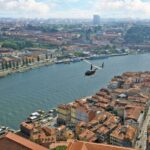
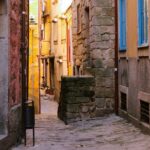

Private Porto Tours, compared.
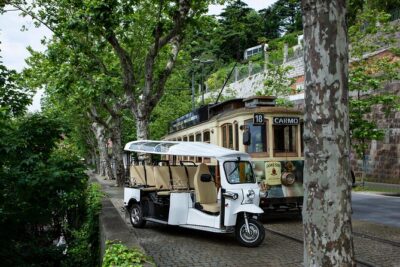 ★ 4.5Discover Porto’s Highlights on a 2-Hour Private Electric Tuk TukFrom $481,860 reviews
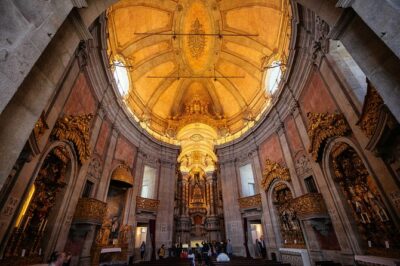 ★ 5.0Porto PRIVATE TOUR With Locals: Highlights & Hidden GemsFrom $96984 reviews
 ★ 5.0Private tour in the Douro (1 to 4 people) on a boat just for youFrom $168744 reviews
 ★ 4.5Historic Porto by Private Electric Tuk Tuk to Top LandmarksFrom $42735 reviews
 ★ 4.8Private Tour of the Historic City in a Classic Ford TFrom $40716 reviews
 ★ 5.0Porto Private Food and Drink Tasting Tour with LocalFrom $139652 reviews
 ★ 5.0Private Taxi Transfer to/From Porto AirportFrom $24649 reviews
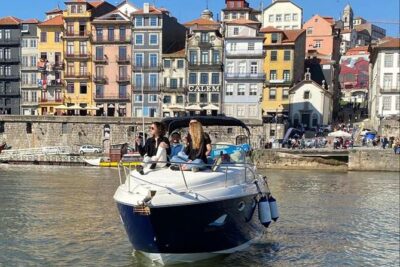 ★ 5.0Private tasting in the Douro (1 to 7 people) on a yacht for yourselfFrom $313559 reviews