
Reviewed · HISTORICAL TOURS
Porto Experience: History, Culture and Tasting Tour
Porto is best understood on foot. This 3-hour History, Culture and Tasting Tour strings together medieval power, Portuguese art-and-charity, and a proper snack break, starting right at Terreiro da Sé. You get a guided look at the Sé do Porto complex, a stroll through Rua das Flores, the famous azulejos at São Bento Station, and the MMIPO Museu da Misericórdia do Porto before ending with local delicacies and drinks.
What I like most is the start and the storytelling. I’m a fan of beginning at Sé do Porto and Paço Episcopal, because it helps you see why Porto grew the way it did. I also really enjoy the MMIPO stop, which connects art with the city’s charity history, then finishes with a tasting that feels like it belongs to what you just learned. One consideration: the tour can feel museum-heavy for some people, and the tasting moment may not line up perfectly with your expectations if you’re hunting a very street-food style snack.
Key highlights to look for
- Sé do Porto + Paço Episcopal: medieval Porto origins, guided and time-boxed
- São Bento Station azulejos: short visit that still gives you the story behind the tiles
- MMIPO Museu da Misericórdia do Porto: a compact museum with a charity-and-art angle
- Local delicacies tasting with drinks: included food plus a calm break from walking
- Optional 4-hour extension: City Hall and Aliados Avenue, Clérigos Church area, old court and jail, plus viewpoints
- Photo stop at Miradouro da Vitória: a final perspective over rooftops and the river
Why Sé do Porto and Paço Episcopal set the tone fast
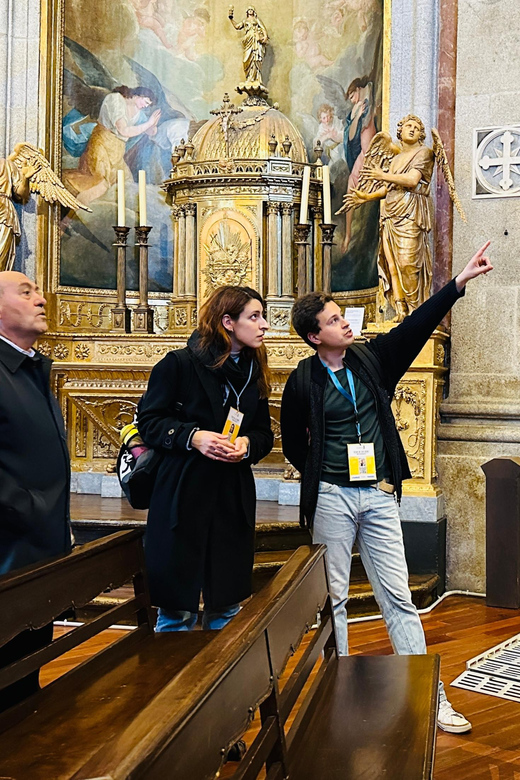
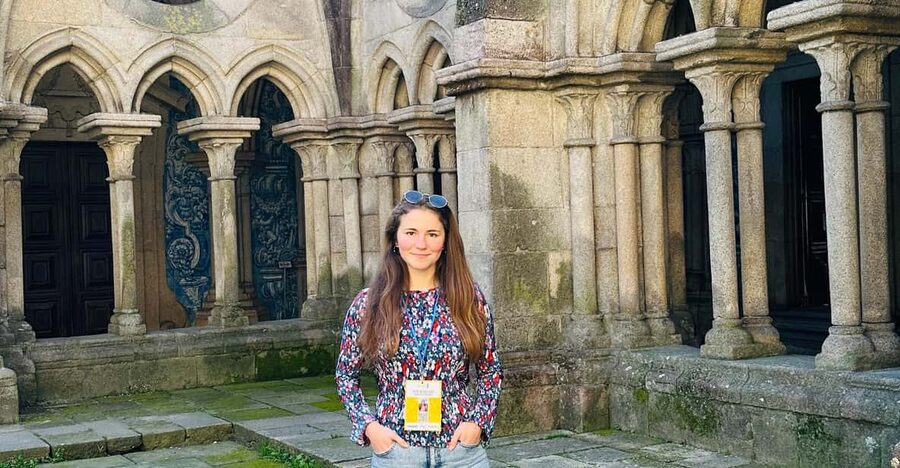
Your tour starts at Terreiro da Sé, then heads straight to Sé do Porto, the city’s cathedral district. You’ll get a guided visit here for about 40 minutes. For me, the sweet spot is how quickly you get context. The cathedral hill is not random tourism. It’s where you can feel Porto’s early gravity: church authority, city planning, and the kind of power that shaped everyday life.
After that, you visit Paço Episcopal (the Episcopal Palace) for around 20 minutes. This is where the “medieval culture” theme turns concrete. Even if you think you’re not a palace person, you’ll probably appreciate how the guide links architecture to society and politics. You come away seeing Porto less as a postcard and more as a working city with layers.
Practical tip: wear shoes you can trust on stone. You’re walking and standing quite a bit, and the Sé area can be slick or uneven depending on weather.
You can also read our reviews of more food & drink experiences in Porto



Rua das Flores and Rua de Sant’ Ana, where Porto feels lived-in
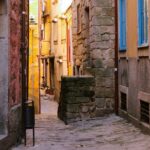
Once you leave the cathedral complex, the tour shifts into street mode. You’ll spend time on Rua das Flores (about 15 minutes) and then Rua de Sant’ Ana (about 20 minutes). These are the kind of lanes where the city’s present blends with its past.
Rua das Flores is known for artisan shops and that “people are out and about” energy. It’s not a huge landmark stop. It’s a reset. You get to look at storefronts, meet the rhythm of the area, and understand why Porto’s older streets still work for commerce and daily routines.
Then Rua de Sant’ Ana adds a slightly different feel, more narrow and old-world in tone. I like these short walks because they keep the tour from turning into a slideshow of buildings. You get some movement, some photos, and a few minutes to just absorb.
São Bento Station azulejos, art you can actually see up close
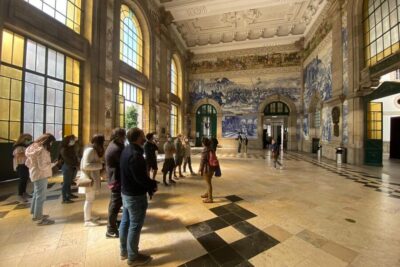
São Bento Station is one of Porto’s most famous photo stops, and the tour includes a guided visit of about 15 minutes. That’s a good length. Too long and you’d be standing around for the sake of standing around. Too short and you miss the story.
The big reason it works: it’s not only about the images. You’ll learn how the azulejos connect to Portuguese themes and memory. Even if you’ve seen azulejos before, this is one of those places where the scale and density make you stop and look harder than you planned.
Practical note: São Bento is still a train station. Expect some foot traffic and noise. The guide time-boxes it, so you’ll have just enough quiet focus before moving on.
MMIPO Museu da Misericórdia, charity meets art
Next comes MMIPO Museu da Misericórdia do Porto, with a guided visit of about 40 minutes. This is the tour’s cultural pivot. Instead of only talking about power and religion, you get Porto’s social side.
The MMIPO focus is on Porto’s legacy of mercy and charity, presented through art and museum collections tied to that mission. For me, this is one of the more meaningful stops on the route because it answers the question you might not ask out loud: who helped the city function when life was harsh?
You’ll also appreciate how the tour structures museum time. Forty minutes is long enough to take in the main points, but short enough that you’re not stuck until your brain turns into a waiting-room brochure.
If you prefer faster, street-level experiences, you may want to keep your expectations in check. The museum segment is a real component of this tour, not an add-on.
The tasting break, local delicacies and drinks included
Right after the museum, you get a food tasting for about 30 minutes. The experience includes typical delicacies and drinks, which is a huge value lever for a tour at this price point. Instead of spending time hunting food afterward, you get a guided moment where someone helps you understand what you’re tasting and why it matters locally.
This is also where I’d recommend taking a breath. The route moves from cathedral to streets to station to museum, so that tasting break is not just about eating. It helps reset your pace.
One more practical thought: tasting menus and the exact item lineup can vary. So if you have a very specific snack fantasy, keep it flexible and let the guide suggest what to try.
You can also read our reviews of more historical tours in Porto




Optional extension: Avenida dos Aliados and City Hall
There’s an optional longer version that continues your Porto adventure. If you choose it, you add about 4 hours and pick up more classic city-center landmarks.
The extension includes Avenida dos Aliados and the Porto City Hall area. This is where the tour shifts from medieval to civic Porto, from church-centered power to the look and feel of modern governance and public space. Avenida dos Aliados works like a grand stage: wide, formal, and easy to understand even if you’re tired.
You’ll also get the kind of architectural sightseeing that helps you place the city historically. It’s not just “pretty building.” It’s a chance to see how civic identity looks when it’s trying to impress.
Clérigos Church, old court and jail, and the viewpoint payoff
The extension also includes the Clérigos Church area, plus stops tied to the ancient city court and jail. In the walking rhythm of Porto, these locations help connect the dots between authority and control. Church power, legal power, and social power all show up as physical spaces.
Then you finish with Miradouro da Vitória. This is a photo stop, with about 15 minutes for sightseeing. It’s the kind of finish that makes the entire walking route feel worth it. Rooftops and the river come into view, and suddenly the earlier climbs and angles make sense. You stop thinking in stops and start thinking in geography.
Bring your phone charger habit for the day, or at least clear storage. Viewpoints are photo magnets.
Price and value: what $53 buys in real time
At $53 per person for about 3 hours, this tour is priced like a value-minded city orientation. The key is what’s included.
You get tickets and guided visits in the main attractions, specifically Porto Cathedral (Sé do Porto), the Episcopal Palace (Paço Episcopal), and MMIPO. You also get typical delicacies and drinks, plus professional guides. On top of that, you’ll have an express security check to skip the line for entry where needed.
So you’re paying for more than narration. You’re paying for timed access, guided pacing, and food that saves you time and effort later. If you were to plan these stops on your own, you’d spend time figuring out tickets, lining up, and fitting it all into a coherent route.
Is it perfect value for everyone? Not if you hate museums. But if you like history, architecture, and one structured tasting break, it’s one of the safer bets in Porto for getting a lot of “why” per hour.
The guiding factor: warm guides and clear priorities
From the guide names and feedback patterns I saw, the tour’s biggest strength is the human delivery. Rui and Arthur are called out as warm and enthusiastic, and Damiano and Olexandra are mentioned for competence, preparation, and energy. That matters because this route includes multiple settings: cathedral areas, a major station stop, a museum, then food.
A good guide keeps it moving, but also slows down at the moments that need explanation. Rui, for example, is described as attentive and spending extra time with groups when needed. Arthur is described as energetic and passionate. That style is useful here. If you’re going to spend your day in older streets and historic interiors, you’ll get more out of it with a guide who can answer questions without rushing.
Small caution, based on one mixed account you may want to watch for: if the museum feels long or technical for you, ask for simpler explanations or request a quicker overview style.
Who should book this tour
This is a great fit if:
- You’re in Porto for the first time and want a story-driven route rather than random hopping
- You care about medieval context, Portuguese society, and how power shows up in buildings
- You want one included tasting stop, so you don’t lose time later
- You like guided azulejos sightseeing, not just “take a picture and leave”
Consider skipping or pairing it differently if:
- You strongly prefer food as street-level snack crawl rather than a guided tasting block
- You dislike museums and could feel restless during MMIPO
It’s also a smart option for mixed groups, since the route covers church and palace, public art, museum culture, and then food.
Practical logistics you should know before you go
Meeting point: the guide waits next to the pillar in front of Se do Porto (Porto Cathedral). You’ll identify them by the company tag and a white umbrella.
Language options: Portuguese, English, Spanish, Russian, Ukrainian, and Italian. That’s a rare range, and it helps if your group includes different language preferences.
Timing: the tour is 3 hours total, and there are starting times based on availability. There’s also that optional 4-hour extension if you want more city-center landmarks and the viewpoint finale.
Drop-offs: you’ll have two drop-off locations, Dworzec Sao Bento and Praça do Infante D. Henrique. That’s helpful because it keeps you near transport and central walking options when you finish.
One more practical note: bring a light layer. You’re outside at multiple points, and you’ll be in and out of interiors.
Should you book this Porto Experience tour
Yes, if you want a smart, guided way to connect Porto’s medieval core to its art-and-charity story, with a built-in tasting that keeps your day from turning into a pure walking contest.
Book it if you like:
- Getting orientation fast from Sé and the Episcopal Palace
- Seeing São Bento azulejos with explanation, not just photos
- Understanding why MMIPO matters beyond “another museum”
- Ending with real local food and drinks, then optionally leveling up with Clérigos, Aliados, old court and jail, and Miradouro da Vitória
Skip it or do a different plan if:
- You hate museums and want only streets, views, and food on the move
- You expect the tasting to feel like a free-form street-food crawl
For most first-timers, this is a strong value because it packages tickets, guided time, and food into one efficient route.
FAQ
How long is the Porto History, Culture and Tasting Tour?
The tour runs for 3 hours.
Where do I meet the guide?
Meet the guide next to the pillar in front of Se do Porto (Porto Cathedral). They’ll have a company tag and a white umbrella.
What does the tour include?
It includes tickets and guided visits for Porto Cathedral, the Episcopal Palace (Paço Episcopal), and MMIPO, plus typical delicacies and drinks, with professional guides.
Is there an optional longer version?
Yes. There is an optional 4-hour add-on that continues through more central landmarks and ends at Miradouro da Vitória.
Which languages are available?
The tour is offered in Portuguese, English, Spanish, Russian, Ukrainian, and Italian.
Where do we get dropped off after the tour?
You have two drop-off locations: Dworzec Sao Bento and Praça do Infante D. Henrique.
Can I get a full refund if my plans change?
Free cancellation is available up to 24 hours in advance for a full refund.
More Food & Drink Experiences in Porto



More Tours in Porto





More Tour Reviews in Porto

Keep comparing: recently reviewed experiences around Porto









Historical Tours, compared.
 ★ 5.0Douro Valley: Historical Sites, Wine Experience, Lunch & CruiseFrom $1075,133 reviews
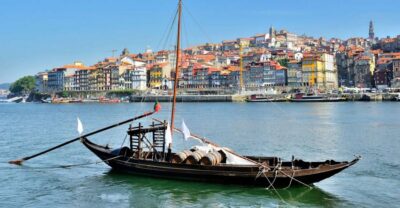 ★ 4.7Historic City Center Walking TourFrom $331,172 reviews
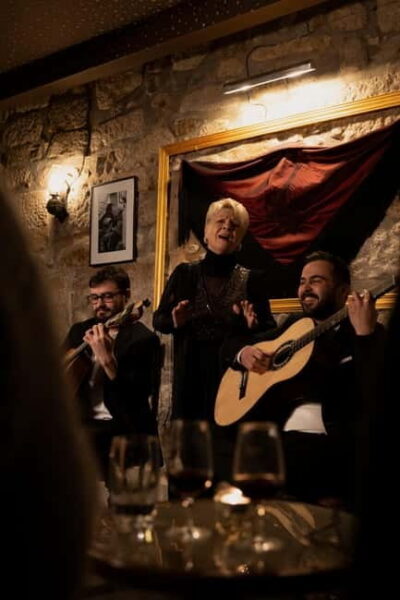 ★ 4.8An Intimate Fado Show in a Historical TavernFrom $211,093 reviews
 ★ 4.8Historical Center Walking TourFrom $41898 reviews
 ★ 4.5Historic Porto by Private Electric Tuk Tuk to Top LandmarksFrom $42735 reviews
 ★ 4.8Private Tour of the Historic City in a Classic Ford TFrom $40716 reviews
 ★ 4.6Douro Valley History & Wine Tour with Cruise & LunchFrom $104433 reviews
 ★ 4.5Porto Guided Tour to the Historical Center on a Tuk TukFrom $42418 reviews
Browse the lists this tour appears in