
Reviewed · SIX BRIDGES RIVER CRUISES
Porto 6 bridges Speedboat Tour along the Douro
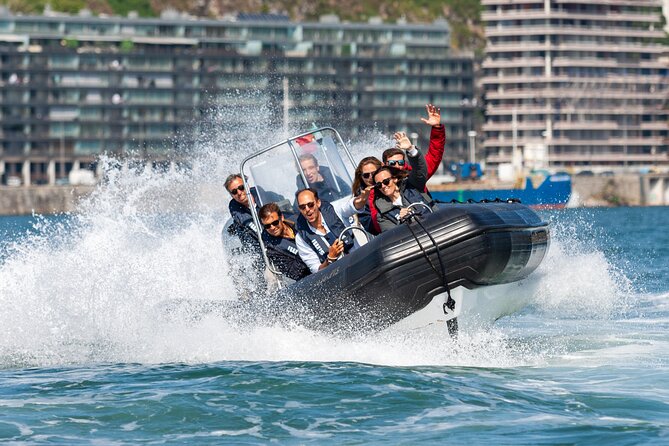
Speed and bridges on the Douro is pure fun. This 45-minute Porto speedboat tour has you zipping past standout waterfront sights and key bridges, with the extra thrill that you may head out toward the sea when conditions are right. I especially like the fact that you leave from Douro Marina and get a fast, high-energy way to see both Porto and Vila Nova de Gaia without getting stuck in crowds.
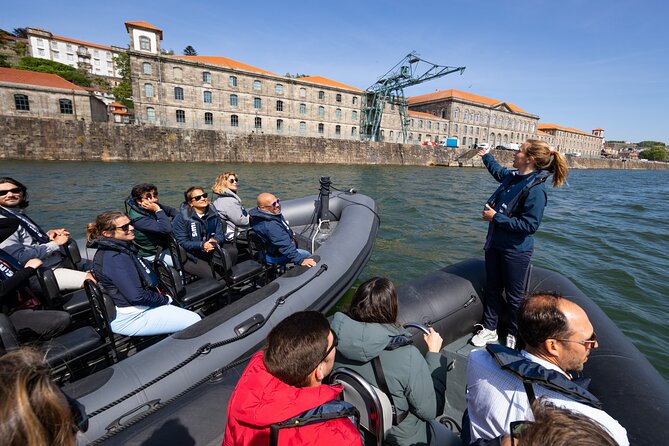
What I really like is how compact and easy it feels. You travel in a small group setup, up to 38 total, with boats that can take about 10 people each, so the ride stays personal rather than chaotic. And you’ll be wearing a life vest for safety while still getting that exciting speed.
One thing to keep in mind: this experience needs good weather, and fast boats can mean you might get a little wet if the water is active. If you’re hoping for calm, totally dry sightseeing, plan for the possibility of splash and a quick, loud, fun ride style.
Key things you should know before you go
- Small boat capacity: max 38 travelers total, with around 10 people per boat and three boats running.
- Life vest included: you’ll stay safe while still getting a thrilling speedboat experience.
- Sea is a bonus: if conditions are right, the cruise can go out to sea beyond the river views.
- You’ll see major Porto and Gaia icons: from bridges like Dom Luis I and Arrábida to the Ribeira waterfront.
- English narration: the experience is offered in English, with a mobile ticket.
- Weather matters: it requires good weather, so it can be rescheduled or refunded if conditions are poor.
Getting to Douro Marina and boarding your speedboat
This tour starts at BBDouroDouro Marina on R. da Praia, in Vila Nova de Gaia (not deep in the old Porto center). The location is set up for visitors, and it’s marked as being near public transportation, which matters when you do not want to waste your day figuring out taxis and parking.
Check in is simple in concept because you end up back at the same meeting point, so you do not have to plan an out-and-back route across town. You’ll also get a mobile ticket, so you can keep everything on your phone.
Language is straightforward: the tour is offered in English. There’s also a minimum age of 10 years old, so it’s not aimed at very young kids.
Compare more reviewed experiences around Porto before fixing the rest of your day.

The quick 45 minutes that packs Porto and Gaia
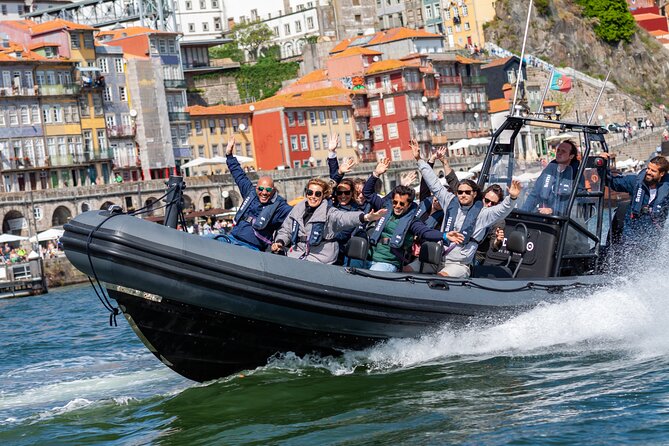
This is an approx. 45-minute ride, and that time shape changes how you should think about it. You are not doing a slow museum visit, and you are not walking far onshore. Instead, you’re getting fast, water-level angles on a long list of famous spots, plus the thrill of speed on the Douro.
The tour also has a “river to sea” possibility. In plain terms, if weather and water conditions cooperate, you can get that extra sense of open water near where the Douro meets the Atlantic. That’s the kind of upgrade that turns basic sightseeing into a memory you’ll talk about later.
The sights you will see along the Douro, from Wine Caves to Passeio Alegre
The itinerary reads like a highlights route that stays focused on the most recognizable parts of Porto and Gaia. From the boat, think of it as a long stream of photo moments, with the guide pointing out what you’re looking at and why it matters.
Here’s what you’ll spot, in the order listed:
Douro River views (Stop 1)
You start on the Douro itself, with views tied to both cities and the sea. Expect iconic cues like Wine Caves (Port wine storage areas), Ouro Street, and the Clérigos Church area. You’ll also see the classic Rabelo boats concept, plus the Douro Estuary, a protected area known for wildlife.
Douro Marina (Stop 2)
Douro Marina opened to the public in February 2012, and it was built with serious capacity in mind. It has room for a lot of vessels, up to 20 meters, and the dock system was designed with floating equipment as part of the big investment. If you like ports, engineering, and modern waterfronts, this stop gives you a useful contrast to the older waterfronts you’ll see nearby.
Afurada heritage edge (Stop 3)
Afurada sits near the mouth of the Douro. The key idea here is scale and life on the water: it’s a small riverside area with about 6,500 inhabitants, historically tied to fishing as the main activity. Even if you only get a brief view, you’ll understand why this stretch feels different from the more tour-focused Porto quays.
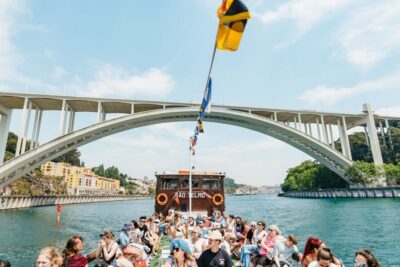
Arrábida Bridge (Stop 4)
This is one of Porto’s big bridge landmarks over the Douro, connecting Porto to Vila Nova de Gaia. It’s an arch bridge, and at the time of its 1963 construction it claimed the largest reinforced concrete arch in the world. It also includes a human story: when it opened, lifts helped pedestrians cross a distance of about 70 meters from the river to the boards, and those lifts stopped working in the mid-1990s. When you see it from the boat, it’s less like a postcard and more like a real piece of traffic history you can measure with your eyes.
Tram and electric transport museum area (Stop 5)
The Museu do Carro Electrico is tied to Porto’s rail and vehicle heritage. Founded in 1992, it preserves electric cars and other historic vehicles. It’s located in a building that used to be the Massarelos Thermoelectric Plant, built in 1915 to power the city’s electric vehicles. If you’re into transport history, you’ll appreciate the sense of “old power plant becomes museum” even if your ride time is short.
Church facade details near Massarelos (Stop 6)
The Igreja da Confraria das Almas do Corpo Santo de Massarelos is a distinctive 1776 church with a tiled facade. It’s organized in three parts with pilasters, and the design includes a broken pediment gate and a niche image of the patron saint. From the boat you won’t be reading the details closely, but the structure helps you understand why this side of the river feels architectural rather than purely industrial.
Customs building and Congress Centre area (Stop 7)
The Alfândega Porto Congress Centre is the former New Customs building, designed by the French architect Jean Colson. It’s a big 19th-century mercantile statement on the riverbank, built with iron plus other materials like stone, brick, and wood. One standout fact: the roof features Riga oak. If you’ve ever wondered why Porto’s waterfront mixes industrial muscle with formal buildings, this is exactly the kind of structure that answers that question.
Vertically terraced park views (Stop 8)
Passeio das Virtudes is a municipal park designed with terraces down the slope, which means you get views in many directions. From the water, it’s easy to see why it’s a great viewpoint zone because it frames the Alfândega area and stretches toward Vila Nova de Gaia.
Clérigos Tower area (Stop 9)
The Torre dos Clérigos, designed by Nicolau Nasoni, is completed in 1763 and rises over 75 meters. It started as a bell tower, but it also served as an orientation point for boats and even as a strategic military marker. It’s famous for a climb of 225 steps to the top, which is not part of the speedboat ride itself, but it adds context to what you see from the river. From water level, that tower reads like a city landmark you can navigate by.
Gaia waterfront and Port wine cellars (Stop 10)
The Cais de Gaia is the major historical waterfront in Vila Nova de Gaia, with shipyard and trading roots going back to the 18th century. It’s tightly linked to Port wine storage because Rabelo boats anchored here to unload barrels for aging in cellars. After a refurbishment finished in 2003, the quay became more leisure-focused and received a Tourism Award for public space enhancement. You’ll also learn that there are about 30 different cellars, many with guided tours and tastings.
Rabelo boats concept (Stop 11)
Barcos rabelos are the classic Douro boats used for decades to transport Port wine between the remote wine region and the Gaia cellars. This is where the guide usually makes the story clear: before dams and with treacherous currents, the river trip demanded experienced sailors, especially in narrow gorges. Once the railway line was in place, it’s believed the last wine transport voyage was around 1964. It’s a reminder that the beauty you’re seeing is tied to real work and risk.
Ribeira old town waterfront (Stop 12)
The Ribeira is Porto’s older, most typical riverside area and part of the UNESCO World Heritage Historical Center of Porto. It has long been a commerce and movement zone because of its proximity to the river. The local legend here is tied to a well-known rescuer, Duque, remembered for saving people from drowning. From the boat, Ribeira reads as layers, bridges, and crowded-to-the-edge waterfront life.
Paço Episcopal (Stop 13)
The Paço Episcopal is the former residence of the bishops of Porto, next to the Cathedral. It’s elevated and dominates the landscape of the historical center, and it’s been a National Monument since 1910. Again, you don’t need to know every architectural term to appreciate it. You’ll spot the building mass as part of the older Porto skyline.
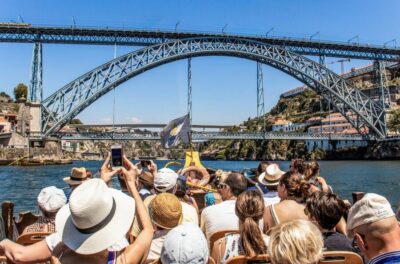
Dom Luis I Bridge (Stop 14)
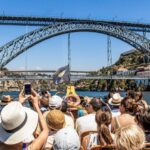
This is the big one. The Dom Luis I Bridge is a metal bridge about 395 meters long and around 8 meters wide, with two decks connecting Porto to Vila Nova de Gaia. It was completed in 1888 and designed by Théophile Seyrig, after a commission tied to King Louis I. You’ll recognize it instantly from photos, but seeing it from the river makes it feel like a working structure, not a flat image.
Serra do Pilar viewpoint and monastery area (Stop 15)
The Miradouro Serra do Pilar centers on the Serra do Pilar monastery, listed as a UNESCO World Heritage Site since 1996. The church has a circular plan, an imposing hemispherical vault, and a balcony, plus a lantern. Historically, its location mattered for invasions in 1809 and later as a military base during the 1832-33 liberal struggles, when it became a fortress and artillery barracks. From the boat, it helps you link views to strategy, not just scenery.
Jardins do Palácio de Cristal area (Stop 16)
These gardens connect directly to the old Palácio de Cristal. Construction began in 1861 and it opened in 1865 under King D. Luís. The original palace was demolished in 1951 for what’s now the Super Bock Arena area. The gardens were designed by Emil David, and portions of the original garden concept remain, including avenues and balcony design over the Douro. From the river, the key value is that these gardens soften the waterfront into something airy.
Douro Estuary Nature Reserve (Stop 17)
The Reserva Natural Estuário do Douro is a protected area of about 66.35 hectares on the south bank near Afurada, including Cabedelo and São Paio Bay. It protects birds, especially through the East Atlantic migratory corridor. There’s also a suspended walkway you can use freely. Even if you only spot it from the water, it gives meaning to the wildlife you might see floating or flying by.
Passeio Alegre Garden (Stop 18)
Passeio Alegre is a late 19th-century garden with a public interest designation. It was designed by Émile David, the same architect behind the Crystal Palace gardens. It’s known for centuries-old trees, shade, and direct views where the Douro meets the Atlantic. The turtle fountain, a granite fountain designed by Nicolau Nasoni and transferred from Quinta da Prelada in the 20th century, adds personality. If you want a final calm moment after the speedboat, this is the kind of place you’d understand immediately because you just saw the water meeting point.
The six-bridge angle, what to watch for during the ride
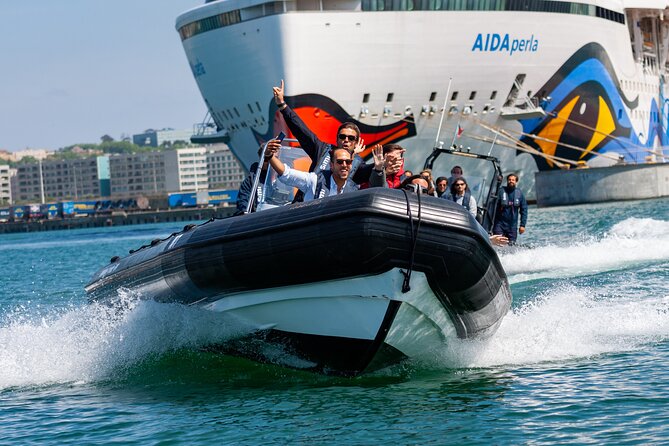
The tour name is doing real work here. When you’re on a speedboat, bridges are not background. They become timing points, visual anchors, and framing tools for the river.
You’ll clearly get the drama of Dom Luis I Bridge with its two decks and long span. You’ll also spot Arrábida Bridge as an arch built for road traffic, and you’ll be reminded that it was engineered as a major reinforced concrete achievement when it opened in 1963.
Porto’s bridge lineup matters for understanding the city’s growth. The tour’s bridge context includes the D. Maria Pia bridge as an older reference, plus São João, Freixo, and Infante bridges mentioned as part of Porto’s set of river crossings. Even if you do not stop for a long look at each one, you’ll feel the way the city solved the challenge of separating and connecting the two banks over time.
Safety, speed, and how to dress so it feels fun
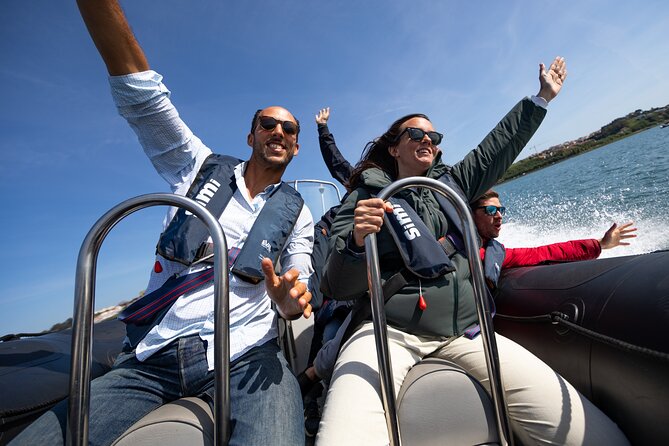
This tour is built to feel safe while still being exciting. You’ll have a life vest, and the experience is designed around a structured speedboat run. One review note that fits your planning: the ride can get you a bit wet, so don’t wear something you’re stressed about damaging.
What helps: bring a light layer you’re okay with. If you’re going in cooler months, wear something that dries fast. If you’re going in summer, sun protection still matters because you’ll be exposed on the water.
Also, this is not a quiet floating lecture. It’s a ride with motion, sound, and instant views. If you want a calm, slow, hands-on stroll day, pair this with a separate land day.

Price and value: what $54.22 buys you in Porto
At $54.22 per person, this is one of those prices that feels fair once you think about what you’re getting. You’re paying for a high-impact viewing format, not a long walk-through.
For your money, you get:
- a short 45-minute speedboat experience,
- a route that highlights major waterfront neighborhoods, river landmarks, and bridge icons on both sides,
- an English experience with a mobile ticket,
- and the safety support of life vests.
Also, the tour tends to be booked ahead on average (about 18 days), which usually signals demand and good availability timing. If you’re flexible, you can likely choose a slot that matches your mood, including the chance of heading out farther if the conditions cooperate.
Should you book Porto 6 Bridges Speedboat Tour?
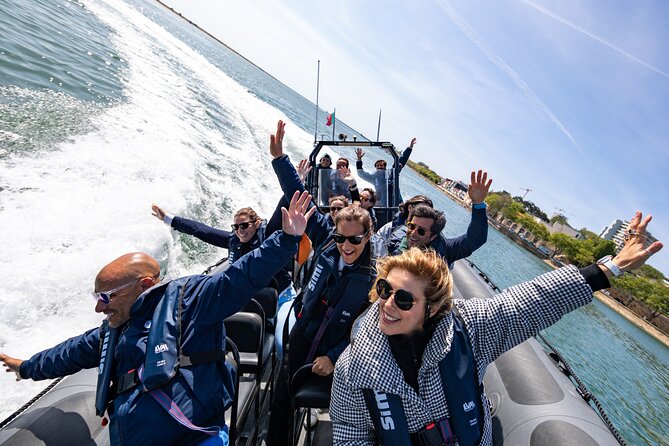
Book it if you want a fast, fun way to see Porto and Gaia from the Douro, especially if you like motion and great angles of famous architecture. It’s a strong fit for first-time visitors who want to cover a lot quickly, and for anyone who enjoys Port wine waterfront context, bridges, and river wildlife without spending half a day in transport.
Skip it or swap your plan if:
- you hate getting a little wet,
- you’re hoping for long stops inside museums or churches (this is a short speedboat format),
- or you’re traveling with someone under 10.
If you time it for good weather, you’re likely to get that best-case scenario, including the chance to cruise out toward the sea. For $54.22, that kind of “river plus ocean edge” moment is exactly the reason this tour works.
FAQ
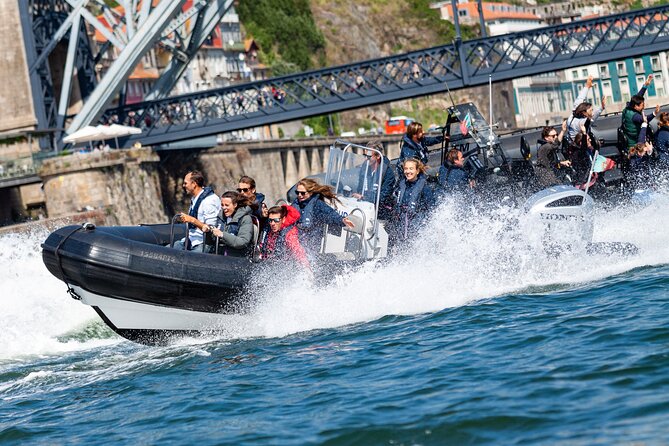
How long is the Porto 6 bridges speedboat tour?
It lasts about 45 minutes.
Where is the meeting point?
The tour starts at BBDouroDouro Marina, R. da Praia, 4400-554 Vila Nova de Gaia, Portugal.
Does the tour end back at the same place?
Yes, it ends back at the meeting point.
Is a life vest provided?
Yes, you’ll be asked to wear a life vest for safety.
What language is the tour offered in?
The experience is offered in English.
What is the minimum age?
The minimum age is 10 years old.
How many people can be on the boats?
The maximum group size is 38 travelers, and boats can take about 10 people each, with three boats running.
Can the speedboat go out to sea?
If conditions are right, the cruise can go out to sea.
Does the tour require good weather?
Yes, it requires good weather. If it’s canceled due to poor weather, you’ll be offered a different date or a full refund.
More Tours in Porto
More Tour Reviews in Porto

Keep comparing: recently reviewed experiences around Porto




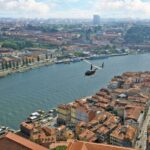

Six Bridges River Cruises, compared.
 ★ 5.0Complete Douro Valley Wine Tour with Lunch, Wine Tastings and River CruiseFrom $10112,920 reviews
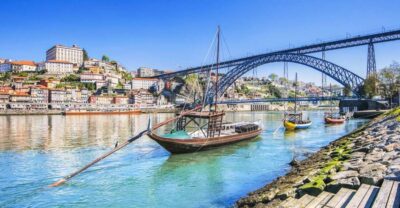 ★ 4.2Six Bridges CruiseFrom $2111,680 reviews
 ★ 4.36 Bridges Douro River CruiseFrom $236,472 reviews
 ★ 4.6Douro Valley: Wine Tour with Lunch, Tastings & River CruiseFrom $1136,081 reviews
 ★ 4.5Guided Tour by Tuk-Tuk & Optional Douro River CruiseFrom $205,980 reviews
 ★ 5.0Authentic Small Group Douro Wine Tour with Lunch & River CruiseFrom $1334,775 reviews
 ★ 4.3River Douro 6 Bridges CruiseFrom $174,168 reviews
 ★ 5.0Douro Valley Tour: 2 Vineyard Visits, River Cruise, Winery LunchFrom $1013,542 reviews
Browse the lists this tour appears in