
Reviewed · PORTO PHOTOGRAPHY TOURS
Mobile Photography through Porto hidden streets
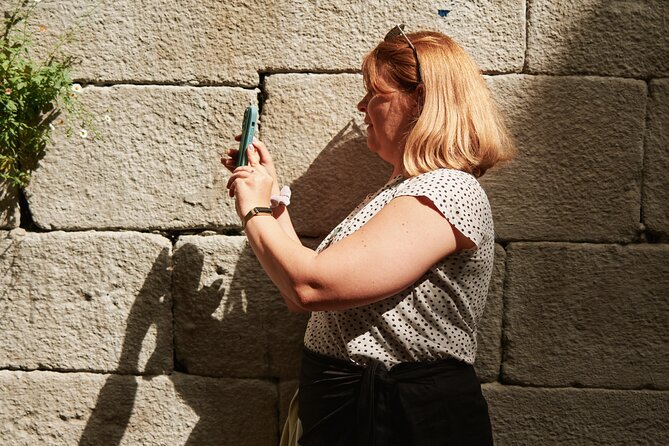
Porto looks different when you look for details, not postcards. This 1.5-hour workshop walks you through old town streets and photo spots, then teaches you how to improve what your phone sees and how you edit on the move. You will finish with a batch of images you can post right away, and a set of tricks you can reuse long after the walk ends.
I like that the focus stays practical. You start with something you already own, your phone or tablet, and you learn composition basics like guiding lines and how to add people for depth, even if you mostly shoot with an iPhone. I also like the small-group feel, up to 15 people, which makes it easier to get feedback and actually try the ideas while you are walking.
The main downside to weigh is physical. The route includes moderate steep stairs and uneven old streets, so you will want decent mobility and a phone battery you can keep powered while you move.
Key highlights you should care about
- Real phone skills, not theory: composition, technique, and on-the-walk editing guidance.
- Hidden streets approach: you spend time in narrow old town areas away from the biggest crowds.
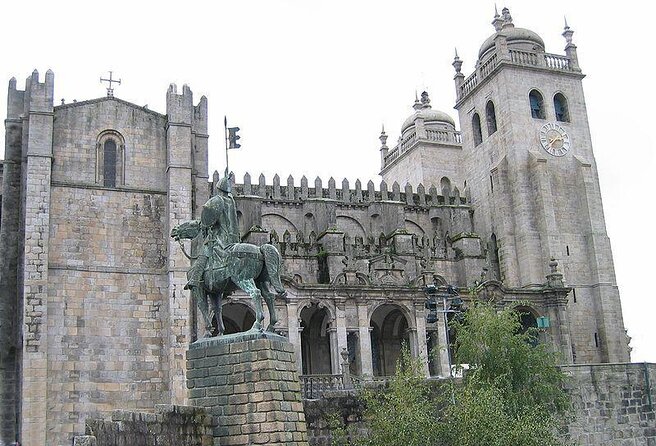
- Iconic anchors for practice: São Bento Station and the Cathedral help you frame shots fast.
- Viewpoints that teach framing: Miradouro da Rua das Aldas and Passeio das Virtudes give you a “try again” setting.
- Small group limit (15 max): easier to ask questions and adjust your shooting style.
- Guide name matters: João leads the session and shares creative ways to improve your results.
A phone-first photo walk through Porto’s old town
This is not a sit-down class. It is a guided walk built around looking, framing, and then shooting with your phone as you go. The workshop is designed for all levels, so if you are new to phone photography, you can still keep up. If you already take lots of travel photos, you will still get new angles on how to make your images feel more intentional.
You will move through old town Porto, including narrower streets where it is easy to lose good compositions unless someone points you to the right things. That is where the teaching helps. You will not just be told to take pictures, you will be coached on how to see: where lines pull the eye, how to balance foreground and background, and how to bring people into a scene without making your photo look accidental.
I also appreciate the practical editing angle. You will talk about the editing apps used while traveling and learn how to refine photos while you still have the city in front of you, not two weeks later when the details are already fuzzy.
You can also read our reviews of more photography tours in Porto

Start at São Bento Station for fast composition practice
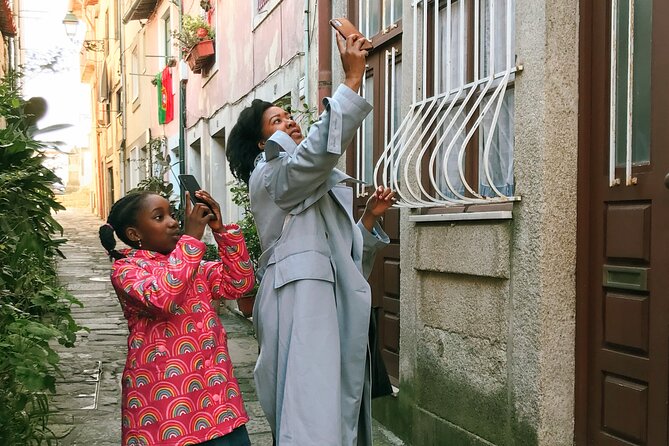
You meet at São Bento station, Praça de Almeida Garrett (and the tour ends back there). This is a strong starting point because the station area gives you textures, shapes, and a lot of built-in structure to experiment with.
Here is why I think this stop works well for a mobile workshop:
- You can test composition quickly without needing long setup time.
- You can shoot from different angles in tight spaces, which teaches you to move your body, not just your camera.
- It is a natural “warm-up” for street photography because there is so much visual detail around you.
If you want to get more out of this stop, do a quick check before you begin: make sure your phone is charged, and consider freeing up storage if your camera roll is already full. In a short workshop, you want every photo session to count.
Catedral do Porto: storytelling at street level
From São Bento, you head toward Catedral do Porto. A cathedral stop can turn into “everyone points at the building and fires off one shot.” In a good mobile photography session, the goal is to slow that habit down and shoot details and context instead.
I like how the format supports that kind of thinking. You get guided prompts for composition, and you learn how to use what is around you to create depth. That matters because Porto’s old town is not flat. Even when you are shooting with a phone, small changes in perspective can make a scene feel layered rather than flat.
A pro move you can try here is working the edges of the frame. Instead of aiming only for a wide view, look for doorways, steps, stone textures, and nearby streets that lead toward the cathedral. This is the kind of “guiding lines” practice that carries over to the rest of your trip.
Miradouro da Rua das Aldas: learn framing from above
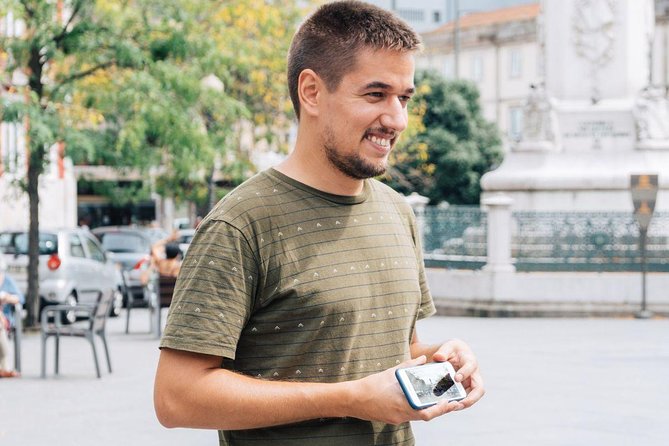
Next comes Miradouro da Rua das Aldas, a viewpoint setting that is perfect for learning framing. Viewpoints can make it easy to over-shoot wide, “I am here” photos. The workshop helps you shift from wide and vague to structured and readable.
From a viewpoint, you can practice a few key photo lessons fast:
- Find the lines that guide the eye across the scene.
- Decide what belongs in the foreground, not just what is far away.
- Try multiple crop choices, because your phone can make a “new photo” from the same moment.
Even if you are not a technical person, you can still follow the teaching. You will get tips on composition and technique, and you can literally apply them between shots while the view is still in front of you.
Passeio das Virtudes: using people and depth
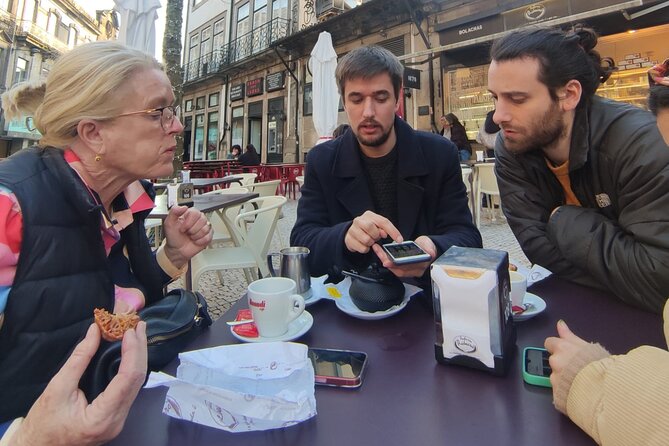
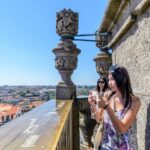
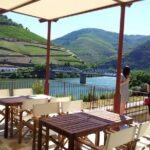
Then you head to Passeio das Virtudes, another strong viewpoint area. This is where the session’s “make it more interesting” coaching really shows.
One standout idea from the experience is learning how to incorporate people into scenes to add depth. That can mean a lot of things: someone walking through the frame, a silhouette near the edge, or a small human scale element that tells you how steep, wide, or layered the city feels.
If you like street photography but worry it will turn into blurry chaos, this kind of guided instruction helps. You can learn when to include people, when to wait, and how to compose so people do not become the only subject. With viewpoints, the background structure already does a lot of the work, so people can feel like part of the scene instead of a random add-on.



Hidden streets and narrow alleys, away from the crowd
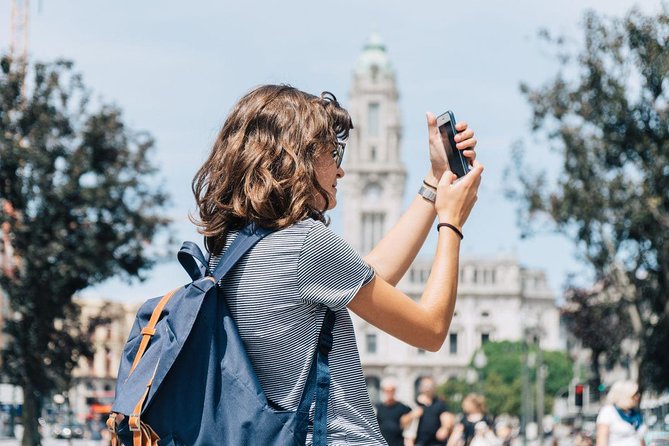
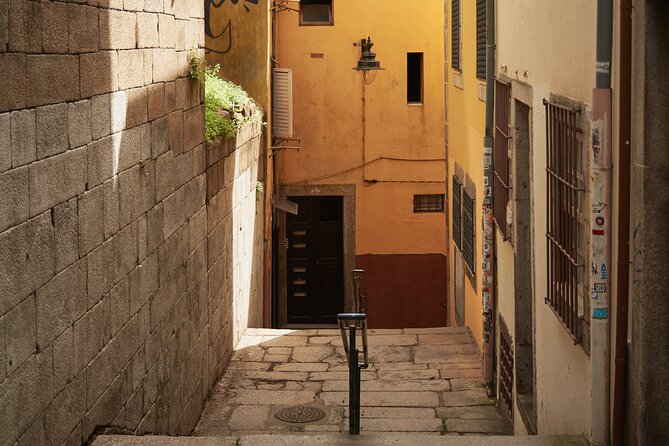
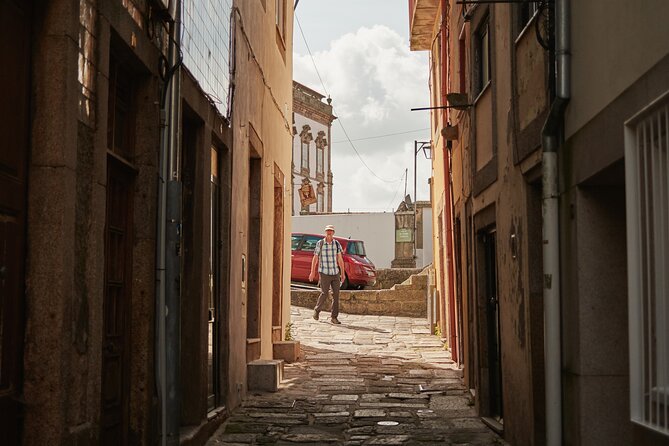
Porto’s old town is full of tight corners and sudden views. If you walk it without a plan, you can end up with great moments that do not quite translate into great photos. The point of this workshop is to guide you away from the obvious, crowded angles and toward quieter streets where details and small stories are easier to frame.
You will explore narrow streets and look for unique details along the way. Think stone textures, stairways, street geometry, and those everyday visual surprises that make Porto feel specific, not generic.
This is also where the phone teaching helps most. In tight spaces, you can do better if you understand composition basics: keep the frame clean, use verticals and diagonals thoughtfully, and pay attention to where the eye naturally travels. You will be getting those reminders while you are moving, not later when it is too late.
Just remember the practical note: expect moderate steep stairs and streets. Wear shoes you trust. If you stop mid-stair to shoot, you want to be stable and comfortable.
The phone tips you can use on day two
A lot of value here comes from taking the session’s ideas and applying them immediately. The workshop covers technique and composition, including guiding lines, plus practical advice about how to use your phone or tablet to get more interesting shots.
From what you will cover, these are the concepts most likely to upgrade your photos right away:
- Composition: learning how to position your subject and reduce visual clutter.
- Guiding lines: using streets, borders, or architectural edges to lead attention.
- Depth with people: adding human scale so images feel dimensional.
- On-the-go editing: learning how to use editing apps while you travel.
If you already use your phone camera a lot, you may still pick up one or two habits that change everything. For example, you might start thinking about how to compose for depth rather than only for sharpness. You might also get better at “shoot, adjust, shoot again” while walking, which is how you end up with that batch of photos that looks like you meant to take them.
A quick “before you go” checklist
This is not required by the tour, but it helps you get the most out of a 90-minute session:
- Fully charge your phone or tablet.
- Bring a phone with enough storage for extra tries.
- Be ready to walk on uneven streets and up stairs.
What editing and publishing support looks like
By the end of the workshop, you should have a batch of images from Porto ready to publish on your social media networks. That is a real goal, and it is why this works better than a generic photo walk where you just “hope the shots are good.”
You will talk about the editing apps used while traveling. The key is that you are not stuck waiting until you are home. You learn how to refine photos as you go, which helps keep momentum high and helps you correct small issues while you still remember the moment clearly.
Also, you will learn techniques you can apply after the walk. The goal is that you leave with a set of habits, not just a memory of where you took photos.
Price and value: $59.15 for 90 minutes, what you get
At $59.15 per person for about 1 hour 30 minutes, this is priced like an active workshop, not a full-day tour. The value comes from the combination of:
- a guided route with specific photo stops,
- instruction focused on how to shoot with your own phone,
- and editing tips so your final images are more “post-ready.”
If you only wanted to visit the viewpoints, Porto can be explored on your own. But you would miss the teaching and the structured practice. If you care about getting better photos without buying new gear, this is a pretty efficient way to do it. You pay for coaching time and the ability to test ideas immediately in different settings.
The small group limit of 15 also matters. In a larger group, it is harder to get guidance, and you spend more time waiting. Here, you should be able to apply tips on the spot.
Language and group pace: English and up to 15
The workshop is offered in English, and the group size is capped at 15. That keeps the pace workable for a mixed skill set.
You are also not expected to be a photography pro. If you have no experience photographing with your phone or tablet, the session is designed to adapt. If you already photograph regularly, you can still learn new ways to look at scenes, especially around depth and using people.
This also helps with pacing. Because the group is small, the guide can adjust explanations so they fit what you are seeing in front of you, not just what a slideshow would show.
Who should book this, and who should skip it
This workshop is a strong match if you:
- want to improve phone photography without buying a camera,
- like walking in historic neighborhoods and learning as you go,
- enjoy viewpoints and street details, not just big monuments.
It is also a good pick if you want a structured way to explore Porto. The session focuses on narrow streets away from the crowds, plus major anchors like São Bento and the Cathedral.
You might want to choose another option if:
- stairs and uneven streets are hard for you, since the route includes moderate steep stairs,
- you dislike walking for 90 minutes in one go,
- you expect a long, deep technical class with slow practice sessions.
Should you book this mobile photography session?
If you are the kind of traveler who likes photos but wants them to look more thoughtful, I think you should book this. The biggest reason is the coaching plus immediate practice. You walk through Porto’s real old streets, you shoot at meaningful stops, and you learn specific phone-based techniques you can reuse all trip.
I would book it especially if you care about getting better images for posting, not just taking “documentation” shots. The promise of a batch of photos ready to publish, plus on-the-go editing talk, is a practical payoff for a short time.
Just be honest with yourself about the walking. If stairs are a problem, you may not enjoy the route. If you are comfortable with moderate stairs, this is a smart, value-focused way to learn how to see Porto through your phone.
FAQ
Where does the mobile photography workshop start?
It starts at São Bento station, Praça de Almeida Garrett, 4000-069 Porto, Portugal.
How long is the workshop?
The duration is about 1 hour 30 minutes.
What does the tour include?
You will explore Porto’s old town through guided photo stops, learn phone photography techniques like composition and guiding lines, and get information about editing apps. You will also leave with a batch of images ready to publish.
Do I need experience with phone photography?
No. If you have no experience, the workshop is adapted to your needs. If you already photograph with your phone, you can still learn new ideas.
What should I bring?
Only your phone or tablet, and make sure it is fully charged.
Is the workshop in English?
Yes, it is offered in English.
How big is the group?
The tour has a maximum of 15 travelers.
Is it physically easy?
It includes moderate steep stairs and streets, so you should have a moderate physical fitness level.
What if weather is poor or I need to cancel?
The experience requires good weather. If it is canceled due to poor weather, you will be offered a different date or a full refund. You can cancel for free up to 24 hours in advance for a full refund.
More Photography Tours in Porto


More Tour Reviews in Porto



Keep comparing: recently reviewed experiences around Porto








Porto Photography Tours, compared.
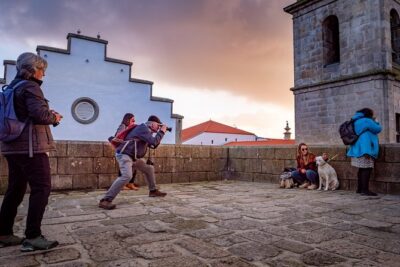 ★ 5.0Porto 1/2 Day Walking Photo Tour & PortraitsFrom $145163 reviews
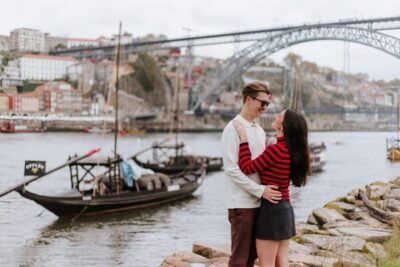 ★ 5.0Photoshoot in PortoFrom $18127 reviews
 ★ 4.5Photoshoot Unforgettable in Porto – Couple or SingleFrom $9419 reviews
 ★ 5.0Photoshoot Session for Solo, Couples and Groups in Porto areaFrom $7818 reviews
 ★ 5.0Analog Photography Workshop & TourFrom $10613 reviews
 ★ 5.0Porto Photo ShootFrom $1808 reviews
 ★ 5.0Instagram Photo Tour in PortoFrom $884 reviews
 ★ 5.0Private Photography Session for Couples in Charming Porto CityFrom $853 reviews
Browse the lists this tour appears in