
Reviewed · BRAGA & GUIMARãES DAY TRIPS
Authentic Braga & Guimarães: Small Historical Group Tour
Two ancient cities in one calm day. If you like your history tied to real streets, real stones, and real viewpoints, this small-group route is a satisfying pick. You get Guimarães first, then Braga, with expert guidance focused on how Portugal’s story actually formed.
I especially like the pace and comfort. With a maximum of 8 people, the day stays friendly, and the air-conditioned vehicle makes the long travel feel easy, even before you start walking.
One consideration: the day is structured and includes a lot of guided talking, and if there are multiple language speakers along for the ride, explanations may get repeated, which can slightly stretch the schedule. Also, lunch is not included, so plan on choosing a spot yourself or based on your guide’s suggestions.
Key highlights you will feel right away
- A max of 8 people keeps the group personal and makes questions easy
- Guimarães Castle area sets the tone fast, with a descent through historic streets
- Legend plus architecture, like the baptism story linked to Igreja de São Miguel do Castelo
- Braga Cathedral included with proper time to look at details instead of rushing
- Bom Jesus do Monte mixes pilgrimage, art, and big views, with about an hour on site
- Sameiro Sanctuary adds a calmer Marian stop with altitude views over Braga
How Guimarães and Braga tell Portugal’s story, in order
This is one of those day trips where the sequence matters. You start in Guimarães, which many people treat as Portugal’s early “foundation chapter.” Then you head to Braga, where you shift from medieval beginnings to religious and architectural landmarks that shaped daily life for centuries.
The guide turns the sites into a connected story. You’re not just seeing buildings, you’re learning why they sit where they do, and how the region’s power and faith shaped what you see today. It’s the kind of day where your brain clicks into place, because the tour keeps linking streets, churches, and monuments to the same big timeline.
You can also read our reviews of more historical tours in Porto

Porto pickup and the small-group advantage (up to 8)
You start early, with a 8:30 am departure. Pickup is included, and you will get your exact pickup time by email before the tour. Plan to wait by the door of the address you provided, since the guide meets you there for boarding.
The vehicle is described as premium and air-conditioned, and the group size is kept small, up to 8. In practice, that means fewer bottlenecks at each stop and less time stuck watching everyone else file out first. One guest specifically praised the comfort and the air conditioning, which is a real quality-of-life detail on a long day.
Guimarães Castle to the old street grid: walking the origin point
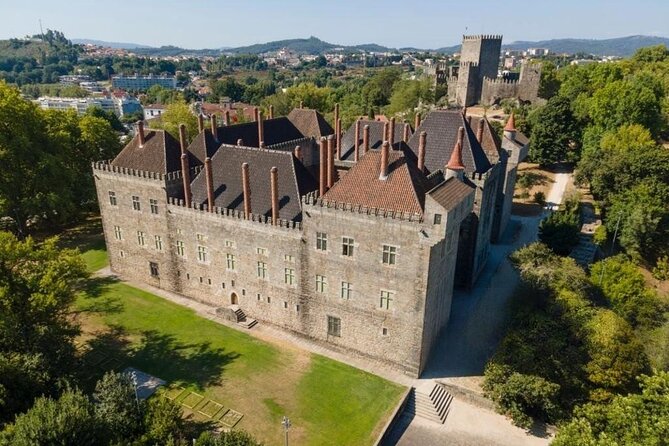
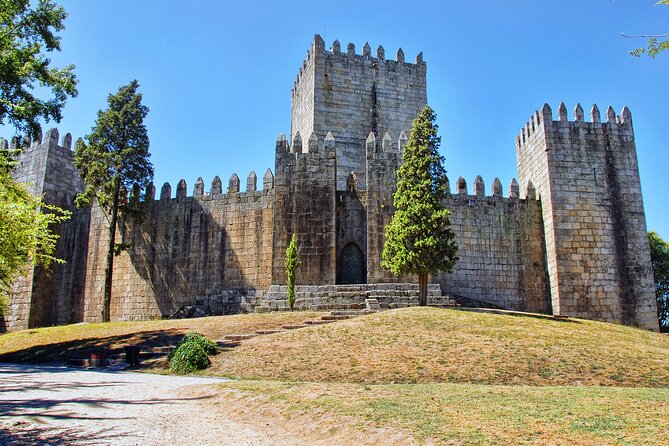
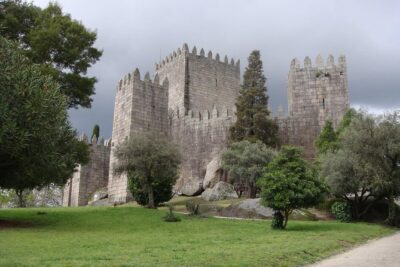
Guimarães starts at the top. When you arrive, you begin in the upper city near the Guimarães Castle. That opening hill-and-descent format is smart. It helps you understand how the city grew, how defense and power worked up on the heights, and how everyday life spread downward toward the center.
From there, the tour moves through a string of historic stops that each add a different layer:
- some are about where rulers and symbols sat
- some are about faith and legends
- some are about street-level history, the “small” things that make a place feel real
You should expect moderate walking. It is not described as strenuous, but there is walking and moving between elevation changes, especially around the old center.
Igreja de São Miguel do Castelo and the baptism legend
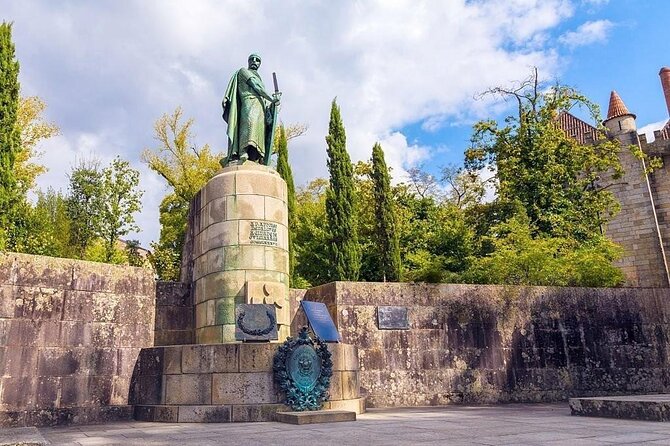
One of the first meaningful stops is Igreja de São Miguel do Castelo. The church dates to the 13th century and is classified as a national monument. It follows a Romanesque style, and it was rebuilt in the early 20th century to match its original look.
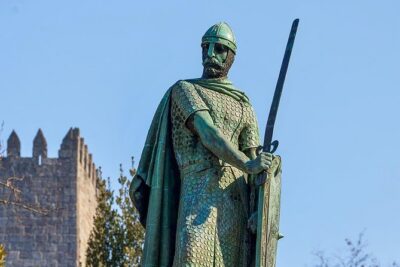
There is also a legend attached to this spot: it’s said that Portugal’s first king, D. Afonso Henriques, was baptized here. Even if you treat legends as stories rather than proof, they still work well on a guided tour like this. They give you a reason to care about the building beyond the stonework.
Good news for your day: the stop includes a free entry ticket for this church.
A 15th-century palace museum, where power leaves wear and tear
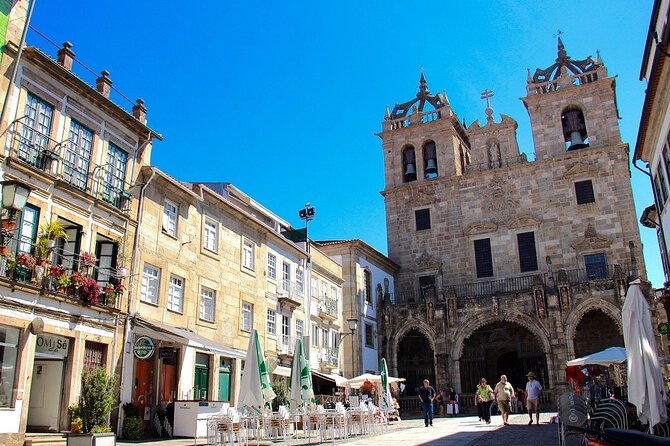
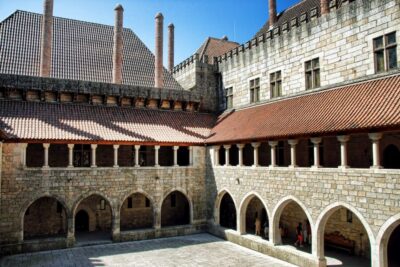
Later, you visit a 15th-century palace whose construction was ordered by D. Afonso, son of King D. João I, connected to his marriage to D. Constança de Noronha. Over time, it served multiple purposes, which caused wear and tear. In the early 1900s, restoration began, and it reopened as a national monument that now works as a museum.
What you’ll notice in a place like this is the mix of things that survive. Palaces are not just one room or one period. They’re layers. Here, the museum showcases items like tapestries, furniture, Chinese porcelain, and paintings, which helps explain how elite Portugal wasn’t isolated. Trade routes and tastes reached the region, and that shows up in the collection.
Entrance is handled as part of the included monument coverage, so you can focus on looking, not finding ticket lines.


Rua de Santa Maria: a street that connects institutions to the castle
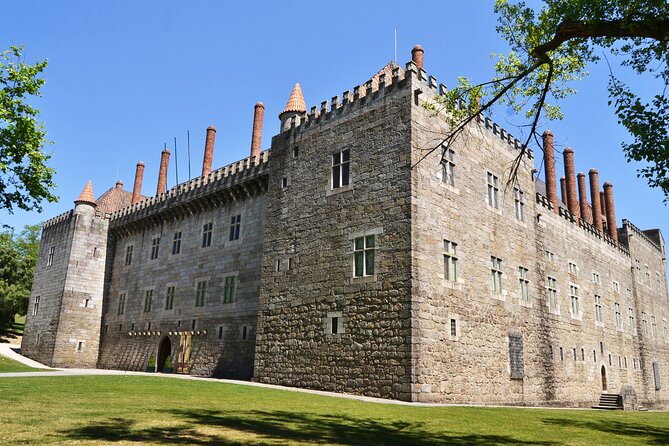
Then comes Rua de Santa Maria, one of Guimarães’s earliest streets. Your guide explains how it served as a major connection between the convent of D. Mumadona Dias, the residential area, and the Castle.
I like this stop because it’s the kind of detail that makes a city feel mapped in your head. When you walk a short street and learn who used it and why, you start seeing the city as a system, not as random pretty corners.
It’s also a short, easy segment of about 15 minutes, so it doesn’t break the flow of the day.
Praca de S. Tiago and the square that became a social hub
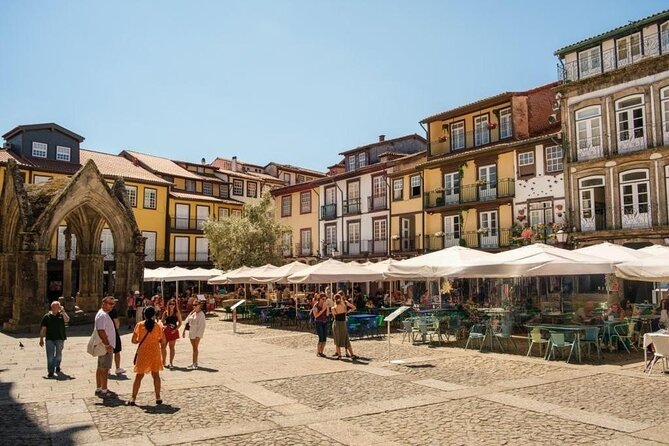
Next up: Praca de S. Tiago. This is a social square in the middle of things, ringed with typical architecture and lined with places to eat, drink, and pause.
The legend here is tied to the apostle James. The story says he left an image of the Virgin Mary during a pilgrimage. A church was built there in the 12th century but later demolished in the 19th century.
The practical angle is simple: you get a break in the schedule and a feel for how locals move through the day. This stop is about 10 minutes and includes free admission.
Largo da Oliveira, Padrão do Salado, and the formation moments you can feel
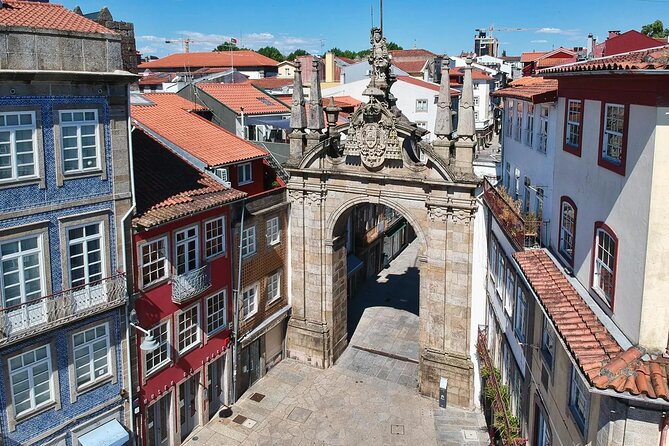
You then reach Largo da Oliveira, one of Guimarães’s most emblematic squares. The name traces back to an ancient olive tree that symbolized peace and tradition. The square has hosted medieval courts and major moments in Portugal’s formation as a nation.
Just nearby, you also see the Padrão do Salado. It commemorates D. Afonso IV’s victory over the Moors in the battle of Salado in 1340. When you’re in a square like this, monuments are not decorations. They are markers of political identity.
From a tour-value standpoint, Largo da Oliveira is where you get density: you see how religious sites, civic space, and national pride sit side by side. You will likely spend around 20 minutes here, plus a short look at the monument area (about 5 minutes).
Igreja de Nossa Senhora da Oliveira: from Countess Mumadona Dias to Gothic lines
From the square, you see Igreja de Nossa Senhora da Oliveira, also known as the Colegiada of Guimarães. Origins tie back to a monastery founded in the first half of the 10th century by Countess Mumadona Dias. The church you see today was built in 1387 under King D. João I, following Gothic architectural models.
This stop works because it anchors the story you heard earlier. If you paid attention to the naming threads tied to Mumadona Dias and the early institutions of the area, this is where the timeline becomes visible in stone and style.
You get about 15 minutes here, and the stop is listed with free admission.
Braga Cathedral: why this stop matters even if you are not a cathedral person
After Guimarães, you shift to Braga, and the tour includes Se de Braga, Braga Cathedral. The ticket is included in the tour.
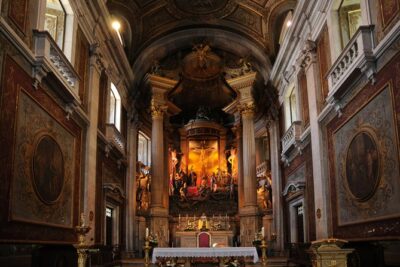
The cathedral’s construction dates to the end of the 11th century, and it was dedicated to the Virgin Mary by Bishop D. Pedro in 1089. It is often described as the first Portuguese cathedral, built decades before the founding of the nation itself.
Even if you do not usually chase cathedrals, I like this one because the guide frames it as part of national formation, not just religious tourism. You get about 30 minutes, which is enough time to look, orient yourself, and appreciate architectural choices without feeling rushed out the door.
Bom Jesus do Monte: pilgrimage architecture meets panoramic payoff
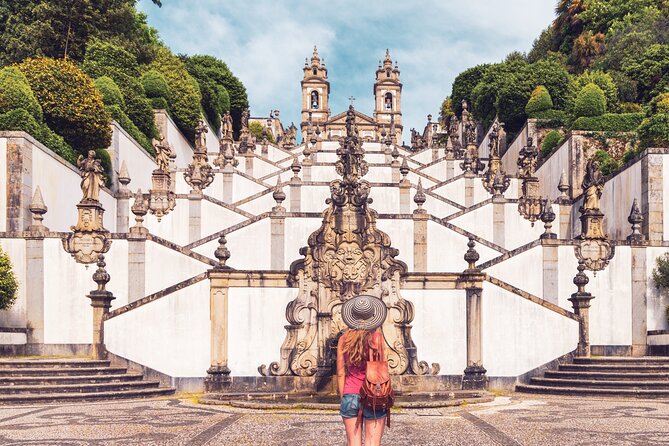
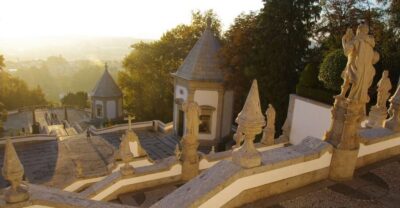
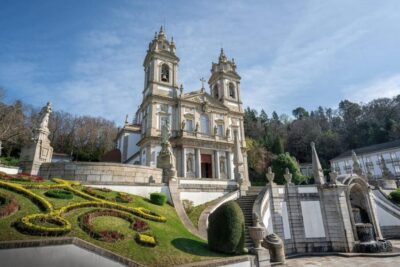
In Braga, you go to Bom Jesus do Monte, a sanctuary with over 600 years of history. It’s connected to European Sacri Monti traditions formed after the Council of Trent in the 16th century. The site includes a long Via Crucis with chapels, fountains, and sculptures representing the Passion of Christ. The route culminates in a neoclassical church built between 1784 and 1811.
One of the features you will likely hear about is the Staircase of the Five Senses, a baroque work that uses fountains and statues as a physical guide for the senses. And yes, it is also recognized by UNESCO as a World Heritage Site, listed in 2019.
This is one of the most visually rewarding parts of the day. You also get panoramic views of Braga, which makes the effort of climbing feel worth it. Time on site is about 1 hour, and entrance is listed as free.
Tip I would give you: bring a bottle of water (it is included), and if you like photos, pace yourself. The viewpoints appear in stages, and you will enjoy it more if you do not sprint to the best angle and then rush the rest.
Sameiro Sanctuary: a calmer Marian stop with mountain-top views
The final religious stop is Sanctuary of Our Lady of Sameiro (Santuário do Sameiro). It is one of Portugal’s important Marian pilgrimage centers. The site was founded on June 14, 1863 by Father Martinho António Pereira da Silva.
The tour frames Sameiro as the second largest Marian pilgrimage center in Portugal after Fátima. It also matters because of where it sits, at 566 meters. From here, you get views over Braga and the surrounding countryside, and the atmosphere is typically quieter than the bigger headline sites.
Time is about 30 minutes, and admission is listed as free.
What’s included for $70.60, and what you need to plan
At $70.60 per person, this tour feels like good value because you are buying a full-day structure, not just a sightseeing list.
What you get included:
- Hotel pickup and drop-off
- a premium air-conditioned vehicle
- a small group tour (max 8 people)
- an expert guide
- entrances to monuments included
- bottled water
What you should plan on:
- Lunch is not included.
- You may want to budget for drinks or a meal during your free time breaks.
- The day involves walking on old streets, and you will be moving between city centers.
The guide quality shows up in the feedback you can use to guide your expectations. Names that popped up include Cheila, Nuno, Brahim, and Francisco. Multiple guests praised how knowledgeable the guides were, and also how the tours balanced structure with enough time to enjoy each place at your own pace. One person specifically mentioned audio-visual support on board, which is a practical add-on when you’re covering a long historical timeline.
There is also a note about green wine. If it is offered, the legal drinking age is 18 and above, so teens and younger travelers should skip it.
Who this tour is best for (and who may want a different pace)
This is a great fit if you want:
- a guided, chronological sense of how Portugal’s early story connects to places you can still see today
- a day trip that is structured enough to avoid decision fatigue
- small-group attention, so you can ask questions and get context
It’s also ideal if you like pilgrimage sites but appreciate them as part of art, architecture, and everyday devotion, not just a checklist.
I would consider a different option if you:
- hate guided storytelling and would rather roam freely
- are very time-sensitive and do not want any schedule stretching
(one review noted that multilingual groups can mean the guide repeats dialogue, which can take extra time)
Should you book this Braga and Guimarães small historical group tour?
If you are basing your trip around Porto and want one day that gives you two of Northern Portugal’s most defining city stories, I think this one is worth your time. The mix of Guimarães legends and civic squares, plus Braga’s major religious landmarks, creates a full arc from early roots to grand sanctuaries.
Book it if you like the idea of an 8-person max day with included monument access and a guide who makes the place make sense. If you are sensitive to schedules, plan ahead for lunch, wear comfy shoes, and expect a guided day with a bit of repeat explanation when multiple languages are present.
FAQ
How much does the Braga and Guimarães tour cost?
The price is $70.60 per person.
How long is the tour?
The duration is approximately 8 hours.
What time does the tour start?
The start time is 8:30 am.
Is pickup and drop-off included?
Yes. The tour includes hotel pick up and drop off.
What is the group size limit?
This is a small group tour with a maximum of 8 travelers.
Is the tour offered in English?
Yes, the tour is offered in English.
Are monument entrance tickets included?
Yes. Entrances to monuments are included, and the Braga Cathedral ticket is listed as included.
Is lunch included?
No, lunch is not included.
Is green wine included, and is there an age requirement?
Green wine may be offered, and the legal drinking age is 18 years old and above.
What is the cancellation policy?
You can cancel for free up to 24 hours in advance for a full refund. If you cancel less than 24 hours before the start time, the amount paid is not refunded.
More Historical Tours in Porto


More Tours in Porto


More Tour Reviews in Porto

Keep comparing: recently reviewed experiences around Porto





Braga & Guimarães Day Trips, compared.
 ★ 4.6From Porto: Braga and Guimarães Full-Day TripFrom $593,951 reviews
 ★ 4.5Best of Braga and Guimaraes Day Trip from PortoFrom $712,552 reviews
 ★ 4.8Guimarães & Braga Tour with Entry Tickets and LunchFrom $123602 reviews
 ★ 4.8From Porto: Braga & Guimarães with Lunch Small Group TourFrom $146545 reviews
 ★ 5.0Braga & Guimarães Small Group Tour: Lunch & All Tickets IncludedFrom $145517 reviews
 ★ 4.7From Porto: Viana do Castelo, Braga and Guimarães Day TourFrom $51475 reviews
 ★ 5.0Guimaraes & Braga Small Group Tour with Lunch and TicketsFrom $127408 reviews
 ★ 4.5Day Trip Braga and Guimarães from PortoFrom $71237 reviews
Browse the lists this tour appears in