Porto Guided Tour to the Historical Center on a Tuk Tuk

Reviewed · RIBEIRA & OLD TOWN

Porto Guided Tour to the Historical Center on a Tuk Tuk

4.5 · 418 reviews 1 hour 50 minutes (approx.) From $42 Operated by Portuk · Bookable on Viator
Book on Viator →

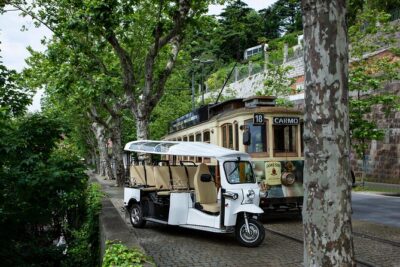
Two hours in a Tuk Tuk changes Porto fast. You ride through the historical center in short hops, then pause at major viewpoints and details that are hard to spot on foot, and you also get a taste of Porto. I like the Tuk Tuk access because it gets you into tight, cobbled lanes without turning the day into a walking test, and you stop for a Port wine glass along the route.

My favorite part is the mix of big sights and fast lessons, plus those moments where Porto’s geography clicks. The Serra do Pilar viewpoint is a standout, and I also love sneaking in lesser-seen history like the Muralha Fernandina, Porto’s medieval city wall.

One possible drawback: the stops are brief and the ride can be a bit loud, so if you’re hoping for long, slow museum-style time or crystal-clear narration from the moving vehicle, you might feel rushed. A couple of guests also noted sound and comfort issues when groups were very full, so pay attention to how your vehicle is loaded.

Key highlights in plain terms

Porto Guided Tour to the Historical Center on a Tuk Tuk - Key highlights in plain terms

  • Tuk Tuk route for narrow streets: You save your legs and still reach places most walking routes miss.
  • Port wine included: A small but very Porto moment, built into the tour.
  • Serra do Pilar viewpoint: A free 15-minute terrace stop with big river and city views.
  • Iconic interiors and exteriors: You get quick hits at São Bento Station tiles, Clérigos Tower, Bolsa, Lello, and more.
  • Military history without the crowds: You pass the Muralha Fernandina stretch, a rare stop for a short tour.
  • Short stop strategy: Lots of variety, but you explore each place only briefly.

Why this Porto Tuk Tuk loop is a smart time-saver

Porto Guided Tour to the Historical Center on a Tuk Tuk - Why this Porto Tuk Tuk loop is a smart time-saver
If you only have a day or two in Porto, you need two things: orientation and highlights. This Tuk Tuk tour delivers both. In about 1 hour 50 minutes, you bounce between the historical center’s showpieces and the spots that explain how the city is laid out.

I also like that the format is built for how Porto actually feels on the ground. Hills, stairs, and cobblestones can wear you down fast. The Tuk Tuk keeps you moving, then lets you get out for short bursts of viewing and photos.

The tour is also offered in English, and it uses a mobile ticket, which is handy when you are juggling transit and lines.

You can also read our reviews of more guided tours in Porto

How the ride feels: pacing, seats, and what to expect

Porto Guided Tour to the Historical Center on a Tuk Tuk - How the ride feels: pacing, seats, and what to expect
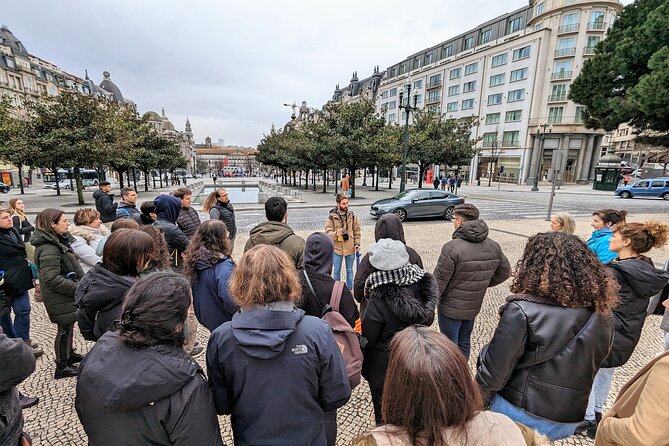
This is a private tour, so you are not sharing the experience with strangers from other bookings. You ride with your group only, and the vehicles travel together and hit the same stops at the same time.

Each Tuk Tuk can hold 2, 3, or 4 adults of average height, up to 75 kg per person. If you have more people, you will likely get multiple Tuk Tuks rather than cramming one vehicle. One review mentioned a concern about tight seating, so it is worth checking that everyone in your group fits comfortably and has a practical seat position for the whole ride.

Timing is also real-world timing. The tour duration is about 1 hour 50 minutes, but it can shift due to local traffic, and you will not get a slow, perfectly timed museum pace at every stop.

First stop energy: theatre ruins, then Porto’s medieval wall

Porto Guided Tour to the Historical Center on a Tuk Tuk - First stop energy: theatre ruins, then Porto’s medieval wall
You start by heading toward the area tied to the National Theatre São João story. The building you see was constructed in 1910 on top of ruins from the Real Theatre, which burned down in 1908. It includes symbolic stylistic emblems and a main façade inspired by a renovation style often linked to Luís XVI, with design credits tied to Marques da Silva. Even if you are not going inside, it is a strong opening because it frames Porto as a city that rebuilds.

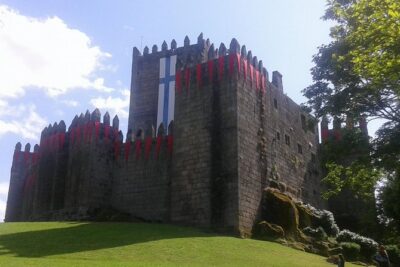
Then you hit one of the tour’s best “how did we not see this walking?” moments: the Muralha Fernandina do Porto. This medieval defensive wall was built between 1368 and 1437, with funding connected to the Sisa do Vinho. Expect a quick look at a major heritage remnant and a sense of scale, the wall stretches roughly 3,000 steps with an average height around 30 feet. It is the kind of stop that makes the city feel older than the postcard view.

Cathedral area: quick medieval stops with a practical timing payoff

Porto Guided Tour to the Historical Center on a Tuk Tuk - Cathedral area: quick medieval stops with a practical timing payoff
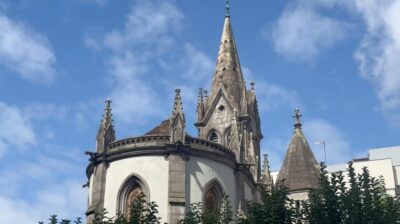
Next, the tour goes to Catedral do Porto. The core dates to the 12th or 13th century, Romanesque in style, and it has been enlarged and renewed through the years, culminating in a twentieth-century reconstitution. The important practical point for you: the stop is around 10 minutes, and admission is not included, so treat this as a look and orientation stop unless you buy tickets on the spot.

You then pass the Pelourinho area near the cathedral. In 1940, buildings around the cathedral area were demolished under the Estado Novo policy, and a paved terrace replaced them. A stone monument went in later, constructed in 1945 as a reproduction based on a drawing from 1797. The stop is short, about 5 minutes, and free, but it adds context for how the city’s center was reshaped in the 20th century.

A quick walk-and-glance follows at Paco Episcopal. It is likely tied to a 13th-century foundation and remade in 1737 with design linked to Nicolau Nasoni. Expect an architectural summary in about 5 minutes, and admission is not included.

São Bento Station tiles: the easiest “wow” on the route

Porto Guided Tour to the Historical Center on a Tuk Tuk - São Bento Station tiles: the easiest “wow” on the route
One of Porto’s most rewarding quick stops is São Bento Railway Station. You get about 10 minutes here, and it is free.

It is early 20th century, with a glass and cast iron roof designed by Marques da Silva. The lobby is where the real payoff is: it is covered with about 20,000 narrative tiles painted by Jorge Colaço. If you like visual storytelling, this stop works because you can stand, look up, and absorb it without committing to a long ticketed visit.

Squares, fountains, and the city’s name changes

Porto Guided Tour to the Historical Center on a Tuk Tuk - Squares, fountains, and the city’s name changes
From the cathedral zone, the route moves into the heart of the historical center and its evolving street life.

You will see the evolution of the main square area, originally linked to the early 18th century with a project starting in 1718. The area’s medieval walls and palaces are long gone, and the square became known as Praça Nova. There is also the layered naming history: for centuries it was Praça dos Ferradores because blacksmith workshops were there.

Another useful detail for understanding Porto: a side of the square ties to the Palace of Viscondes de Balsemão, later used as a guesthouse and connected to King Charles Albert of Sardinia during his exile to Porto. The square’s current name reflects that chapter, and there is a monument in the garden area remembering Portuguese who died in the Great War (1914 to 1918).

Then you stop at the Fonte dos Leoes (Fountain of the Lions), a 19th-century fountain built by a French water company and cast in France at the Val d’Osne foundry. The tour’s angle here is that you are seeing Porto borrow and adapt designs from elsewhere, so the city does not feel sealed off from Europe.

Rococo church façades and tile work, seen at a glance

Porto Guided Tour to the Historical Center on a Tuk Tuk - Rococo church façades and tile work, seen at a glance
Porto has a habit of surprising you with ornate religious architecture right in the middle of everyday streets. This tour uses short stops so you can sample that. You will see a church dating to the 17th century with a classical façade dating to the 1850s, attributed to Nicolau Nasoni, with an altarpiece described as Porto rococo style and designated a national monument.

You will also see a second rococo standout: a church built in the second half of the 18th century, also designated a national monument, with a side façade covered in tiles in 1912. The tile drawings are attributed to Silvestre Silvestri and connect to themes about Nossa Senhora.

Practical note: because these stops are brief and monument entrances are not included, you should plan to enjoy the outside details and any quick interior peek that the stop allows.

Jardim da Cordoaria (João Chagas Garden): a peaceful pause

Porto Guided Tour to the Historical Center on a Tuk Tuk - Jardim da Cordoaria (João Chagas Garden): a peaceful pause
If you want one “reset” moment during the tour, this is a good one. The route includes the Cordoaria Garden, also called João Chagas Garden since 1924. It is tied to rope makers who worked here for around 200 years, then later the city turned the area into a public garden.

It was designed by German landscaper Emile David and built around 1865 to 1866. You will also see statues of Ramalho Ortigão and António Nobre, plus sculptures by Juan Muñoz from 2001, including O rapto de Ganímedes. It is one of those stops that makes the whole tour feel less like a checklist.

Clérigos Tower and the Noble Cloister story

The tour heads to Torre dos Clerigos, the bell tower tied to the Baroque Clérigos Church. It is one of Porto’s most recognizable symbols because you can spot it from different points around the city.

The stop is quick, about 5 minutes, and admission is not included. Still, it helps you recognize the skyline later when you look back from viewpoints. The tour also connects this church complex to later uses, including restoration work tied to occupation by Benedictine monks, plus the Porto National Orchestra and Porto District Archives. In the Porto 2001 cultural period, the Noble Cloister saw an acoustic shell and performances under the Teatro Nacional de S. João umbrella.

Palácio da Bolsa: the Arabian Room and a real-world venue

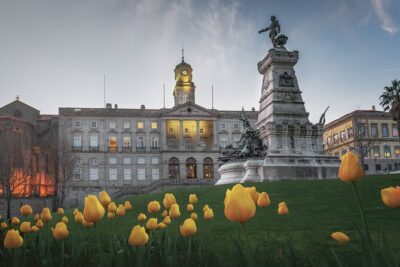
From church towers to a polished, neoclassical building: Palácio da Bolsa (Stock Exchange Palace). It is a major stop in the historical center and a property tied to the Commercial Association of Porto. The design is credited to Joaquim da Costa Lima in 1842, and the big highlight is the Arabian Room.

This matters for you because it is not only architecture. The palace is also used as a Cultural and Conference Centre. The tour places it where it makes sense in the walking circuit from the city’s trade and cultural center.

Admission is not included for monuments on this tour, so treat Bolsa as a “see it from the outside and decide” moment unless you plan to budget for an interior ticket.

Livraria Lello: the Art Nouveau façade and the “staircase moment”

One of the most photographed stops is the library building inaugurated in 1906. The façade mixes Art Nouveau with neo-Gothic details, and the interior is known for painted plasterwork that imitates wood, plus a reinforced concrete staircase.

You also get mention of a huge stained-glass skylight with the monogram and motto Decus in Labore. This is one of those places where even a brief look can make your photos look more “Porto” than generic street shots. Admission is not included.

Mercado spaces and the square with Infante D. Henrique

The route also includes a former market building tied to iron architecture. It was built in 1885 by city order to replace the older Mercado da Ribeira, then served various purposes. Today it is renovated as an entertainment venue, with Hard Club located there. This is a great stop if you want to see Porto as a city that reuses buildings.

Nearby, you pause at the square that has been around since 1885, bordered by Mercado Ferreira Borges and Palácio da Bolsa. You can spot a small garden and an underground car park, plus a Monument to Infante D. Henrique. The monument was inaugurated for the 5th centenary of his death, construction began in 1894 and finished in 1900, and it is meant to represent Portuguese navigation and faith.

São Francisco Church: the Tree of Jesse and the gilded interior

This is the big faith-and-art stop. Porto’s most important Gothic temple (construction began in the 14th century) is known for its Baroque gilded interior from the 17th and 18th centuries. It includes the Tree of Jesse and catacombs, and it is designated a national monument since 1910 and UNESCO World Cultural Heritage since 1996.

It is a lot for a short stop, but even if you only have minutes, you get the point: Porto’s churches here are not quiet backdrops. They are designed to overwhelm you with detail.

Alfândega Nova do Porto: iron, engineering, and a transport museum connection

As you move toward the riverside side of the historical area, you also see the neoclassical Alfândega Nova do Porto building. Built in the 19th century to a project by engineer Jean F. G. Colson, it has two façades, one facing the Douro river and one facing the city.

The building’s structural approach uses iron alongside stone, brick, or wood depending on the space. In 1987, it was chosen for the future Museum of Transport and Communications, with restoration and adaptation credited to architect Eduardo Souto Moura. If you like engineering, this stop adds a different side to Porto beyond churches and tiles.

Serra do Pilar viewpoint plus two iconic iron bridges

This is where the tour turns into a geography lesson you can actually feel.

First comes Mosteiro da Serra do Pilar, a World Cultural Heritage site that began in 1538 and was completed around 1670. You will hear the story of how it shifted roles over centuries, including the period when liberal forces used it during the Civil War (1832 to 1834). The church is circular in plan, with a dome and a balcony, and the cloister is also circular with 36 Ionic columns, noted as the only example of this kind in Portugal.

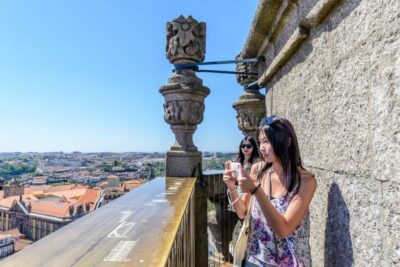
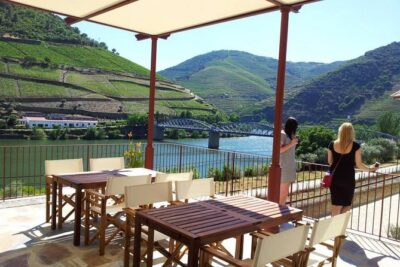
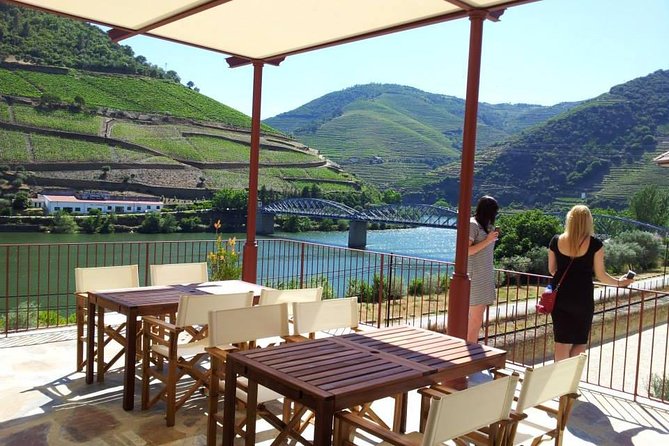
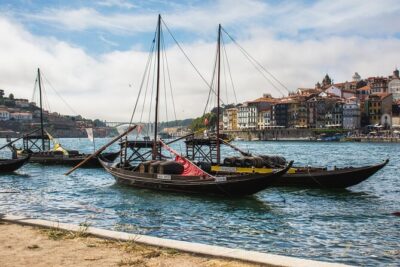
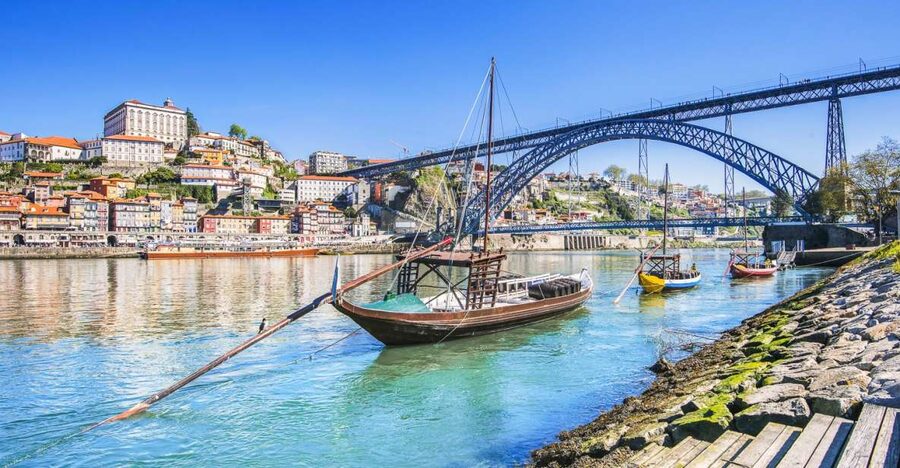
The payoff is the free 15-minute terrace stop. From there, you can see the riverside area of Porto and Gaia up to the Arrábida Bridge, plus the historic center and D. Luís I bridge. In the other direction, you can also look toward Fontainhas and the São João bridge.

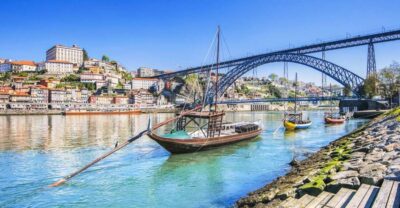
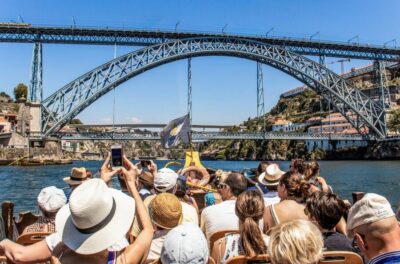
Then you cross into the bridge story. The tour includes D. Luís I Bridge, planned by Teófilo Seyrig, inaugurated in 1886. It has two overlapping iron decks. The bridge is 395 meters long and 8 meters wide, and its arch is still considered the world’s biggest forged iron arch. The upper deck is used by the Porto Metro (line D), connecting the Cathedral area to Jardim do Morro and Avenida da República in Vila Nova de Gaia.

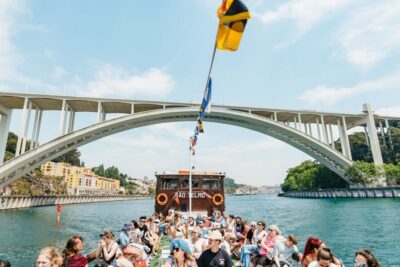
The final bridge moment is São João Bridge (in Porto area, often discussed as a Maillart-type arch bridge). It was inaugurated in 30 March 2003, engineered by Adão da Fonseca. It is 371 meters long and 20 meters wide, with a high altitude deck. The arch span is about 280 meters and is described as a world record, with a span-rise ratio of 11.2. The bridge connects Fontainhas to Oliveira do Douro in Vila Nova de Gaia.

Price and value: is $42.33 worth it?

At $42.33 per person for around 1 hour 50 minutes, this is not cheap, but it also is not meant to replace long museum days. It is built for efficient sightseeing.

Here is where the value comes from:

  • You pack in many major stops quickly without stairs and long walks between zones.
  • You get a Port wine glass included, so you are not paying extra for the signature Porto experience.
  • You also get short “context” moments at each stop, so your later independent visits go smoother.

The main thing that can affect your final cost is monument entrances. The tour clearly states that monuments entrance is not included, so if you plan to go inside multiple ticketed sites like the cathedral or tower areas, your overall day budget will climb.

Who should book this Tuk Tuk tour, and who might not

Book it if:

  • You want a first-day overview of Porto’s layout.
  • You have limited time and want big sights plus a few less-obvious details like the city wall.
  • You like photo stops and short, focused viewing periods.

Skip or supplement it if:

  • You want long visits inside major monuments and religious interiors.
  • You need very quiet narration and long stop times for every location.
  • You are sensitive to motion and sound, since the ride is partly moving time between short stops.

Should you book this Porto Guided Tour on a Tuk Tuk?

I think this is a strong choice for most first-time Porto visitors, especially if you keep expectations realistic. Treat it as a guided highlight sampler with some standout extra context, like Serra do Pilar and the medieval wall. The Tuk Tuk format is the real value here, letting you cover ground and still get out for views and landmark photos.

If you pair it with a return visit to just one or two ticketed interiors you care about most, this tour becomes the best kind of planning tool: it helps you decide where to spend your real time.

FAQ

How long is the Porto Tuk Tuk historical center tour?

It runs for about 1 hour 50 minutes.

Is the tour offered in English?

Yes, the tour is offered in English.

What is included in the price?

You get a Port wine glass, a driver/guide, and a local guide. You also receive a mobile ticket.

Are monument entrances included?

No. The tour lists monument entrance as not included. Some stops are free, but ticketed sites are on your own.

Where does the tour start?

The meeting point is R. de Augusto Rosa 180, 4000-528 Porto, Portugal.

Is this a private tour?

Yes, it is private. Only your group participates.

What happens if the weather is bad?

The experience requires good weather. If it is canceled due to poor weather, you are offered a different date or a full refund.